How Much Does a Granny Pod Cost? Permits, Zoning and Budget Breakdown
A granny pod provides private, accessible housing near the main residence. This arrangement supports aging relatives, visiting family, or rental income. A professionally installed backyard cottage typically costs between $100,000 and $300,000. National planning estimates place a standard, fully finished unit at approximately $180,000. Smaller prefabricated models may cost less initially, yet site preparation, utility connections, permits, and foundation work can substantially increase the final bill.
Three factors control most granny pod costs. These include pod size and finish level, local zoning and permit requirements, and site conditions. A flat backyard with nearby utility connections can reduce construction expenses. A sloped lot, long sewer run, or restrictive access can add tens of thousands of dollars. A carefully designed accessory dwelling unit, often called an ADU, can provide measurable housing value and reduce the need for distant assisted living arrangements. Early planning helps homeowners avoid expensive changes after construction begins.
Granny Pod Cost Breakdown
The most useful pricing model combines a per square foot estimate with separate site and approval expenses. A finished backyard cottage commonly costs $200 to $400 per square foot. This figure includes construction but not always land preparation or major utility upgrades.
Typical total costs fall into these ranges:
- 25th percentile: $100,000 to $140,000 for a compact, simple unit
- 50th percentile: $160,000 to $220,000 for a standard one bedroom cottage
- 75th percentile: $240,000 to $350,000 for a larger or highly customized unit
- Minimum practical project budget: about $90,000, even for a small prefabricated pod with basic finishes
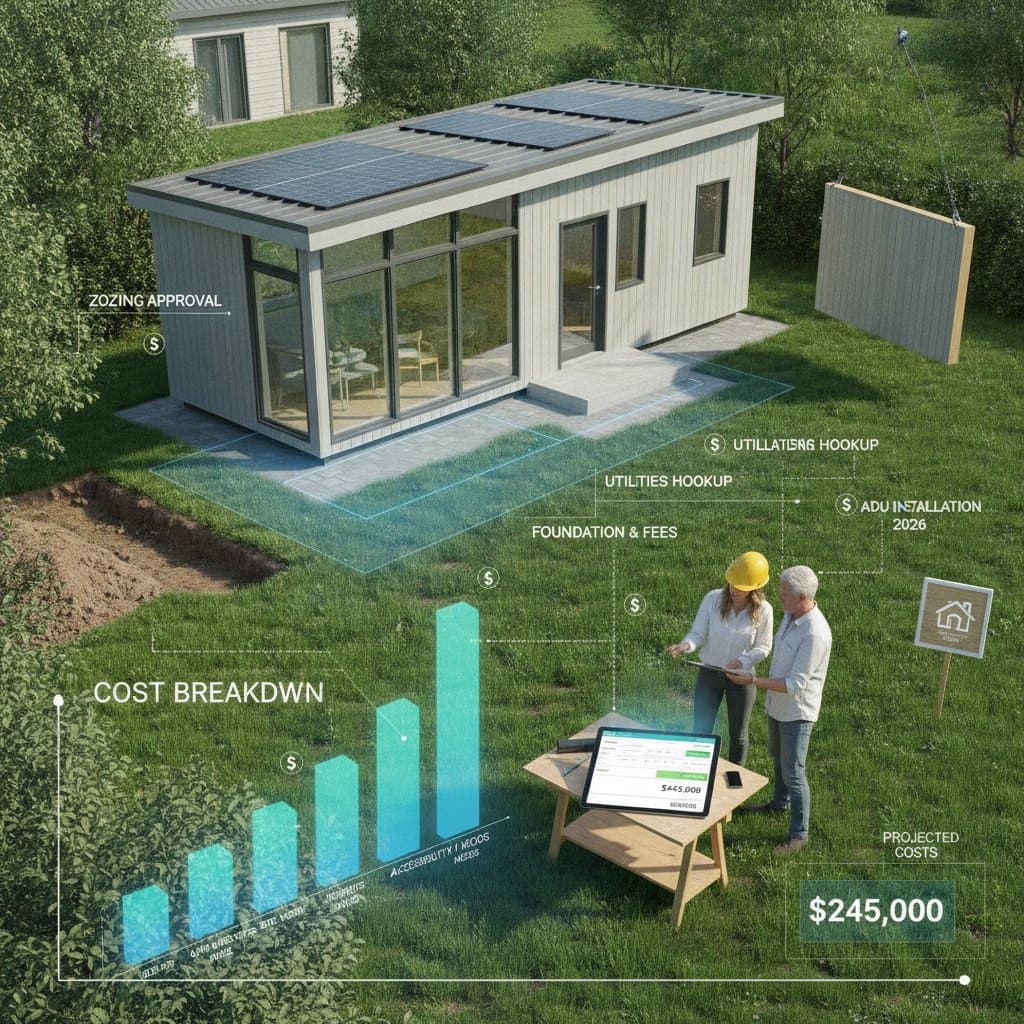
A 400 square foot pod at $250 per square foot has a construction estimate of $100,000. Adding a $15,000 foundation, $20,000 utility connections, and $8,000 in permits and design brings the project near $143,000. Each additional 100 square feet can add roughly $20,000 to $40,000. This depends on fixtures, insulation, cabinetry, and accessibility features.
Size and Scope
A 250 to 350 square foot studio pod generally costs $90,000 to $160,000. A 400 to 600 square foot one bedroom unit often costs $140,000 to $250,000. Larger two bedroom cottages can exceed $300,000.
The scope includes more than the building shell. A complete unit may need a kitchen, bathroom, heating and cooling, accessible doors, emergency egress windows, lighting, flooring, and fire safety equipment. The U.S. Department of Housing and Urban Development provides accessibility guidance that can help owners plan wider clearances, reachable controls, and safer bathroom layouts.
Materials and Quality
Entry level prefabricated pods often use vinyl flooring, stock cabinets, laminate counters, and standard plumbing fixtures. These choices can keep construction near $200 per square foot. The expected service life and warranty vary by manufacturer.
Mid range construction typically adds durable siding, fiberglass windows, quartz counters, better insulation, and heat pump systems. Brands such as Andersen, Kohler, and Mitsubishi may increase material costs by 10 to 25 percent. These upgrades improve comfort and maintenance performance.
Premium cottages can include standing seam metal roofing, custom cabinetry, roll in showers, backup power, and smart monitoring equipment. Premium finishes may add $40,000 to $100,000. Their value is strongest when the resident needs long term accessibility or the homeowner expects rental use.
Complexity and Site Conditions
A difficult site can add 15 to 40 percent to the construction budget. Excavating a slope, removing mature trees, reinforcing soil, or building a retaining wall can each require specialized contractors. Long electrical, water, or sewer runs may add $5,000 to $30,000.
A preconstruction survey should identify drainage, property boundaries, utility locations, fire access, and foundation requirements. Local building departments may require structural engineering, stormwater controls, energy calculations, or wildfire resistant materials. Platforms such as Angi, HomeAdvisor, and Thumbtack can help collect local contractor bids. Homeowners should verify licensing, insurance, and references independently.
Service Types and Comprehensive Pricing
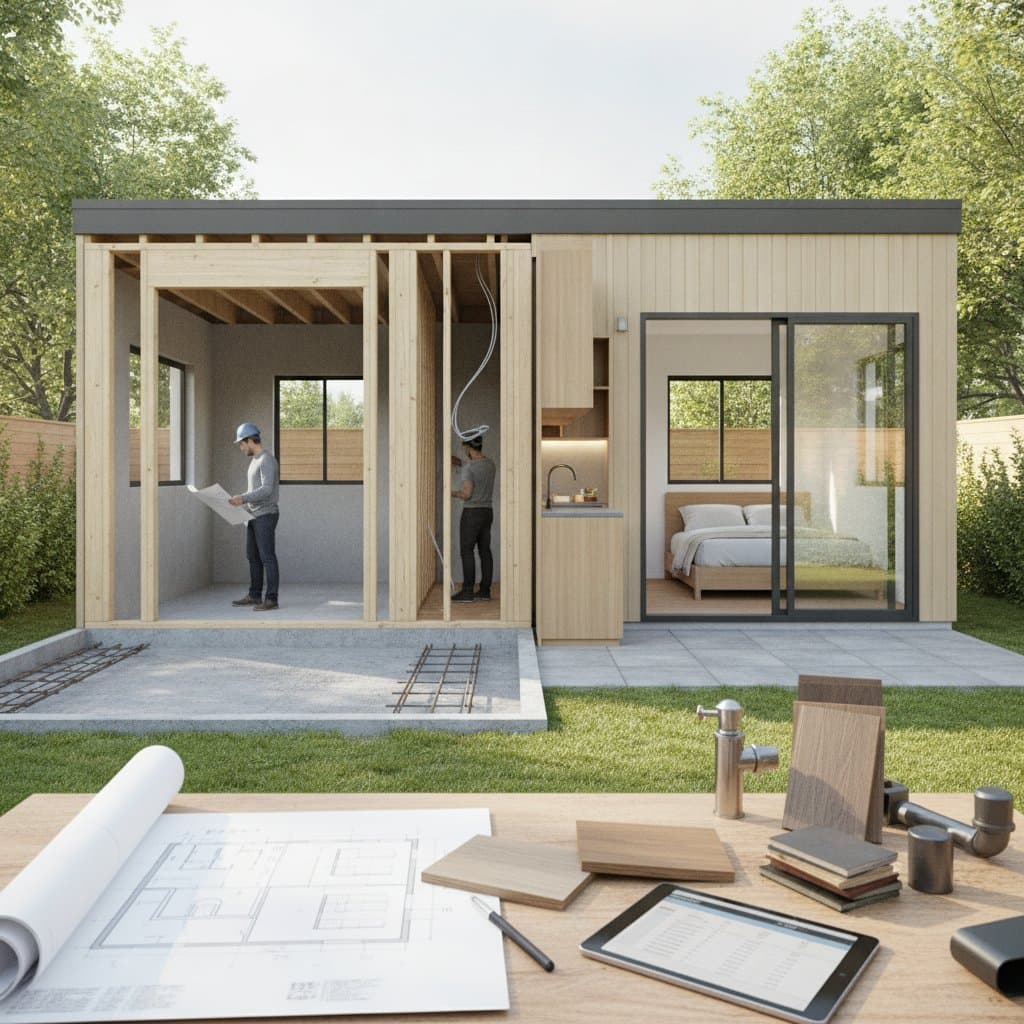
A basic granny pod installation usually includes design coordination, site preparation, foundation work, delivery or framing, utility connections, interior finishes, and final inspections. Labor commonly represents 35 to 50 percent of the total project. A straightforward installation may take several months from planning through occupancy. Complex sites require additional permitting and construction work.
| Project type | Typical cost | Best use |
|---|---|---|
| Small studio pod | $90,000 to $160,000 | Sleeping, bathing, and limited living space |
| Standard one bedroom ADU | $140,000 to $250,000 | Full time family housing |
| Premium accessible cottage | $220,000 to $350,000 or more | Long term care and specialized mobility needs |
A comprehensive package may add architectural drawings, geotechnical testing, landscaping, fencing, a ramp, backup power, and interior accessibility modifications. These additions can raise the budget by 20 to 35 percent. A $12,000 ramp, $8,000 bathroom upgrade, and $15,000 electrical service upgrade can prevent future renovations when planned before construction.
Common add on prices include:
- Permit drawings and engineering, $5,000 to $20,000
- Foundation and excavation, $15,000 to $45,000
- Utility trenching, $5,000 to $30,000
- Accessible bathroom features, $4,000 to $15,000
- Landscaping and walkway work, $3,000 to $18,000
- Mini split heat pump, $4,000 to $10,000
Bundling these tasks with one experienced general contractor may save 5 to 12 percent compared with separate scheduling. The only reliable way to confirm savings is to request an itemized bid showing labor, materials, allowances, and change order terms.
Permits and Zoning Requirements
Permit and zoning approval can determine whether a granny pod is possible on a specific property. Most jurisdictions review setbacks, lot coverage, height, parking, utility capacity, emergency access, and owner occupancy rules. Some areas allow detached ADUs by right. Others require a planning hearing or special approval.
Permit costs often range from $2,000 to $12,000. This excludes architectural and engineering services. Impact fees, sewer connection fees, school fees, and utility upgrades can add another $5,000 to $40,000. Contact the local planning department before purchasing a pod. A manufacturer cannot override local zoning rules. A delivered structure may still require a building permit.
Ask the planning office for written confirmation of allowable size, required setbacks, foundation standards, rental restrictions, and inspection stages. This step can prevent a costly purchase that cannot receive occupancy approval.
Professional Installation Versus DIY
DIY construction may appear less expensive. A complete owner managed project often costs $70,000 to $180,000 after materials, permits, equipment rentals, and specialist labor. A basic material list includes framing lumber, insulation, siding, roofing, windows, plumbing, wiring, drywall, cabinets, fixtures, and appliances. Tools and equipment may add $2,000 to $8,000 through purchases or rentals.
A homeowner with construction experience may save 15 to 25 percent by handling painting, trim, flooring, or landscaping. Electrical, plumbing, foundation, structural, and utility work usually require licensed trades. Mistakes can create $5,000 to $30,000 in rework. They may delay inspections or void manufacturer warranties.
Professional installation provides documented insurance, coordinated inspections, trade scheduling, and workmanship coverage. Get at least three detailed bids. Compare foundation assumptions, utility allowances, permit responsibility, completion standards, and warranty terms rather than choosing the lowest headline price.
Ways to Reduce Granny Pod Costs
Schedule site work during slower construction periods when local contractors may offer discounts of 5 to 15 percent. Ask about weekday access, bundled excavation, and flexible delivery dates. Avoid changing layouts after permits are issued. Revisions can trigger redesign and inspection fees.
Prepare the site by clearing loose debris, marking property boundaries, and gathering utility records. These tasks can save several hundred dollars in labor and reduce delays. Select a standard floor plan, use readily available fixtures, and request firm allowances for cabinets and appliances.
Collect three to five quotes and ask each contractor to price the same drawings. A cash payment discount may be available. Do not surrender progress protections or make large payments before verified work. Keep a contingency reserve of 10 to 15 percent for hidden soil, drainage, and utility conditions.
Market Factors and Property Value
Granny pod prices are usually highest in major metropolitan areas with expensive labor and restricted housing supply. Projects in Los Angeles, San Francisco, Seattle, New York, and Boston can cost 20 to 50 percent more than similar work in smaller Midwestern or Southern markets. Rural locations may have lower labor rates but higher mobilization and utility costs.
Construction material prices, insurance premiums, and skilled labor shortages can change estimates between bidding and installation. Request an expiration date for every quote and confirm whether materials are locked in.
An ADU may improve resale appeal, create rental income, and reduce future relocation expenses. A $1,800 monthly rental estimate produces $21,600 in gross annual income. This figure excludes maintenance, insurance, vacancy, and taxes. Accessibility upgrades can also reduce later remodeling costs and support safer independent living.
Electrical Service Upgrades and Utility Planning
Electrical service upgrades typically cost $5,000 to $20,000 and should be planned with the pod. Sewer or septic improvements range from $5,000 to $30,000 and may require separate approvals. Walkways, ramps, and exterior lighting often cost $3,000 to $20,000 while improving safety and access.
Start with zoning confirmation, a measured site plan, and a realistic utility assessment. Then compare itemized bids from licensed professionals. A well planned granny pod protects your budget, supports comfortable living, and creates a durable backyard housing solution.