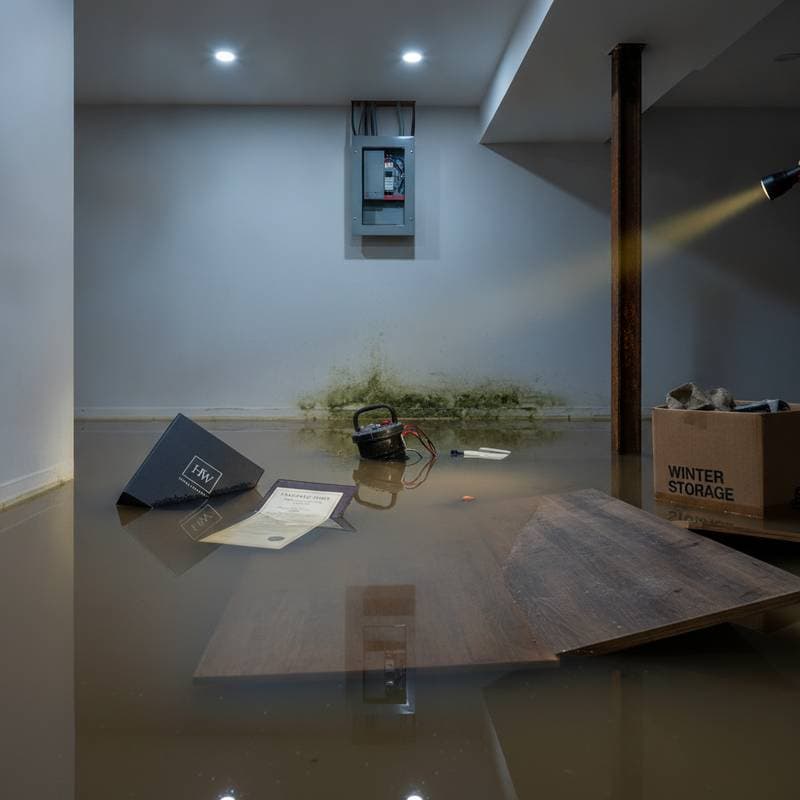
Flooded Basements: What Insurance Will Not Cover
A flooded basement creates immediate stress and financial pressure. Water damage costs range from $1,500 to $10,000 in most cases. Severe situations involving sewage, mold, or structural issues can exceed $15,000. Understanding your coverage options before water enters your home helps you respond quickly and avoid costly surprises.
What Homeowners Insurance Typically Covers
Standard homeowners policies protect against sudden and accidental water damage from internal sources. A burst supply line, failed water heater, or washing machine hose often qualifies for coverage. The policy usually pays for water extraction, drying equipment, and repairs to affected building materials.
Coverage extends to personal belongings damaged by covered water events. Furniture, electronics, and stored items may receive compensation when the water source meets policy requirements. Some policies include additional living expenses if you must relocate during repairs.
Common Insurance Exclusions
Groundwater and surface water flooding fall outside standard homeowners coverage. Rising water from heavy rain, melting snow, or nearby rivers requires separate flood insurance. Seepage through foundation walls or floors also lacks protection under most policies.
Gradual leaks from poor maintenance or wear and tear receive no coverage. A slow drip from an aging pipe that causes damage over months will not trigger a claim payment. Sump pump failures from power outages or mechanical breakdown typically fall outside standard policy language.
Home Warranty Limitations
Home warranties cover mechanical failures of specific systems and appliances. A sump pump breakdown may qualify for repair or replacement under the contract terms. However, the warranty rarely covers water damage that results from the equipment failure.
Warranty service calls focus on the failed component rather than restoration work. The contract usually excludes cleanup costs, drywall replacement, and flooring repairs. Read your warranty documents carefully to understand what triggers coverage and what remains your responsibility.
Cost Breakdown by Damage Type
| Service | Low Estimate | High Estimate | Notes |
|---|---|---|---|
| Water extraction | $500 | $3,000 | Higher costs apply to contaminated water |
| Professional drying | $300 | $1,500 | Equipment rental for multiple days |
| Mold assessment | $300 | $800 | Additional testing increases the price |
| Drywall replacement | $200 | $3,000 | Based on 100 to 500 square feet |
| Flooring replacement | $300 | $12,000 | Material quality affects final cost |
| Sump pump replacement | $500 | $1,500 | Warranty may cover equipment only |
These figures represent national averages. Local labor rates, material costs, and job complexity create significant variations. Your specific situation may fall outside these ranges depending on water depth, contamination level, and basement finishes.
Factors That Increase Repair Costs
Contaminated water from sewage or groundwater requires specialized handling and disposal procedures. Clean water from a supply line costs less to remediate than water containing bacteria or chemicals. The longer water remains in contact with building materials, the more extensive the damage becomes.
Finished basements with drywall, carpet, and insulation absorb water quickly. These materials often require complete removal rather than drying and restoration. Electrical systems near water sources create safety hazards that demand licensed electrician involvement before any cleanup begins.
Immediate Response Steps
Stop the water source if you can safely reach the shutoff valve. Move valuable items to dry areas while avoiding electrical hazards. Document everything with photographs and videos before removing any materials.
Contact your insurance company and home warranty provider within 24 hours of discovering the damage. Request claim numbers and written coverage determinations from each party. This documentation helps prevent disputes about what work each provider will cover.
Choosing Professional Help
Select restoration contractors who carry liability insurance and workers compensation coverage. Request references from recent basement flooding projects and verify their licensing status with local authorities. Compare written estimates that detail every phase of work from extraction through final repairs.
Avoid contractors who pressure you for immediate full payment. A reasonable payment schedule includes a modest deposit, progress payments tied to completed milestones, and final payment after satisfactory inspection. Keep records of all communications and agreements throughout the process.
Documentation Requirements
Maintain detailed records of every expense related to the water damage. Save receipts for equipment rentals, temporary repairs, and professional services. Request written reports from contractors that include moisture readings, equipment specifications, and work completed.
Photograph all damage from multiple angles before cleanup begins. Take additional photos during each phase of restoration work. These images support your claim and provide evidence if coverage disputes arise later.
Prevention Strategies
Test your sump pump monthly by pouring water into the basin until the float switch activates. Clean gutters and extend downspouts at least six feet from the foundation. Inspect visible foundation cracks and seal them promptly with appropriate materials.
Store belongings on shelves or platforms rather than directly on the basement floor. Install a battery backup system for your sump pump if power outages occur frequently in your area. Address musty odors or peeling paint immediately, as these signs often indicate moisture problems developing behind walls.
Long Term Considerations
Complete repairs promptly to protect your home's resale value. Unresolved water damage creates liability concerns for future buyers and may affect property appraisals. Keep all repair documentation organized for at least seven years after work completion.
Review your insurance policy and home warranty contract annually. Coverage terms change over time, and you may need to add endorsements for sewer backup protection or flood coverage. Understanding your specific policy language before problems occur helps you make informed decisions during stressful situations.