Solar Panel Costs and Federal Incentives: What Homeowners Should Know
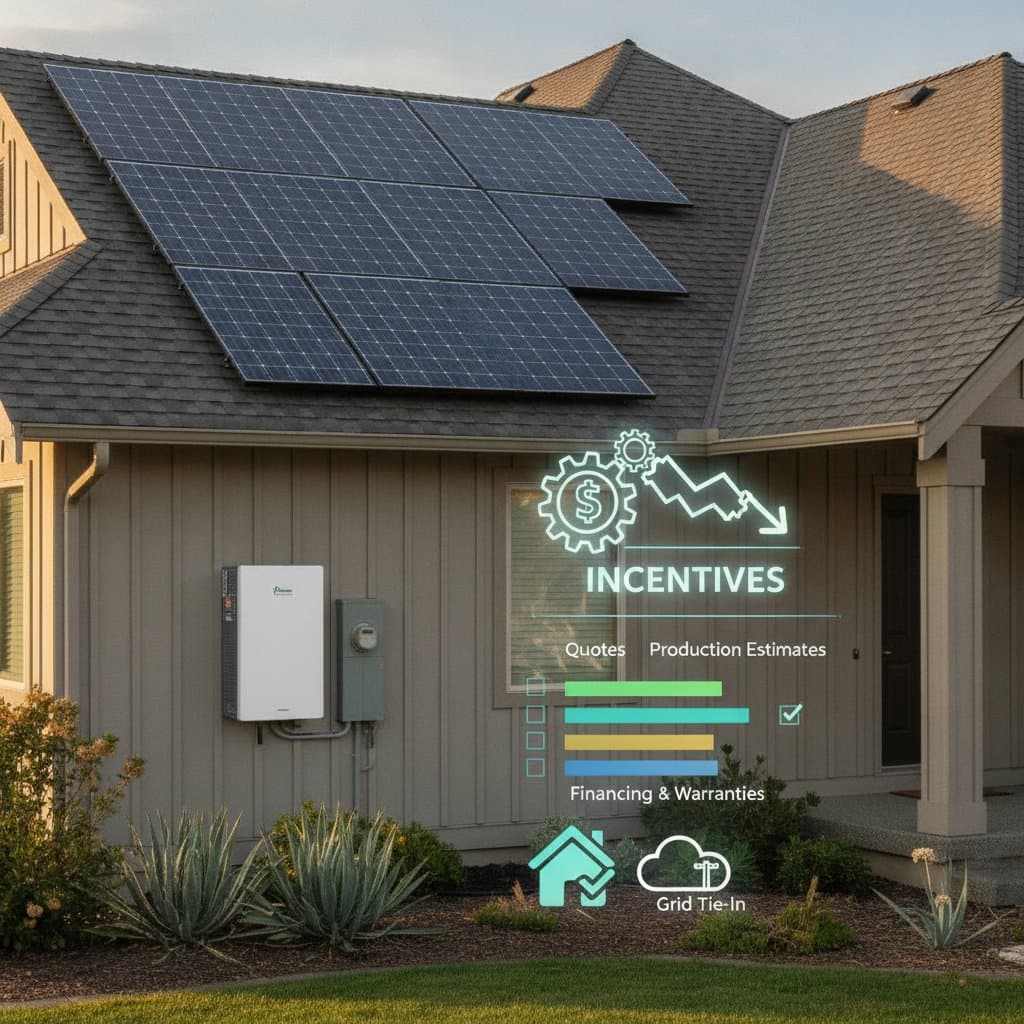
Solar panel prices have fallen, but the amount you pay still depends on system size, roof conditions, local labor, financing, and available federal incentives. A careful comparison can help you lower energy bills without committing to a system that does not fit your home.
Quick Answer
A typical home solar installation costs $15,000 to $30,000 before incentives for a system around 5 to 8 kilowatts. After eligible federal support, the net cost may fall by several thousand dollars. Batteries, electrical upgrades, difficult roofs, and premium panels can raise the price quickly.
Plan for:
- Cost: $15,000 to $30,000 before incentives
- Project time: One to three days for installation, followed by utility approval
- Difficulty: Professional installation recommended
- Main risks: Roof damage, poor savings estimates, financing charges, and changing incentive rules
- Best first step: Collect three detailed quotes using the same system size and equipment quality
Federal incentives can reduce the tax burden for qualified homeowners, but they are not always an instant discount at the point of sale. Confirm eligibility with a tax professional and review current federal guidance before signing a contract.
What Determines Solar Panel Costs
The panel itself is only one part of the project. A contractor also prices the inverter, mounting hardware, wiring, labor, permits, inspections, and utility interconnection.
The biggest cost factors include:
- System size: More panels cost more, though larger systems can reduce the price per watt.
- Roof layout: Simple, south-facing roof planes usually cost less than roofs with several angles, dormers, or obstructions.
- Roof condition: Replace worn shingles before installation. Removing and reinstalling panels later adds cost.
- Electrical service: Older panels may need an electrical upgrade.
- Equipment grade: Premium panels offer strong efficiency and warranties, but standard panels may deliver better value.
- Battery storage: A home battery can add $8,000 to $18,000 before incentives.
- Local labor: Installation prices are higher in areas with expensive permitting, insurance, or skilled labor.
- Financing: Loans can make payments manageable, but dealer fees and interest may add thousands of dollars.
Ask every installer for the total cash price, estimated production, equipment model numbers, warranty terms, and financing fees. A low monthly payment does not prove that a quote is affordable.
Federal Incentives and Eligibility
Federal solar incentives can reduce the cost of an eligible residential system through a tax credit. The credit generally applies to qualified equipment and installation expenses, subject to current federal rules and your personal tax situation.
Eligible costs may include:
- Solar panels
- Inverters
- Mounting equipment
- Wiring and installation labor
- Certain energy storage equipment
- Required preparation directly connected to the solar installation
A tax credit reduces the federal income tax you owe. It does not usually create an automatic cash payment, and it may not exceed your tax liability for the applicable filing period. Unused portions may be subject to carryforward rules, but you should confirm those details with a qualified tax adviser.
Keep your contract, paid invoices, permit records, inspection documents, and equipment details. Avoid relying on a sales representative's verbal promise about eligibility. Federal programs can change, and some advertised benefits may apply only to specific equipment, locations, or ownership arrangements.
State, utility, and local programs may provide extra savings. These can include rebates, property tax treatment, sales tax exemptions, performance payments, and reduced-cost financing. Your utility may also impose limits on export credits or require a new rate agreement.
Solar Options Compared
| Option | Typical cost before incentives | Advantages | Drawbacks |
|---|---|---|---|
| Grid tied solar | $15,000 to $30,000 | Lowest upfront cost, strong bill reduction | Shuts off during a grid outage unless paired with storage |
| Solar with battery | $23,000 to $48,000 | Backup power and greater energy control | Higher cost, battery replacement planning |
| Community solar | $0 to $200 enrollment | No roof work, useful for renters | Savings and availability depend on the local program |
| Solar loan | Varies by lender | Preserves cash for other needs | Interest and dealer fees can reduce savings |
| Cash purchase | Full project price upfront | Lowest long-term financing cost | Requires substantial available funds |
Choose grid tied solar if your priority is lowering regular utility bills. Choose a battery if outages are frequent, export credits are weak, or backup power matters. Community solar may be the better fit for shaded roofs, rental homes, or properties with structural limits.
Estimating Your Payback
A useful estimate starts with annual electricity use, not the number of panels a salesperson suggests. Review at least twelve months of utility bills. Add future loads such as an electric vehicle, heat pump, or induction range.
A 6 kilowatt system may produce roughly 7,000 to 10,000 kilowatt hours annually, depending on roof direction, shading, weather, and local sunlight. Divide the net project cost by estimated annual utility savings to get a simple payback estimate.
Example:
- Gross installation price: $21,000
- Eligible federal reduction: $6,300
- Net cost: $14,700
- Estimated annual bill savings: $1,500
- Simple payback: about ten years
This estimate excludes financing interest, inverter replacement, roof work, and changes in utility rates. It also assumes the system produces what the contractor predicts. Request a production model that accounts for shading and panel orientation.
Solar can improve resale appeal, but owned systems are usually easier to explain to buyers than leased systems or power purchase agreements. If you may move, ask how the contract transfers and whether a buyer must qualify for financing.
Installation Timeline and Order of Operations
A typical project follows this sequence:
- Review utility bills and inspect the roof.
- Get three itemized proposals.
- Confirm equipment, warranties, ownership, and incentive assumptions.
- Sign the contract and complete site measurements.
- Submit permits and utility interconnection documents.
- Install roof attachments, racking, panels, wiring, and inverter.
- Complete municipal inspection.
- Receive utility permission to operate.
- Monitor production and save project records.
The physical installation may take one to three days. Permits and utility approval can take several weeks or longer in busy jurisdictions. Do not assume the system is ready to operate when the crew leaves. Ask for written confirmation before turning on the equipment.
DIY Versus Professional Installation
Solar installation is not a good beginner project. Panels produce electricity whenever exposed to light, and roof work introduces fall hazards. A licensed contractor should handle electrical connections, structural attachments, utility interconnection, and code compliance.
A limited DIY role can include:
- Gathering utility bills
- Trimming minor shade sources when safe
- Checking attic access
- Comparing equipment warranties
- Preparing permit information requested by the contractor
- Monitoring production after commissioning
Hire licensed professionals for roof work, panel upgrades, structural repairs, gas equipment relocation, and any work involving live electrical equipment. Never drill into a roof without confirming rafter locations, flashing details, and water management. Follow local requirements for fall protection, lockout procedures, and personal protective equipment.
Materials and Questions for Installers
A complete solar system commonly includes:
- Monocrystalline solar panels
- String or microinverters
- Aluminum racking
- Roof flashing and sealants
- Electrical conduit
- Disconnects and labels
- Monitoring hardware
- Optional battery storage
Ask these questions before choosing a contractor:
- What is the projected annual production?
- Which panels, inverters, and racking will you install?
- Who handles permits and utility approval?
- What roof repairs are excluded?
- What workmanship warranty applies?
- What happens if the system produces less than projected?
- Are financing fees included in the cash price?
- Who owns renewable energy credits?
- How does a battery operate during an outage?
- What are the cancellation and transfer terms?
Avoid quotes that hide the system size, production estimate, or total financing cost.
Maintenance, Care, and Lifespan
Solar panels need little routine care, but they are not maintenance free. Inspect the monitoring app monthly for sudden production drops. Keep nearby trees trimmed without creating unsafe ladder work. Have a professional check roof penetrations if you see leaks, loose flashing, or staining in the attic.
Panels commonly carry performance warranties lasting decades, while inverters may need replacement sooner. Batteries have their own capacity and cycle warranties. Keep records for all repairs and warranty claims.
Cleaning is often unnecessary in areas with regular rain. Dust, pollen, bird droppings, and snow can reduce output in some climates. Follow the manufacturer's cleaning instructions. Do not walk on panels or use abrasive tools.
Next Steps for Homeowners
Start by gathering twelve months of utility bills and noting any planned additions such as an electric vehicle or heat pump. Request three detailed quotes that list equipment models, production estimates, and all financing fees. Verify roof condition and electrical service capacity before signing any contract. Keep all paperwork, including permits and inspection records, for tax credit documentation and future resale needs.