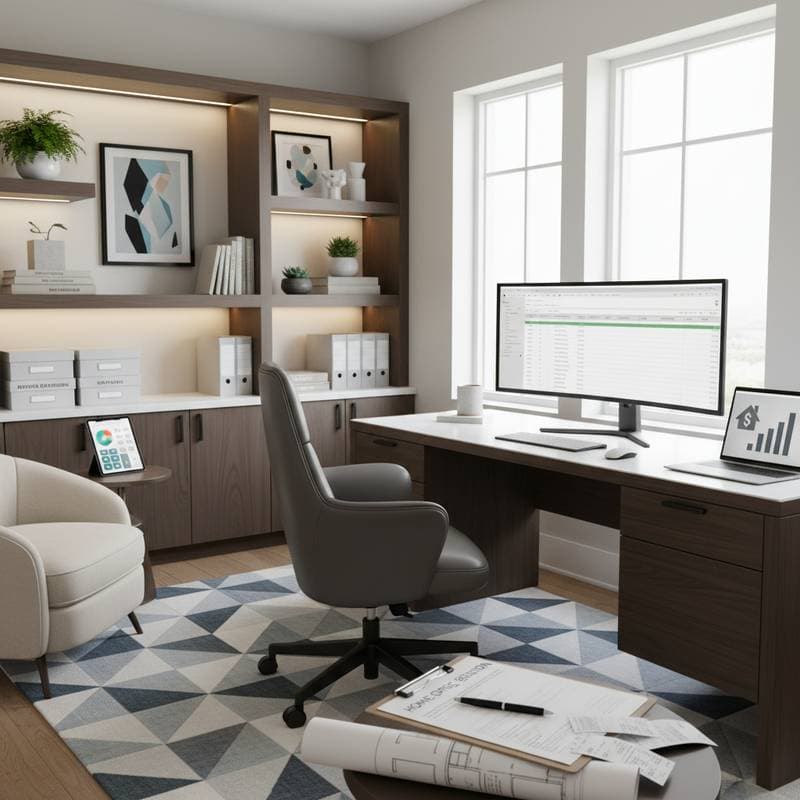
Step 1: Establish the Dedicated Workspace
Begin by precisely measuring the square footage of the home office area. Calculate the business-use percentage by dividing this measurement by the total square footage of the entire home. This percentage forms the foundation for allocating deductible expenses accurately.
Step 2: Record All Remodeling Expenditures
Collect and organize receipts for every element of the project, including materials, labor charges, permit fees, and professional design consultations. Categorize each expense as direct or indirect to ensure proper treatment.
- Direct costs pertain exclusively to the office space, such as specialized flooring installations or targeted painting applications.
- Indirect costs benefit the broader home structure, like comprehensive roof repairs or central HVAC system enhancements, and qualify only proportionally.
Step 3: Identify Qualifying Expenses
Routine repairs that preserve the functionality of the office space qualify for full deduction in the year incurred. Capital improvements that increase the property's value, such as custom built-in cabinetry or energy-efficient window replacements, require depreciation over an extended period. For upgrades serving mixed purposes, allocate costs based on the business-use ratio to maximize eligible portions.
Step 4: Select the Appropriate Calculation Method
Taxpayers have two primary options for computing the home office deduction: the simplified method or the actual expense method.
- Simplified method: Apply a fixed deduction rate per square foot of qualifying office space, capped at a reasonable maximum to streamline the process.
- Actual expense method: Deduct the business percentage of verifiable costs, encompassing utilities, property insurance, mortgage interest, and depreciation on the office portion.
Consider factors like total expenses and recordkeeping capacity when choosing; the actual method often yields higher deductions for substantial remodels.
Step 5: Substantiate Exclusive Business Use
Document the space's dedication to business through timestamped photographs, detailed invoices, and logs of work hours spent in the area. This evidence strengthens your position against potential IRS inquiries and confirms compliance with exclusivity requirements.
Step 6: Prepare and Submit Your Return
Incorporate the calculated deduction into the relevant section of your tax form, depending on whether you file as a sole proprietor, partnership, or corporation. Review IRS Publication 587 for specifics, or engage a licensed tax professional to verify accuracy and completeness.
Step 7: Maintain Long-Term Records
Archive all receipts, photographs, and supporting documents for at least three to seven years, aligning with IRS audit statutes. A robust documentation system safeguards your deductions and simplifies any future reviews.
DIY Projects Versus Professional Services
Suitable for DIY Efforts:
- Applying fresh coats of paint to walls and ceilings.
- Mounting shelving units or organizational systems.
- Updating light fixtures for improved illumination.
- Laying basic flooring materials like laminate or carpet tiles.
Circumstances Requiring Professional Expertise:
- Relocating electrical circuits, outlets, or wiring configurations.
- Installing new windows or altering HVAC ductwork and vents.
- Modifying load-bearing walls or enhancing insulation layers.
- Fabricating custom cabinetry or integrated built-in features.
Key Advantages of Hiring Professionals:
Certified contractors secure necessary permits, adhere to local building codes, and guarantee safe installations for electrical and ventilation systems. These measures not only promote occupant safety but also bolster the deductibility of expenses by demonstrating compliance with regulatory standards.
Alternative Workspace Configurations
Option A: Repurposing a Detached Garage
This approach suits scenarios demanding high privacy or frequent client interactions. Deduct the business portion of conversion costs if the space remains exclusively for professional use. Note the elevated initial outlay for insulation, electrical setups, and permitting processes.
Option B: Installing a Garden Office Shed
Ideal for solo entrepreneurs seeking clear separation from living areas. Prefabricated or modular sheds qualify for deductions when dedicated solely to business operations. Limitations include constrained interior dimensions and possible local zoning hurdles.
Option C: Creating an Interior Partitioned Area
A practical choice for renters or condominium residents. Designate a section of an existing room using room dividers or temporary walls, with deductions applying only to the partitioned zone. Challenges involve reduced acoustic privacy and potential distractions from household noise.
Preparation Checklist
- Accurately measure the office square footage and compute the business-use percentage.
- Implement a systematic expense tracking mechanism.
- Categorize costs as direct or indirect based on usage.
- Capture comprehensive before-and-after photographic evidence.
- Secure and organize all purchase receipts and invoices.
- Decide on the simplified or actual expense calculation method.
- Schedule a consultation with a tax professional for intricate scenarios.
Implementing Your Remodel Strategically
A thoughtfully executed home office remodel serves dual purposes: elevating daily comfort and optimizing tax outcomes. Success hinges on proving exclusive business use through unwavering documentation practices. This foundation unlocks deductions that meaningfully reduce taxable income.
Outline a precise workspace boundary and establish a realistic budget from the outset. Systematically segregate business-specific improvements from personal endeavors, treating each expense with fiscal precision. View the project as an investment that bolsters both professional output and economic well-being.
For guidance on regional building regulations or nuanced tax provisions, retain a licensed contractor and certified tax advisor. Their expertise ensures adherence to codes and structures the remodel to deliver the greatest fiscal impact.
Ultimately, a meticulously documented home office transformation yields tax savings, fosters a more effective work environment, and appreciates the property's enduring value. Proceed methodically, prioritize planning, and cultivate a professional haven that generates tangible returns.