How Much Does a Home Greywater System Cost? Complete Pricing Guide
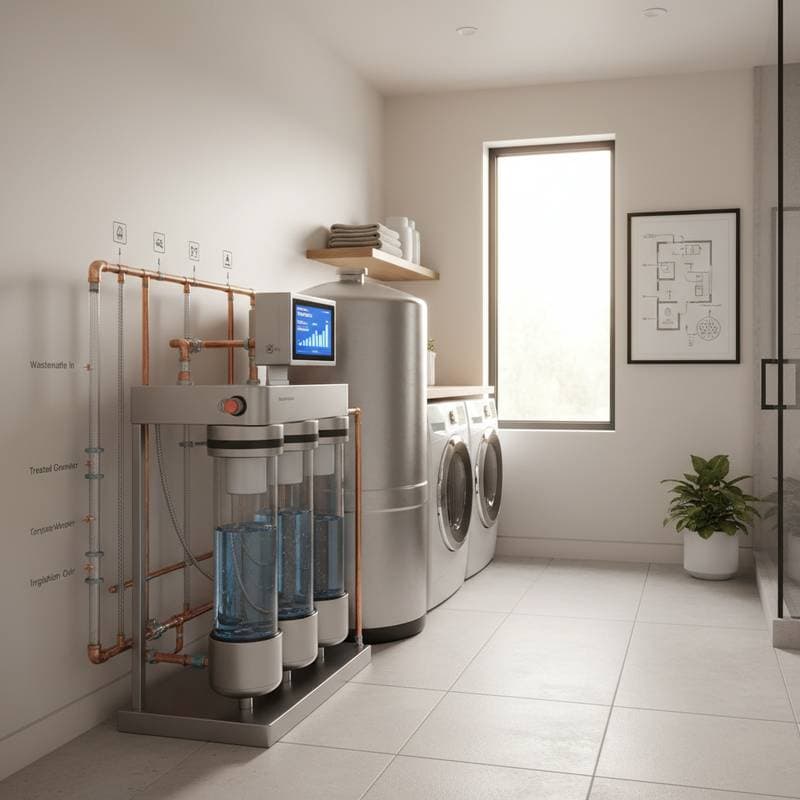
Greywater systems recycle water from sinks, showers, and laundry for landscape irrigation or toilet flushing. Professional installation for a typical single family home costs between $2,800 and $9,500. Most homeowners pay around $5,600 for a complete setup.
Three main factors shape the final price. These include system size, filtration complexity, and local permit rules. Regional plumbing codes and soil conditions also affect totals.
Properly maintained systems reduce outdoor water use by up to 40 percent. This efficiency supports drought resilience and can raise property value in areas with water restrictions.
Detailed Cost Breakdown
Pricing depends on installation scale and filtration level. Basic laundry to landscape systems begin near $1,200. Whole home gravity fed systems range from $3,000 to $7,000. Advanced pumped and filtered setups that serve multiple zones reach $9,500 or higher.
Primary Pricing Structure
Installers charge $20 to $40 per linear foot of piping. Filtration units add $400 to $1,200. Minimum service charges start near $500 and cover site assessments plus design. Nationally the 25th percentile cost sits near $3,000, the median near $5,600, and the 75th percentile approaches $8,000.
Regional differences appear quickly. Homes in arid western states average 15 percent higher costs because of stricter codes and soil testing. Coastal regions often see lower expenses due to simpler infiltration designs.
Size and Scope Factor
System scale drives most price changes. A small single zone laundry system costs $1,200 to $2,000. A two bathroom one laundry configuration reaches $4,500 to $6,000. Each added bathroom adds $800 to $1,200. Properties over 3,000 square feet run from $7,000 to $9,500.
Real examples illustrate the range. A 2,400 square foot home with a gravity fed system averaged $5,200. A custom property with pressurized filtration and automated controls reached $9,000.
Material and Quality Tiers
Entry level systems use PVC piping, simple valves, and mesh filters. They cost $1,200 to $3,500 and need manual maintenance every few months.
Mid range systems add polyethylene tanks and automated diverters. Kits from established suppliers fall between $3,500 and $6,500.
Premium systems include stainless steel parts, UV disinfection, and smart controllers. These run $7,000 to $9,500 and carry warranties up to 10 years.
Complexity Variables
Access limits, soil type, and retrofit needs create price swings. Limited plumbing access adds $500 to $1,000 in labor. Rocky soil or concrete trenching adds $800 to $1,500. Permits and inspections average $200 to $400. Engineered drawings cost $300 to $600 when required.
Service Types and Comprehensive Pricing
Basic or Standard Service Package
A basic package covers site inspection, piping from laundry and bath sources, a manual diverter valve, and basic filtration. These projects take one to two days and cost $2,800 to $4,800. Labor makes up 40 percent of the total.
Premium or Comprehensive Service
Premium packages add advanced filtration, pressure pumps, UV units, and smart irrigation controls. Totals range from $6,500 to $9,500. Homeowners often recover costs through lower water bills and rebates within five to seven years in dry regions.
Add on Services Matrix
- Greywater holding tank: $400 to $800
- UV sterilization module: $600 to $1,200
- Smart irrigation controller: $200 to $600
- Annual maintenance plan: $150 to $300
Bundling upgrades saves 10 to 15 percent. Off peak scheduling trims labor by another 5 percent.
Professional vs DIY Analysis
DIY Cost Breakdown
A basic kit costs $500 to $1,000. Piping, valves, and fittings add $190. Tool rental adds $150. At 12 to 20 hours of work the total value lands near $1,200 to $1,600. Hidden costs arise from leaks or code issues that require later fixes.
Professional Advantages
Licensed installers supply design expertise, warranty coverage, and code compliance. They finish in half the time and include testing plus calibration. The insurance value of professional work often exceeds $1,000.
Decision Framework
Choose DIY only when local code permits homeowner work, connections are accessible, and prior plumbing experience exists. Select professional installation for multiple sources, complex filtration, or irrigation integration.
Actionable Cost Saving Strategies
Timing Optimization
Contractors offer 10 to 20 percent lower rates in late winter and early spring. Weekday scheduling saves up to 5 percent.
Smart Shopping Tactics
Obtain three quotes from licensed installers. Comparing proposals cuts total cost by 12 percent on average. Sourcing pipe and fittings directly from supply houses trims expenses by 8 percent.
Preparation Actions
Clear work areas and mark irrigation zones ahead of time. Each step reduces labor by one to two hours and saves $100 to $200.
Market Dynamics and Considerations
Geographic Variations
Major metro areas such as Los Angeles and Phoenix run 20 percent above national averages due to drought rules. Rural sites face higher delivery charges but lower labor rates.
Value Indicators
Efficient systems cut annual water bills by $300 to $700. They can raise resale value by 3 to 5 percent according to building industry benchmarks.
Related Services Ecosystem
Rainwater harvesting systems range from $2,000 to $6,000 and pair well with greywater setups. Low flow fixture installation averages $150 to $300 per fixture and extends system life.
Planning Your Installation
Select the correct system size, secure permits, and schedule regular filter maintenance. Thoughtful design and steady upkeep allow a greywater system to run efficiently for more than a decade while delivering water savings and added property value.