HVAC Maintenance vs Home Warranties: Which Saves More?
Homeowners often face a decision when managing HVAC costs. They must choose between a maintenance plan with regular tune-ups or a home warranty that covers unexpected breakdowns. The right choice depends on system age, risk tolerance, and length of home ownership.
This guide examines coverage details, costs, and long-term value for each option.
Coverage Details for Each Option
HVAC maintenance plans operate as service contracts with local contractors. They provide scheduled inspections, filter changes, coil cleaning, refrigerant checks, and minor adjustments. Homeowners pay an annual fee and receive priority service during issues.
Home warranties function as broader contracts through third-party providers. They cover repair or replacement for major systems including HVAC, plumbing, and appliances after normal-use failures. Policyholders pay premiums plus a service fee per claim.
Advantages, Limitations, and Ideal Situations
Maintenance plans deliver consistent efficiency gains and fewer unexpected failures. They extend equipment life and support safe operation. These plans suit newer systems where owners seek predictable performance and reduced operating expenses over time.
Home warranties offset large repair expenses and cover multiple systems at once. They help with budget planning for older equipment. Such policies fit owners who cannot handle major costs or landlords overseeing several properties.
Cost Ranges and Influencing Factors
| Scope Item | Material Cost Range | Labor Cost Range | Total Range | Notes on Drivers |
|---|---|---|---|---|
| Annual HVAC Maintenance Plan | $150 - $300 | Included | $150 - $300 | Price varies by system size and region |
| Home Warranty (Whole Home) | $450 - $900 | Service fees $75 - $150 per claim | $525 - $1,050 | Cost rises with add-ons and older equipment |
| Major HVAC Repair (Without Coverage) | $400 - $1,500 | $300 - $1,200 | $700 - $2,700 | Depends on part type, refrigerant, and access |
Three main factors drive costs. Higher-efficiency systems require more expensive service. Complex installations in attics or crawl spaces increase labor time. Limited access in multi-story homes adds further expense.
Maintenance Plan Routine
Schedule tune-ups before each heating and cooling season. A technician inspects refrigerant pressure, voltage, drain lines, coils, and filters. Minor issues receive attention before they escalate. Service reports remain on file to support any manufacturer warranty requirements.
Home Warranty Claim Process
Contact the warranty provider when failure occurs. An assigned contractor performs an inspection. The homeowner pays the service fee. The company then approves or denies the claim according to policy terms.
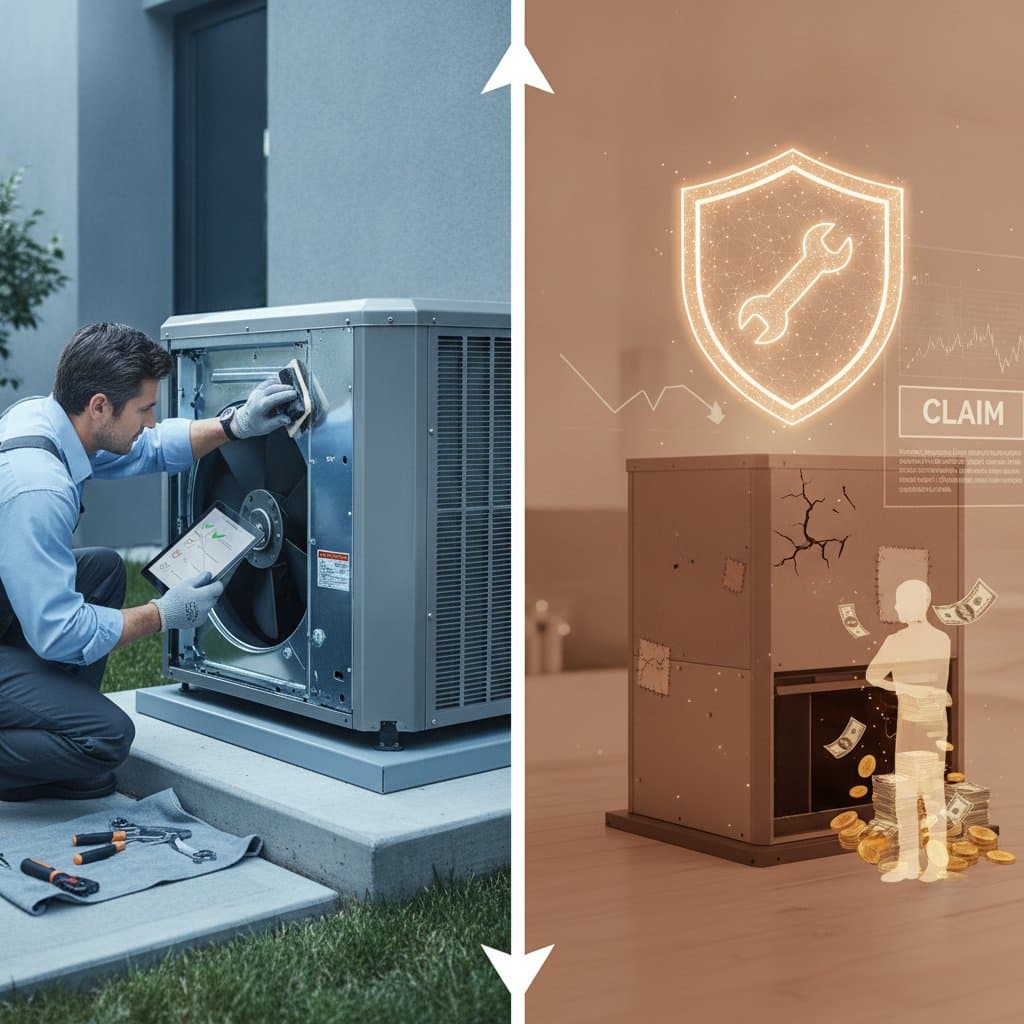
A maintenance plan emphasizes prevention. A warranty provides reaction after failure. The two rarely apply together for the same issue.
Safety Standards and Code Requirements
All HVAC work must meet electrical and refrigerant safety rules. Power must remain off at the disconnect during inspection. Technicians need EPA Section 608 certification for refrigerant handling. Some municipalities require permits for compressor or coil replacement. Missed maintenance can void manufacturer coverage on key components.
Errors That Reduce Protection
- Skip filter changes between professional visits.
- Assume a warranty covers results of neglected maintenance.
- Overlook refrigerant leaks that harm compressors.
- Use unlicensed technicians on warranty-covered work.
- Fail to retain service records.
Equipment Longevity and Performance Gains
Properly maintained systems reach 15 to 20 years of service. Neglected units often fail much sooner. Clean coils and balanced airflow cut energy use by up to 15 percent. Confirm each visit covers both indoor and outdoor components.
Recommended Service Intervals
- Perform the first inspection six months after installation.
- Complete tune-ups ahead of each seasonal change.
- Conduct an annual review of refrigerant levels, electrical connections, and duct pressure.
- Evaluate replacement once repair costs exceed 40 percent of a new installation.
Tasks for Homeowners Versus Professionals
Homeowners can replace filters, verify thermostat settings, and rinse outdoor fins. Refrigerant work, electrical diagnostics, and duct balancing require licensed technicians. Opening sealed parts or incorrect wiring risks injury and voids coverage. Follow all manufacturer safety instructions.
Side-by-Side Feature Comparison
| Feature | Maintenance Plan | Home Warranty |
|---|---|---|
| Coverage Type | Preventive care | Repair or replacement |
| Annual Cost | $150 - $300 | $450 - $900 |
| Response Time | Same-day or next-day | 2 to 5 days |
| Included Systems | HVAC only | Multiple systems |
| Claim Fees | None | $75 - $150 per call |
| Long-Term Savings | High efficiency | Protection from large bills |
Protection Steps for Homeowners
Select a plan that matches system age and budget. Keep records of every service visit. Address small issues promptly to avoid larger failures. Review policy exclusions before purchase.
System Protection Outcomes
Regular maintenance reduces energy costs and extends equipment life. It also preserves eligibility for manufacturer warranties. Homeowners gain reliable comfort and fewer emergency expenses over time.