What Are the Installation Costs for Granny Pods in 2026?
Granny pods, often called accessory dwelling units or backyard cottages, enable aging family members to maintain independence while remaining close to loved ones. These small homes feature essential amenities like bedrooms, bathrooms, and kitchenettes, blending comfort with accessibility. However, the path to installation involves navigating varied costs, local regulations, and ongoing responsibilities. Families benefit from a thorough cost analysis to avoid surprises and secure a worthwhile investment.
What Is a Granny Pod?
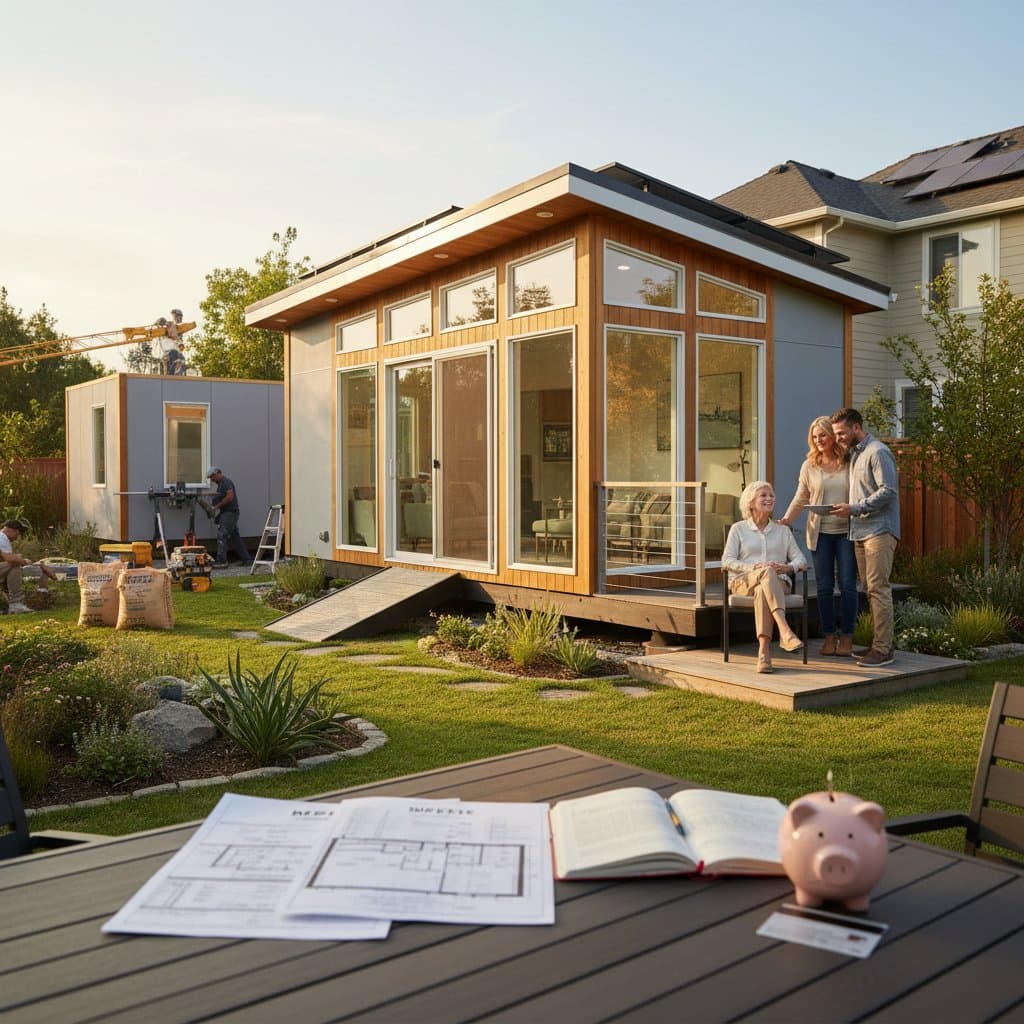
A granny pod consists of a compact, self-sufficient living space situated in the backyard of a primary residence. It typically encompasses a bedroom, full bathroom, compact kitchen, and living area. Options range from prefabricated modules delivered ready-to-install to site-built structures tailored to specific needs. The process covers site evaluation, foundation work, utility integrations, and adherence to building standards, all influencing the final price and durability.
Breaking Down the Cost Components
Installation expenses for granny pods fluctuate based on unit size, building materials, and property specifics. Focus on a comprehensive breakdown instead of surface-level quotes to grasp the true investment. Key areas encompass the core unit, preparatory work, connections, and refinements.
The base unit price covers the structure itself. Prefabricated versions suit studios or single-room setups, starting affordably. Custom options incorporate design consultations and premium materials, elevating the overall outlay.
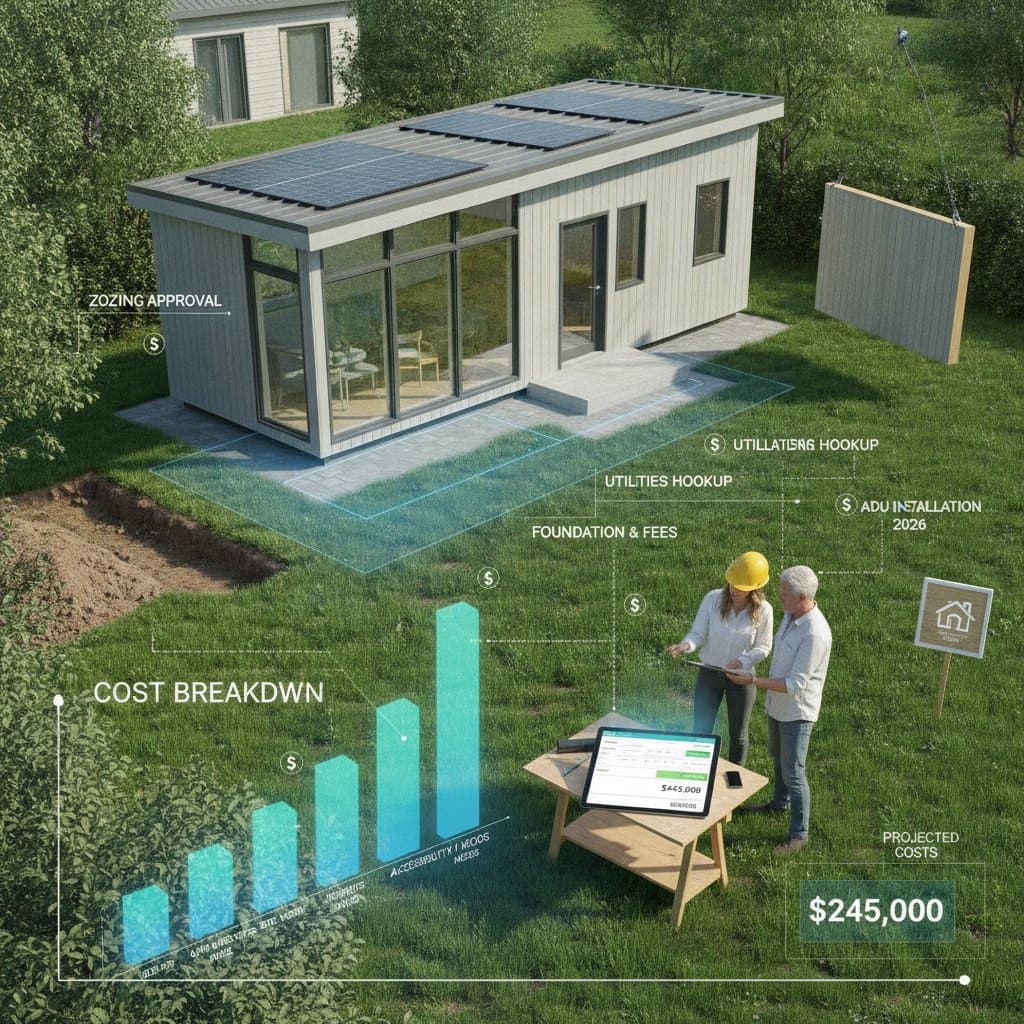
Site preparation often incurs extra fees. Tasks such as excavating, leveling ground, and laying foundations can add significant amounts, particularly on uneven terrain. Separate charges apply for linking plumbing and electricity to the existing home, while permit costs vary by local rules and project scope.
Warranties from builders protect against defects, typically spanning one year for labor and longer for the frame. Verify inclusions to understand protection levels. Out-of-pocket items might involve restoring landscaping, modifying driveways, or adding ramps for easier access, which enhance usability but fall outside standard bids.
Over time, expect rises in utility bills, upkeep, insurance premiums, and property taxes. The added square footage boosts the home's assessed value, leading to higher annual obligations.
Cost Ranges and Comparisons
Market data from contractors and manufacturers reveal distinct pricing tiers for 2026 installations. The table below outlines averages, factoring in unit price, basic setup, and standard utilities.
| Tier | Total Cost Range | Size Limit | Included Features | Notable Exclusions |
|---|---|---|---|---|
| Basic | $80,000 - $120,000 | Up to 400 sq. ft. | Prefab unit, standard hookups | Custom designs, advanced accessibility |
| Mid-Range | $120,000 - $180,000 | Up to 600 sq. ft. | Enhanced materials, basic ramps | Extensive site grading, premium appliances |
| Premium | $180,000 - $250,000 | Up to 800 sq. ft. | Full custom build, integrated smart tech | Landscaping, extended utility runs |
Prefabs keep costs lower through factory efficiency, whereas bespoke builds with accessibility elements push toward the upper limits. These estimates exclude design fees or optional warranties.
The Installation Process Step by Step
Homeowners gain control by tracking the installation phases, which proceed in a structured manner.
- Consultation: Discuss preferences, site details, and budgets with a builder or supplier.
- Site Evaluation: Inspect soil, access paths, and utilities to forecast prep needs and timelines.
- Permitting: Submit plans to authorities for approval, addressing any zoning or distance rules that could cause delays.
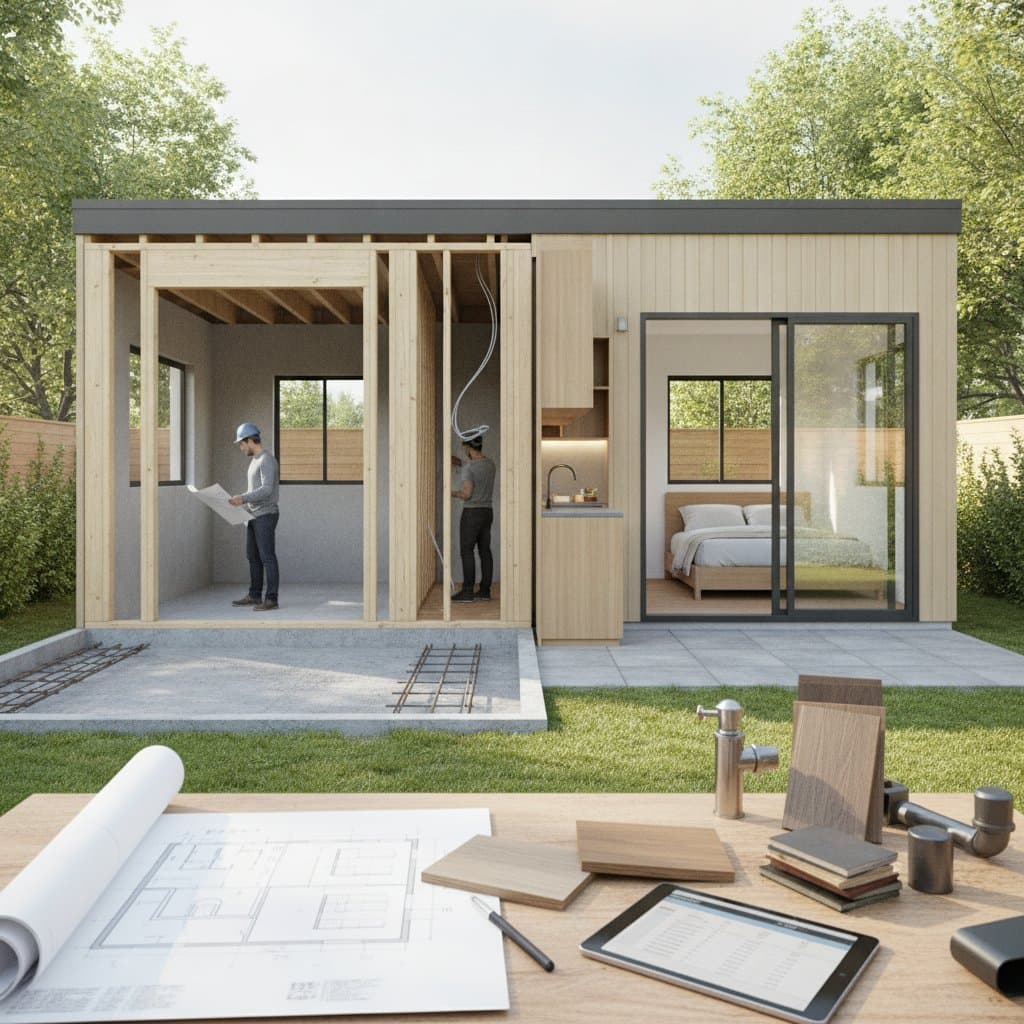
- Construction Phase: Prepare the foundation, position the unit, integrate systems, and weatherproof the setup.
- Final Checks: Undergo inspections for compliance, followed by optional post-install reviews to uphold warranty terms.
Monitoring these steps minimizes errors and flags potential cost overruns early.
Common Exclusions and Limitations
Quotes often overlook certain elements, leading to unexpected bills. Watch for these typical omissions:
- Utility lines exceeding short distances from the main house
- Soil treatments for unstable or poorly drained areas
- Clearing vegetation or repairing yard damage post-build
- Tailored features like spaces for medical devices
- Additional permit filings due to regulatory changes
For example, a lengthy sewer extension might tack on $5,000 or more. Request full disclosures upfront.
Long-Term Financial Considerations
Ownership costs surpass the initial build. The unit may enhance property worth, yet it elevates taxes and insurance needs, possibly as a distinct policy. Utilities increase with separate heating, lighting, and water demands.
Weigh this against alternatives like area rentals. In high-rent zones, the pod recoups value quickly; elsewhere, escalating taxes could offset gains. Explore funding through home equity, personal financing, or dedicated ADU loans, each demanding permits and contracts for approval.
How to Choose the Right Option
Select prefab for speed and savings on suitable sites, or custom for precise adaptations on challenging lots. Consider these factors:
- Property layout: Even ground suits modules; slopes demand reinforced bases.
- Feature priorities: Standard prefabs deliver basics; builds allow personalization.
- Protection details: Check warranty durations and service inclusions.
- Future sales: Highlight the unit's appeal while noting upkeep.
- Ongoing expenses: Project energy, coverage, and tax shifts.
Steps to Sidestep Costly Mistakes
- Insist on itemized, written quotes covering all phases.
- Confirm builder credentials, including licenses and bonds.
- Consult officials on permits prior to commitments.
- Scrutinize warranty language for clarity.
- Set aside 10-15% of the budget for surprises.
Securing Lasting Value from Your Granny Pod
This investment supports family bonds through thoughtful planning and execution. By prioritizing detailed estimates, vetted professionals, and proactive care, families create a secure, efficient space that delivers enduring benefits.