How Much Does a Greywater System Cost? Pricing Guide
Greywater systems convert household wastewater into a valuable resource for garden irrigation and decrease reliance on municipal water supplies. Professional installation of these systems ranges from $2,800 to $8,500, with the average homeowner spending approximately $5,200 on a standard configuration that handles water from bathroom sinks, showers, and laundry drains.
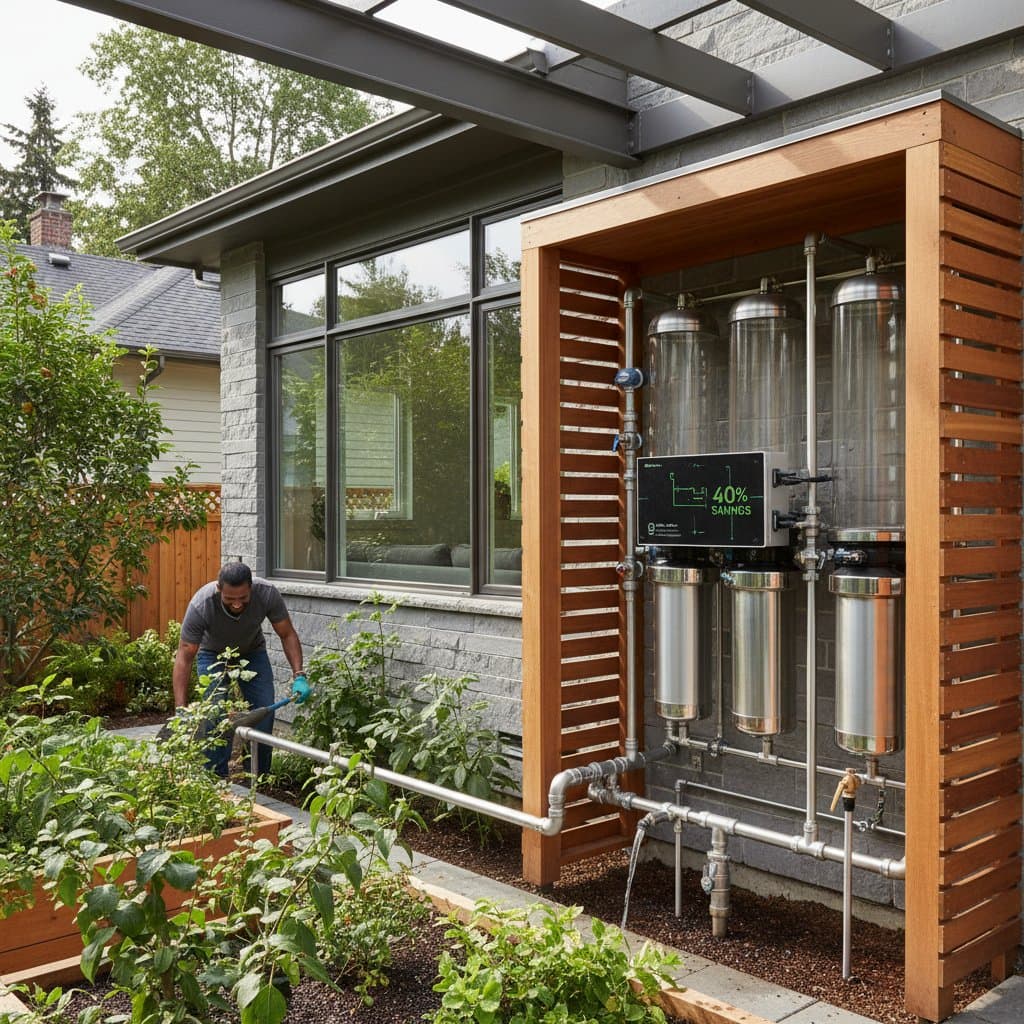
Three primary factors shape the total expense: system size, filtration quality, and permit requirements. Larger setups with robust pumps and sophisticated filtration increase both material and labor costs, while permit fees and adherence to local codes affect the overall budget. When installed correctly, greywater systems lower outdoor water consumption by up to 40 percent, as reported by the Water Research Foundation. Homeowners benefit from reduced utility bills and contribute to sustainable water practices. Selecting an appropriate system and securing necessary permits guarantees reliability, durability, and regulatory compliance.
Detailed Cost Breakdown
Pricing for greywater systems often depends on the number of collection points or daily gallon capacity. Basic residential units that gather water from a bathroom sink or laundry machine range from $1,800 to $3,000. Mid-range options collecting from several sources typically cost $4,000 to $6,000, whereas advanced systems with filtration, pumps, and irrigation controls extend to $8,000 to $10,000.
Licensed installers usually impose a minimum fee of $500, which covers initial site assessments and planning. The national average holds at $5,200, with projects at the 25th percentile around $3,000, median installations at $5,000, and those at the 75th percentile nearing $7,800.
Size and Scope
The extent of the system significantly impacts expenses. A straightforward laundry-to-landscape setup installs for about $2,000. Incorporating lines from bathroom sinks and showers adds $1,000 to $2,500, accounting for extra plumbing and diverter valves. Expanding capacity by 100 gallons per day increases costs by roughly $200.
Consider a 300-gallon system with dual filtration: such a project totals around $5,600. A 600-gallon version for a spacious property might surpass $8,000. Data from the Greywater Action Network indicates that each additional source point boosts material needs by about 20 percent, underscoring the value of precise planning to match household output.
Material and Quality Tiers
Entry-level systems rely on manual diverter valves and gravity-fed lines. These options price between $1,500 and $2,800, require little upkeep, yet provide no filtration for delicate plants.
Mid-range systems incorporate mechanical filters, compact pumps, and automated controls for irrigation. Models from Oasis Design and Aqua2use fall in the $3,500 to $5,500 range, delivering reliable operation for typical homes. These setups balance cost and functionality, allowing water diversion during peak usage times.
Premium systems equip smart sensors, UV sterilization, and efficient pumps from manufacturers like ReWater or Water Wise Home, costing $6,500 to $9,000. They include extended warranties, support for multiple irrigation zones, and superior recovery rates, often recouping costs within five years in areas with elevated water rates. For households with diverse landscaping, these features enhance water distribution precision.
Complexity and Variables
Site accessibility and current plumbing layout affect installation challenges. Properties with slab foundations or restricted crawl spaces incur extra labor fees of $800 to $1,200. Modifications to satisfy plumbing codes or addition of backflow prevention devices contribute $300 to $600.
Geographic variations play a role too. Urban coastal regions command 15 to 25 percent higher labor rates than rural locales. In states with permissive regulations, streamlined permitting processes can shave nearly $1,000 off totals, as shared by homeowners on platforms like Reddit.
Service Types and Comprehensive Pricing
Basic Greywater Installation
Standard packages encompass design consultations, connections from one or two sources, fundamental filtration, and irrigation pathways. Labor spans one to two days for modest homes. Total costs fall between $2,800 and $4,500, providing strong returns for users with limited recycling needs or compact yards. This approach fits properties where drain lines remain easily reachable.
Premium or Comprehensive System
Full-scale installations feature automated pumps, multi-zone delivery, UV treatment, and smart controllers. Prices range from $6,500 to $9,500, with labor extending to three or four days. Although the initial outlay proves greater, these systems slash outdoor water expenses by 40 to 60 percent each year. They prove ideal for expansive gardens or regions enforcing water conservation mandates, yielding substantial long-term efficiencies.
Add-on Services Matrix
| Add-On Service | Cost Range | Savings or Benefit |
|---|---|---|
| Permit and Inspection Management | $200 - $600 | Ensures compliance and prevents rework |
| Smart Controller Integration | $400 - $900 | Optimizes irrigation automatically |
| Filtration Upgrade | $300 - $700 | Extends system lifespan |
| Annual Maintenance Plan | $150 - $300 | Keeps performance consistent |
Coordinating design and installation with one contractor yields up to 10 percent savings over piecemeal approaches. Directories such as HomeAdvisor and Angi connect users with certified professionals offering off-season promotions.
Professional vs. DIY Installation
DIY Cost Breakdown
Those inclined toward self-installation can purchase kits from Aqua2use or GreyFlow for $800 to $1,500. Supplementary items like PVC pipes, valves, and fittings add $300 to $600. Tool rentals for trenching or drilling contribute about $150 daily. Overall, DIY projects total $1,200 to $2,200.
Participants should account for 15 to 20 hours of effort, plus navigating plumbing basics and code adherence. Errors risk leaks or pollution, potentially escalating expenses through repairs. Thorough research into local guidelines mitigates these hazards.
Professional Advantages
Certified installers deliver systems aligned with codes, backed by warranties and verified performance. They finish work swiftly, often in half the time of DIY efforts, conserving 10 to 15 hours. Included insurance and permitting minimize owner risks. The added expertise fee of $1,500 to $2,000 translates to extended durability and reduced upkeep demands.
Professionals suit scenarios involving multiple fixtures or mandatory approvals, ensuring seamless integration with home infrastructure.
Actionable Cost-Saving Strategies
Timing Optimization
Contractors frequently provide 5 to 10 percent reductions in winter or early spring, periods of lower demand. Scheduling weekday sessions avoids weekend premiums on labor.
Smart Shopping and Preparation
Soliciting quotes from at least three providers can lower costs by up to 15 percent, per industry statistics. Purchasing PVC or tubing independently from hardware outlets cuts expenses. Pre-installation tasks like clearing pathways and identifying drains reduce labor by $200 to $300, streamlining the process.
Realizing Returns Through Greywater Adoption
Investing in a greywater system positions homeowners to achieve meaningful bill reductions while advancing eco-friendly habits. By evaluating needs against budget options and leveraging professional guidance, users secure installations that deliver consistent savings and operational reliability. Over time, these systems not only offset costs but also enhance property resilience amid growing water scarcity concerns.