Understanding Granny Pods in 2026
Granny pods, known also as backyard cottages or accessory dwelling units (ADUs), offer families an effective solution for supporting aging loved ones. These compact structures allow seniors to remain nearby while preserving personal space and independence. As regulations evolve, understanding costs and zoning rules becomes essential for a smooth project. This guide examines key elements, from initial planning to long-term maintenance, to help you navigate the process with confidence.
In 2026, several jurisdictions have streamlined ADU approvals to address housing shortages and aging populations. However, local variations persist, so verifying specific rules early prevents delays. Costs typically range from $50,000 to $150,000, depending on size, location, and features. Factors like utility connections and site preparation often drive the final price higher than anticipated.
Benefits, Drawbacks, and Ideal Applications
Granny pods provide multiple advantages for multigenerational living. They foster family connections without sacrificing privacy, creating a supportive environment for seniors. Properly constructed units can increase property value by up to 10 percent in ADU-friendly areas. Additionally, these spaces offer versatility, serving as guest quarters or income-generating rentals after initial use.
Despite these upsides, challenges exist. Initial investments surpass those for modular homes or short-term care deposits, often requiring careful financial planning. Zoning restrictions may limit dimensions, occupancy, or placement, complicating designs. Utility extensions and land grading can add 20 to 30 percent to budgets. Resale appeal hinges on community views of ADUs, which vary by neighborhood.
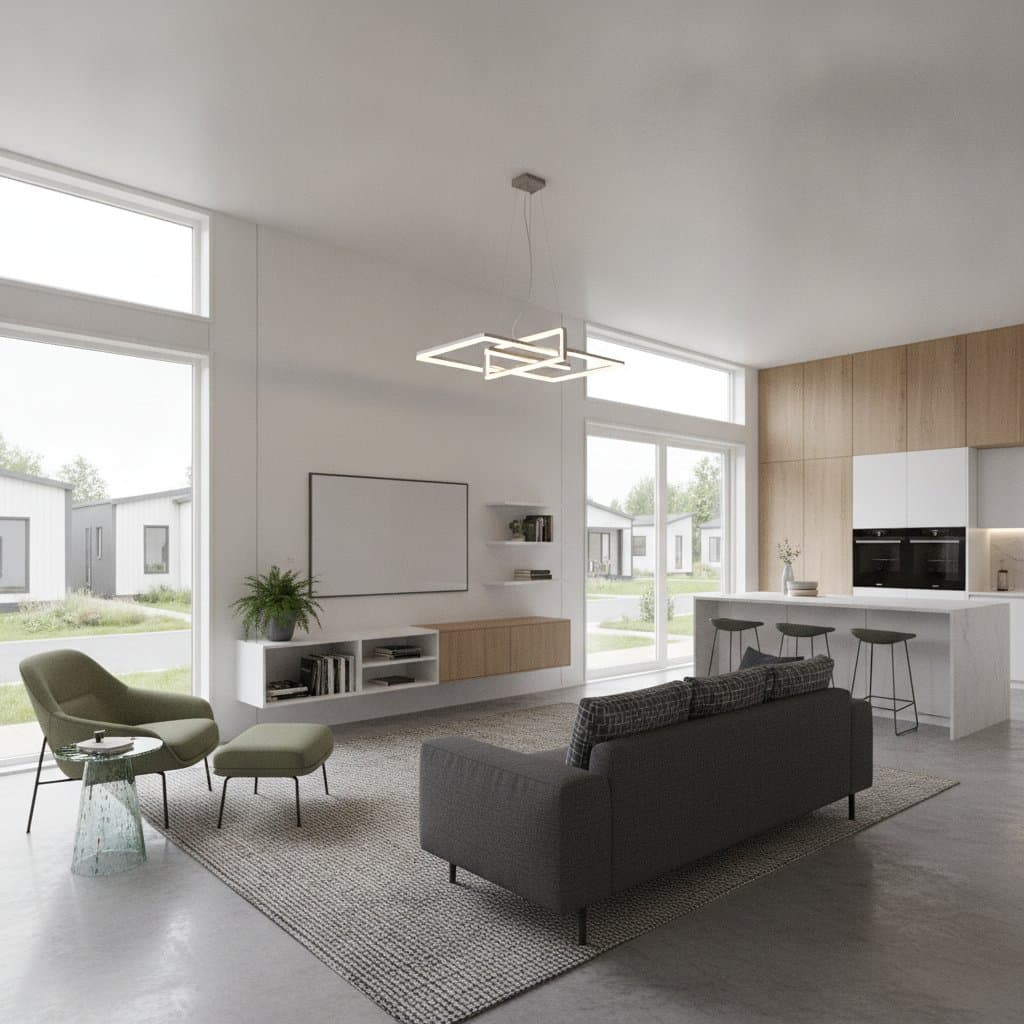
The best scenarios involve level lots with proximity to main utilities, minimizing excavation needs. Single-story designs suit most seniors, emphasizing accessibility from the start. Homeowners committed to long-term residency benefit most, as the structure adapts to changing needs over time. For urban or suburban settings with supportive codes, granny pods enhance lifestyle without major disruptions.
Detailed Cost Breakdown for 2026
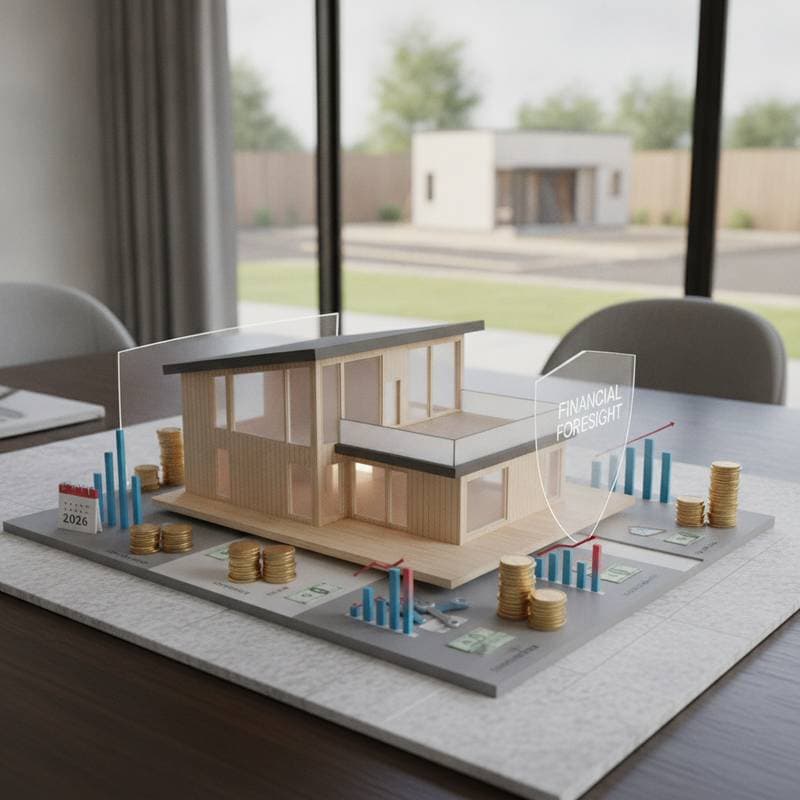
Budgeting accurately requires breaking down expenses into categories. Site preparation, including surveys and grading, averages $5,000 to $15,000, higher on sloped or rocky terrain. Foundation work, such as concrete slabs or pier systems, costs $10,000 to $25,000, influenced by soil type and local seismic requirements.
The core structure—framing, roofing, and exterior finishes—ranges from $30,000 to $70,000 for a 400- to 800-square-foot unit. In 2026, energy-efficient materials like insulated panels reduce long-term costs but increase upfront spending by 15 percent. Utility installations prove costly: electrical wiring runs $3,000 to $8,000, plumbing $5,000 to $12,000, and septic or sewer ties $10,000 to $20,000 if distances exceed 50 feet.
Interior outfitting adds $10,000 to $30,000, covering kitchens, bathrooms, and accessibility features like grab bars. Permitting fees vary from $1,000 to $5,000, with architect or engineer consultations at $2,000 to $6,000. Ongoing maintenance, including insurance and utilities, totals $2,000 to $4,000 annually. Total costs reflect regional labor rates; coastal areas command premiums due to stringent codes.
Navigating 2026 Zoning and Permitting Rules
Zoning laws in 2026 emphasize flexibility for ADUs, with many states mandating approvals within 60 days. Common requirements include minimum lot sizes of 5,000 square feet and setbacks of 4 to 10 feet from property lines. Height limits cap at 16 to 20 feet, ensuring pods blend with primary residences. Occupancy restricts to two adults, prioritizing family use over commercial rentals in some zones.
Updates for 2026 include relaxed parking mandates—many areas now waive extra spaces for ADUs—and incentives for green builds, such as solar integration rebates up to $5,000. However, historic districts or flood zones impose stricter reviews. Homeowners must submit site plans, elevations, and utility schematics to building departments. Engaging a local planner early identifies variances needed for non-standard lots.
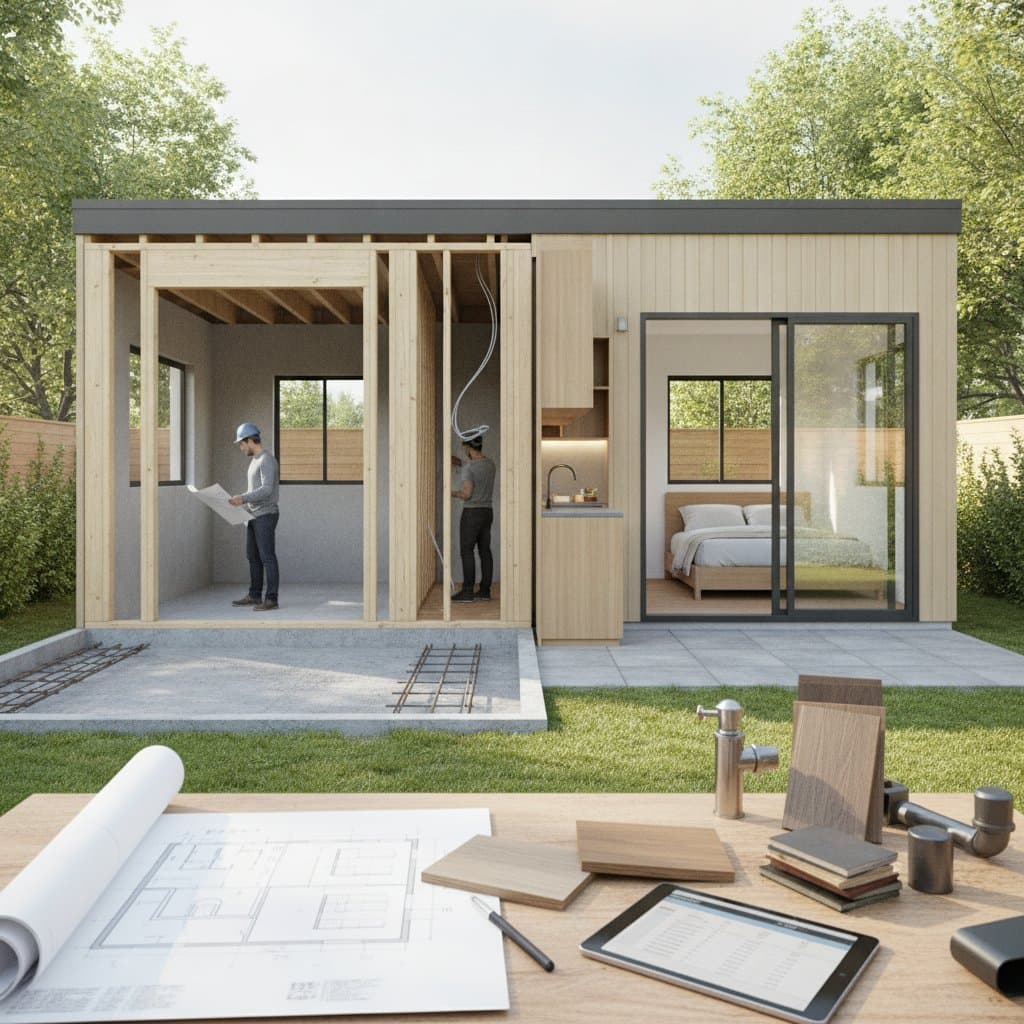
Step-by-Step Construction Process
Safety remains paramount throughout. Equip with hard hats, gloves, safety glasses, sturdy boots, and hearing protection to mitigate risks.
- Site Assessment: Evaluate zoning, measure setbacks, and assess utility proximity. Hire a surveyor to confirm boundaries and soil stability.
- Design Phase: Collaborate with an ADU specialist to draft plans compliant with 2026 codes. Include universal design elements like wide doorways and zero-step entries.
- Permitting Submission: File complete documentation, including environmental impact statements if required. Expect reviews focusing on fire safety and energy efficiency.
- Site Preparation: Clear vegetation, grade the land, and install erosion controls. Test soil for load-bearing capacity.
- Foundation Installation: Pour a reinforced slab or install helical piers, ensuring levelness within one inch.
- Structural Framing: Erect walls with pressure-treated lumber, install trusses, and apply weather-resistant sheathing.
- Utility Rough-In: Trench and lay conduits for electricity, water, and waste lines. Coordinate with licensed subcontractors.
- Insulation and Enclosure: Fit walls and attic with R-21 to R-38 insulation, varying by climate zone. Seal against air leaks.
- Interior Completion: Install drywall, flooring, and millwork. Integrate smart home tech for monitoring.
- Final Inspections and Occupancy: Schedule checks for electrical, plumbing, and structural integrity. Obtain certificate of occupancy before furnishing.
Project timelines span 10 to 20 weeks: permitting takes 4 to 8 weeks, construction 6 to 12 weeks. Weather delays or supply chain issues can extend this, so build buffers into schedules.
Pitfalls to Sidestep in Your Project
Overlooking property surveys leads to encroachment disputes, incurring fines up to $10,000. Underbudgeting for utilities surprises many; a 100-foot sewer line might cost $15,000 in trenching alone. Neglecting accessibility, such as ramps or lever handles, compromises usability for wheelchair users.
Hiring unlicensed contractors risks structural failures and insurance voids. Skimping on insulation elevates energy bills by 25 percent annually. Forgetting vapor barriers invites mold, damaging interiors within years. Always prioritize code adherence to safeguard health and investment.
Deciding Between Professional and DIY Approaches
Assess your capabilities using this decision framework:
| Factor | Suitable for DIY | Best for Professionals |
|---|---|---|
| Skill Level | Basic woodworking, painting | Advanced framing, electrical work |
| Risk Level | Interior tasks, landscaping | Roofing, plumbing installations |
| Equipment Needs | Hand tools, ladders | Excavators, welding gear |
| Regulatory Hurdles | Cosmetic finishes | Full permitting, inspections |
DIY suits finishing touches like installing shelves or landscaping paths, saving 10 to 20 percent on labor. Delegate structural and mechanical elements to certified experts to ensure compliance and warranties. This hybrid approach balances cost control with quality.
Essential Preparation Checklist
- Verify local 2026 ADU ordinances via municipal websites or planning offices.
- Conduct a professional site survey to map utilities and boundaries.
- Calculate budget with 20 percent contingency for unforeseen expenses.
- Select designs prioritizing energy efficiency and senior-friendly features.
- Secure quotes from at least three licensed contractors for major phases.
- Plan for ongoing costs, including property tax adjustments post-construction.
- Consult family on needs to customize layout for comfort and independence.
Realizing the Value of Your Granny Pod Investment
Building a granny pod in 2026 transforms family dynamics and property utility. Beyond immediate support for seniors, it creates a resilient asset adaptable to life's shifts. With thoughtful planning, you achieve compliance, affordability, and enduring benefits. Start with local research to turn this vision into a practical reality, enhancing security and togetherness for years ahead.