2026 Costs to Retrofit Your Home Against Wildfires
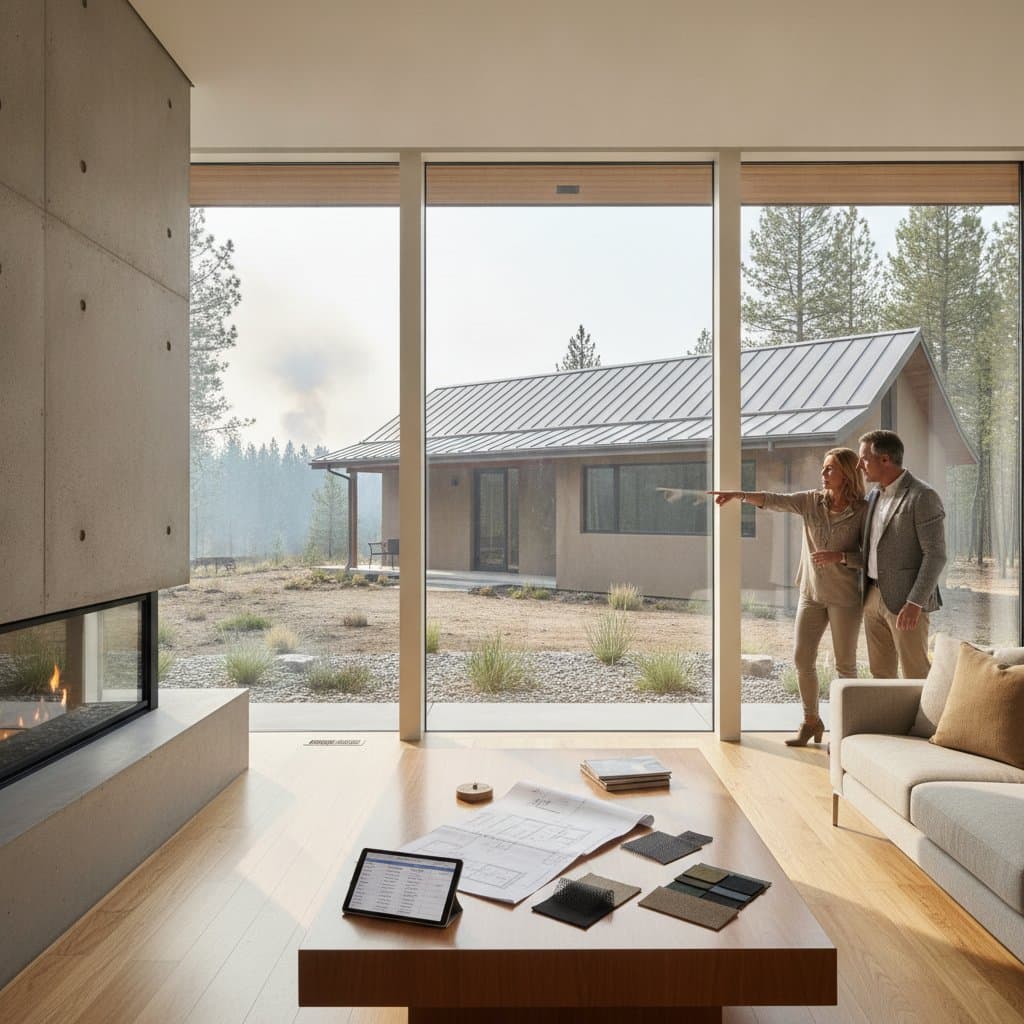
Retrofitting strengthens a home against wildfire by upgrading materials that resist ignition and limit heat transfer. The upgrades slow fire spread and provide time for response crews. This overview presents current pricing, key decision factors, and a clear sequence for completing the work.
Timing a Retrofit
Homes located near vegetation or open land face elevated exposure. The best moments to add protections occur during roof replacement, siding updates, deck repairs, or window changes. Insurers increasingly request documentation of these measures before issuing or renewing policies.
Advantages and Limitations
- Lower premiums from carriers that recognize hardened construction
- Reduced risk of structural loss and contents damage
- Improved market position when selling in high-risk areas
Upfront expense remains the primary drawback. Contractor schedules fill quickly in fire-prone counties, and exterior permits can extend project timelines.
Typical Price Ranges
Whole-home retrofits generally fall between 10000 and 60000 dollars. Costs vary with house size, material choices, and site access. The following table lists common line items.
| Scope Item | Material Cost Range | Labor Cost Range | Total Range | Notes on Drivers |
|---|---|---|---|---|
| Class A fire-rated roof | 7 to 12 dollars per square foot | 3 to 6 dollars per square foot | 10 to 18 dollars per square foot | Steep pitch and existing material removal increase totals |
| Fiber cement or stucco siding | 5 to 10 dollars per square foot | 4 to 8 dollars per square foot | 9 to 18 dollars per square foot | Detailed trim work raises labor hours |
| Ember-resistant vents | 25 to 60 dollars each | 75 to 100 dollars each | 100 to 160 dollars each | Attic configuration affects installation time |
| Dual-pane tempered windows | 400 to 900 dollars each | 200 to 400 dollars each | 600 to 1300 dollars each | Nonstandard sizes require custom fabrication |
| Deck replacement with composite | 25 to 45 dollars per square foot | 15 to 25 dollars per square foot | 40 to 70 dollars per square foot | Elevated structures demand additional framing support |
Recommended Sequence
- Examine every exterior surface for gaps, combustible materials, and vent openings.
- Seal joints with fire-rated caulk and install ember-resistant vents.
- Install a Class A roof and ignition-resistant siding.
- Replace single-pane windows with dual-pane tempered units.
- Establish a 30-foot zone cleared of vegetation around the structure.
Code and Safety Requirements
Select products tested to ASTM E108 for roofs and ASTM E119 for walls. All power tools must operate on grounded circuits equipped with GFCI protection. Permits are required for roofing, siding, and window work in most jurisdictions. Retain every receipt and inspection record for insurance files.
Common Errors
- Omitting vent upgrades allows embers to reach attic insulation.
- Retaining untreated wood trim or decking creates early ignition points.
- Leaving roof-to-wall intersections unsealed creates repeated failure locations.
Ongoing Care
Inspect vents, seals, and roof edges each spring. Reapply protective coatings to fiber cement surfaces on a 15-year cycle. Remove debris from gutters and maintain clearance around trees. These steps protect the value of completed upgrades.
Securing Contractor Bids
Obtain three detailed proposals that list materials, ratings, and quantities for each item. Verify Class A and ignition-resistant certifications before signing agreements. Begin with the roof, proceed to siding, and finish with windows and vents.