How Modular Homes Reduce Build Times by 35 Percent by 2026
Modular homes transform traditional construction practices. These structures assemble in factories under controlled conditions, ship in prefabricated sections, and install on-site with efficiency. This approach shortens overall timelines by approximately 35 percent relative to conventional stick-built processes, resulting in decreased holding expenses, limited exposure to weather interruptions, and accelerated occupancy for homeowners and developers.
The primary advantage lies in streamlined production. Factory environments enable precise execution unaffected by seasonal changes. Homeowners benefit from reliable deadlines, while builders avoid on-site inefficiencies.
Quick overview: Modular homes achieve completion 35 percent quicker than standard builds, preserving structural integrity and personalization possibilities. The main compromise involves design adaptability weighed against accelerated timelines and budget efficiencies.
Key Differences Between Modular and Traditional Construction
Modular and stick-built homes differ in execution and outcomes. The table below highlights essential comparisons to inform decision-making.
| Feature | Modular Home | Stick-Built Home |
|---|---|---|
| Build timeline | 3 to 6 months | 6 to 12 months |
| Quality control | Rigorous factory inspections ensure uniformity | Dependent on on-site teams and environmental factors |
| Design options | Broad selections constrained by shipping sizes | Unlimited customization potential |
| Cost per square foot | $120 to $180 | $150 to $250 |
| Waste and efficiency | Low material usage and recycling focus | Elevated on-site debris and management expenses |
| Weather risk | Sheltered production minimizes disruptions | Vulnerable to rain, wind, and temperature shifts |
Advantages of modular homes:
- Established timelines promote planning confidence.
- Optimized labor reduces unnecessary efforts.
- Minimal site disturbance preserves neighborhood peace.
- Factory settings guarantee superior craftsmanship standards.
Challenges to consider:
- Module dimensions restrict oversized components during transit.
- Limited regional expertise may complicate assembly coordination.
- Specialized financing options demand targeted lender partnerships.
- Post-production alterations incur significant additional fees.
Step-by-Step Modular Construction Process
Successful modular projects adhere to a structured sequence. This ensures seamless progression from concept to completion.
- Design and permitting phase (4 to 8 weeks). Select a certified manufacturer and refine architectural drawings. Secure local zoning approvals and construction permits to align with regulations.
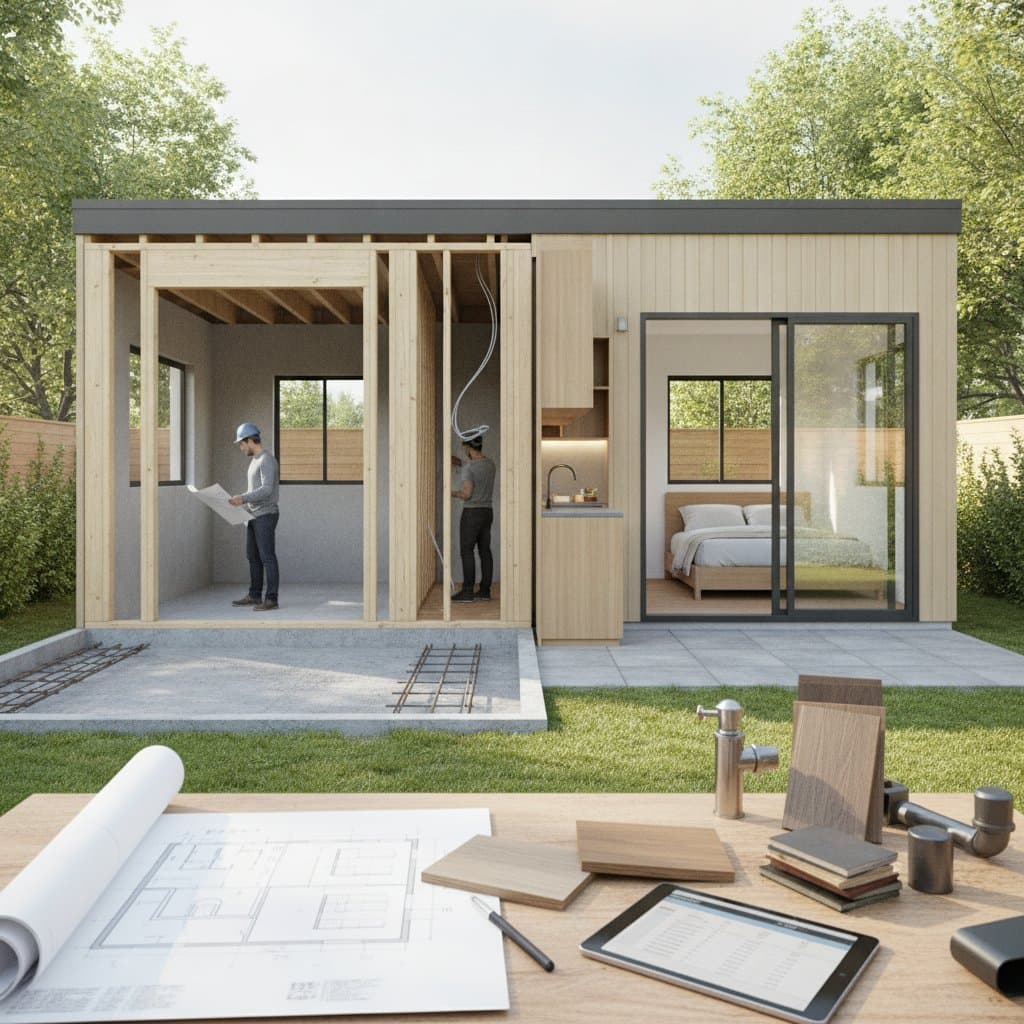
- Factory production (6 to 10 weeks). Construct modules within a protected indoor space, incorporating electrical, plumbing, and interior elements.
- Site readiness (overlapping 4 to 6 weeks). Prepare the foundation through excavation, pouring concrete, and basic utilities while modules take shape off-site.
- Transportation and installation (1 to 3 days). Deliver sections via specialized vehicles and position them using heavy-duty cranes for precise alignment.
- On-site completion (4 to 8 weeks). Integrate exterior elements like roofing and siding, connect systems, and perform final inspections.
Indoor fabrication shields the majority of work from elements, fostering adherence to schedules even in adverse conditions.
Essential Materials and Tools for Modular Projects
Selecting appropriate supplies supports durable assembly. Focus on items that complement factory specifications.
Recommended materials:
- Pressure-treated lumber for exterior platforms and access points.
- High-performance sealants and moisture barriers to protect joints.
- Heavy-duty fasteners engineered for load-bearing applications.
- Durable paints and finishes that adhere to pre-applied surfaces.
Necessary tools:
- Cordless drills and impact drivers for secure fastening.
- Precision levels and laser distance measurers for alignment.
- Utility knives and caulking guns for detailing.
- Comprehensive safety equipment, such as gloves, protective eyewear, and respirators.
These choices enhance project reliability and longevity.
Adapting Modular Homes to Regional Climates
Modular designs adapt effectively to diverse environments with targeted enhancements. Evaluate local conditions during planning.
- In colder climates: Incorporate advanced insulation layers and triple-glazed windows to optimize thermal performance.
- In warm or humid areas: Install vapor barriers and integrated dehumidifiers to control moisture levels.
- Near coastlines: Opt for galvanized or stainless-steel fasteners and raised foundations to resist corrosion and flooding.
- On rural properties: Verify road access for oversized transport vehicles and crane operations prior to commitment.
Such preparations ensure resilience and compliance with area-specific building codes.
Frequently Asked Questions
Do modular homes endure extreme weather events? Modules comply with identical structural standards as traditional homes. They frequently surpass requirements due to transportation rigors, providing enhanced stability.
Is floor plan customization possible? Adjustments fit within module constraints and shipping regulations. Bespoke configurations extend planning time and expenses but remain feasible.
Will modular homes retain or increase in value? Properly maintained units in growing markets appreciate comparably to site-built equivalents, supported by durable construction.
What is the typical timeline to occupancy? With pre-approved permits and prepared sites, homeowners receive keys within several months of initiation.
Steps to Launch Your Modular Home Project
Pursue modular construction for expedited results without sacrificing excellence. Begin by touring display homes from established providers to assess real-world applications. Solicit detailed quotes encompassing delivery, installation, and warranties. Verify your financial institution's experience with modular loans to streamline funding.
Coordinated efforts yield energy-efficient residences with controlled budgets and minimal interruptions. For primary dwellings or portfolio expansions, this method accelerates realization while emphasizing enduring performance and satisfaction.