Landlords: Protect Rental Investments With Home Warranties
A landlord home warranty helps cover the repair or replacement of listed home systems and appliances. This service contract gives rental property owners a predictable way to manage breakdowns and tenant service calls.
Summary Box
- What it is: A service contract for covered systems and appliances in a rental home.
- Why it matters: It can reduce surprise repair bills and speed up maintenance decisions.
- Typical cost: About $500 to $1,200 per property each year, plus service fees of $75 to $150.
- Coverage limit: Plans exclude many preexisting conditions, code upgrades, neglect, and items not listed in the contract.
- When to hire a pro: Use licensed contractors for electrical, gas, structural, plumbing, heating, and safety work.
- Service timing: Routine claims may take one to several business days, while replacement decisions can take longer.
What Is a Rental Property Home Warranty?
A rental property home warranty is a contract between a landlord and a warranty company. The company sends a technician when a covered appliance or home system stops working. The landlord pays a service fee, then the provider pays eligible repair costs within the plan limits.
A warranty is not the same as landlord insurance. Insurance usually covers sudden damage from events such as fire, theft, or certain storms. A warranty usually covers mechanical breakdowns caused by normal wear.
What Does a Landlord Home Warranty Cover?
Coverage depends on the plan, property type, and contract terms. Common covered items include heating and cooling systems, electrical wiring and built-in electrical components, plumbing stoppages and interior plumbing lines, water heaters, refrigerators, ovens, dishwashers, and built-in microwaves. Washers and dryers, garage door openers, sump pumps or well pumps are also covered when selected.
A basic plan may cover systems only. A broader plan may include appliances. Optional coverage can add pools, septic systems, roof leaks, or additional refrigerators. The contract may set a dollar limit for each item. It may also exclude permits, hauling, refrigerant, access work, cosmetic damage, and code-required upgrades. Read these terms before comparing prices.
When Should a Landlord Buy a Warranty?
A warranty can make sense when the rental has older equipment, several major appliances, or limited local contractor access. It can also help a new landlord budget maintenance costs across multiple homes.
A warranty may provide less value when the property has newer equipment under manufacturer warranties, when the owner has trusted contractors, or when the contract has low limits and many exclusions. Before buying, inspect every covered item. Record the age, model, condition, and recent repairs. Some companies deny claims for known defects or maintenance problems that existed before coverage began.
How the Warranty Process Works
1. Review the Property and Contract
List each major system and appliance. Match the list against the plan. Confirm coverage for rental use, tenant occupancy, detached units, and multiple properties.
2. Report the Breakdown
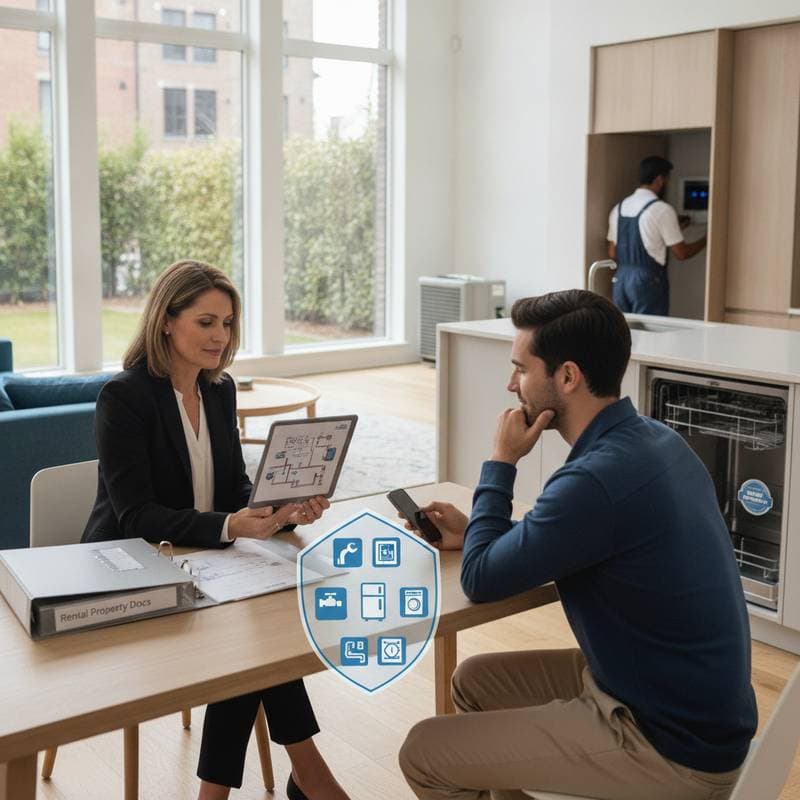
The tenant should contact the landlord or property manager first. The landlord then files the claim through the provider. Give clear details, including the appliance, symptoms, error codes, and safety concerns.
3. Pay the Service Fee
The provider assigns a contractor and collects the service fee. Ask whether the fee applies again if the first technician cannot complete the repair.
4. Approve the Repair or Replacement
The contractor diagnoses the problem. The warranty company decides whether to repair, replace, or deny the claim. Ask for the decision in writing when the repair involves a major system.
5. Keep Records
Save the claim number, technician report, invoices, photos, and tenant messages. These records support disputes, tax documentation, and future property sales.
Costs and Cost Factors
National costs usually range from $500 to $1,200 per property each year, with a median near $800. Service fees commonly cost $75 to $150 per visit.
| Line item | Typical range | Notes and variables |
|---|---|---|
| Basic systems plan | $500 to $800 yearly | Heating, cooling, plumbing, and electrical coverage |
| Systems and appliances plan | $700 to $1,200 yearly | Adds common kitchen and laundry appliances |
| Service fee | $75 to $150 | Charged per approved service request |
| Optional coverage | $50 to $300 yearly | Pools, septic systems, wells, or extra units |
| Emergency or after-hours work | $100 to $300 extra | Depends on provider and local availability |
| Code upgrades and permits | $100 to $2,000 or more | Often excluded from standard coverage |
Low-cost scenarios usually involve one property, standard systems, and a higher service fee. High-cost scenarios involve older equipment, multiple units, specialty systems, or a low service fee plan. Regional labor rates, travel distance, climate, and contractor supply affect both premiums and service speed. Ask whether the company limits you to its contractor network.
DIY vs Pro Matrix
| Task | DIY suitability | Main concern |
|---|---|---|
| Replace an appliance filter | Suitable for most owners or tenants | Follow the equipment instructions |
| Document model numbers and symptoms | Suitable | Keep records with the claim |
| Reset a tripped breaker | Limited | Stop if the breaker trips again |
| Diagnose gas, electrical, or heating faults | Not suitable | Fire, shock, carbon monoxide, and code risks |
| Replace plumbing or HVAC components | Usually professional | Leaks, damage, permits, and warranty disputes |
| Dispute a denied claim | Suitable with records | Request contract language and technician notes |
Do not open gas appliances, alter main electrical panels, repair refrigerant systems, or bypass safety controls. These tasks require qualified professionals and may void coverage.
Safety and Code Notes
Landlords must provide habitable housing under local law. A warranty does not remove that duty. It also does not excuse delayed repairs. Confirm local rules for heating, hot water, smoke alarms, carbon monoxide alarms, electrical work, and emergency response.
Maintenance and Lifespan
A warranty works best with documented maintenance. Replace HVAC filters on the manufacturer schedule. Test smoke and carbon monoxide alarms regularly. Flush water heaters when appropriate for the equipment. Clean dryer vents and inspect plumbing under sinks.
Keep service records for every covered system. Poor maintenance can lead to denied claims, even when the item appears in the plan. Ask the provider whether annual inspections are required.
Regional Factors
In cold climates, heating equipment, frozen pipes, and sump pumps deserve priority. Choose coverage that addresses freeze damage only when the contract clearly includes it. In hot, humid regions, air conditioning, mold prevention, and condensate drainage need close attention.
Selecting Coverage That Matches Your Portfolio
Compare multiple providers on coverage limits, service fee amounts, and contractor network size. Request sample contracts and review the exclusions section line by line. Verify that the plan explicitly covers rental properties and tenant-occupied units. Check whether the provider allows you to use your own licensed contractors for certain repairs. Calculate the total annual cost by adding the premium, service fees, and any optional riders you need. Ask current customers about claim approval speed and communication quality. Once you select a plan, schedule a pre-coverage inspection to document the condition of every covered item before the contract begins.