Unveiling Hidden Costs of Solar Panels After Warranty Expiration
Solar panel installations deliver significant reductions in electricity expenses and enhance residential property values. However, warranties typically address only manufacturing defects and performance guarantees, leaving subsequent maintenance and repair needs uncovered. Homeowners frequently encounter unexpected financial demands as systems age, which underscores the importance of anticipating these obligations for sustained benefits.
Quick Overview: Standard solar warranties protect against product flaws and output declines, but they exclude routine tasks such as panel cleaning, inverter exchanges, structural roof work, and performance tracking tools. Understanding these distinctions empowers informed decision-making from the outset.
Essential Expenses Beyond Warranty Protection
Solar systems demand ongoing attention to retain optimal functionality. Neglecting these elements can lead to diminished energy production and escalated repair bills. The following outlines primary cost categories, complete with practical estimates and strategies.
1. Panel Cleaning and Professional Inspections
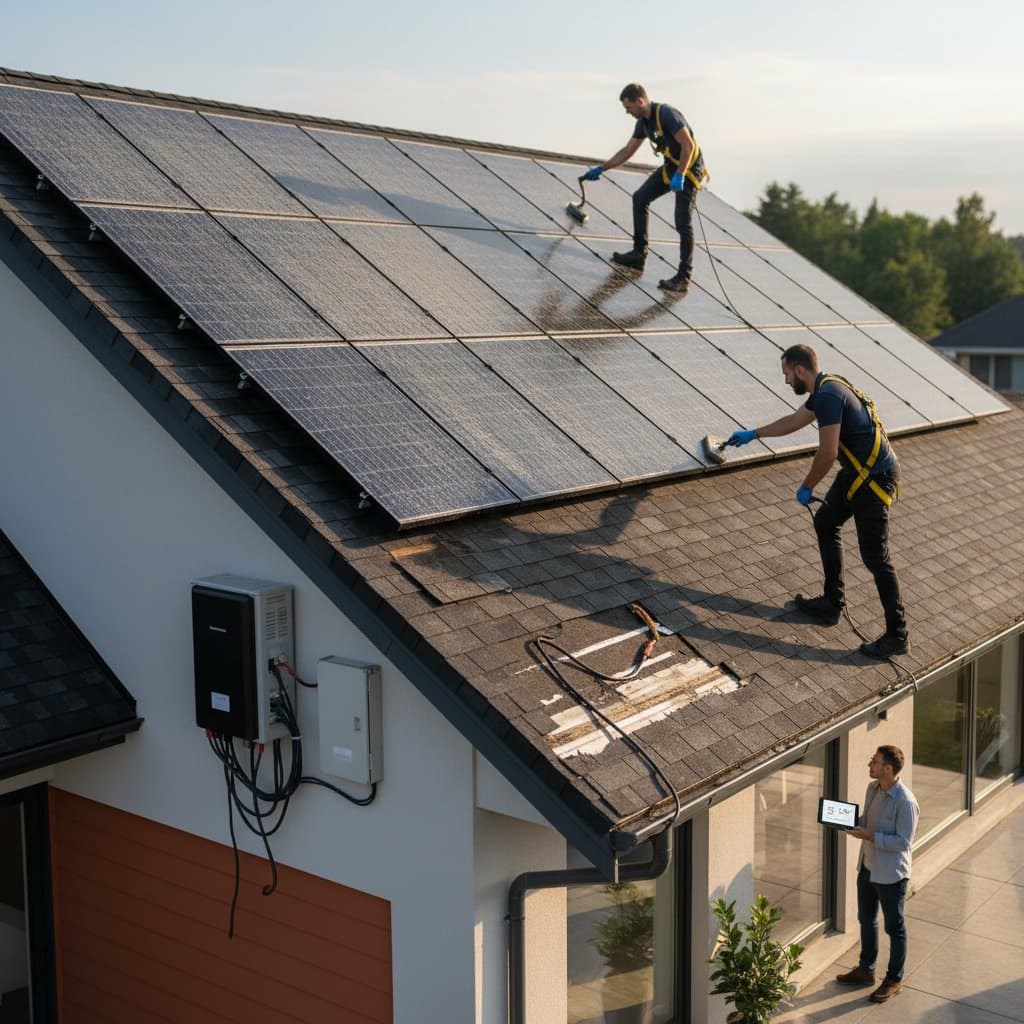
Accumulated debris, including dust, bird droppings, pollen, and environmental pollutants, reduces panel efficiency by up to 20 to 30 percent in severe cases. Manufacturers advise cleaning one to two times annually, depending on local conditions, to restore peak output. Inspections complement cleaning by identifying early signs of wear, such as microcracks or loose connections.
- Self-Managed Cleaning: Budget 50 to 100 dollars for essential supplies like a extendable brush, non-abrasive sponges, and eco-friendly soap. Perform the task on a cloudy day to minimize water spotting and ensure safety with stable ladders.
- Hired Cleaning Services: Expect 150 to 350 dollars per session, influenced by roof pitch, system accessibility, and regional labor rates. Professionals employ specialized equipment, such as deionized water systems, to prevent mineral deposits.
- Diagnostic Inspections: Allocate 100 to 200 dollars for thorough evaluations, which may include thermal imaging to detect hot spots. Schedule these every one to two years to preempt efficiency losses.
2. Inverter Upgrades and Replacements
Inverters serve as the critical bridge, transforming direct current from panels into alternating current for household use. These components typically endure 8 to 12 years before efficiency wanes due to heat exposure, electrical surges, or component degradation. Selecting durable models during initial setup can extend this lifespan, but eventual replacement remains inevitable.
- Conventional String Inverters: Replacement costs range from 1,000 to 2,500 dollars, including installation. These centralized units suit simpler setups but fail entirely if one section underperforms.
- Distributed Microinverters: Individual units cost 100 to 250 dollars each, with total expenses scaling by panel count. They enhance reliability by isolating issues but increase upfront and maintenance outlays.
- Associated Labor Charges: Add 300 to 600 dollars for electrical adjustments, bracket reinforcements, or firmware updates. Engage certified technicians to comply with safety codes and preserve system warranties.
Opt for inverters with extended warranties of 10 to 25 years to align better with panel lifespans, which often exceed 25 years.
3. Roof Integration and Structural Maintenance
Solar arrays mount directly to rooftops, creating interdependencies between the energy system and building envelope. When roofs require resurfacing or repairs, panels necessitate temporary removal to avoid damage during the process. Proactive assessments prior to installation mitigate these disruptions and costs.
- Panel Removal and Reinstallation Labor: This service commands 1,000 to 2,000 dollars, varying with array size, roof complexity, and local permitting fees. Larger systems or multi-story homes amplify expenses due to crane usage or scaffolding.
- Preventive Measures: Conduct roof evaluations every five years or before major installations. Choose racking systems compatible with anticipated roof materials, such as asphalt shingles or metal sheeting, to simplify future work.
Integrating solar during roof replacements saves 30 to 50 percent on labor, highlighting the value of synchronized planning.
4. System Monitoring and Data Management
Modern solar setups rely on digital platforms to track production, consumption, and anomalies in real time. Hardware like sensors or gateways, paired with software subscriptions, enables users to monitor via mobile devices. Failures in these elements can obscure performance issues, leading to undetected declines.
- Hardware Replacements: Data loggers or communication modules cost 100 to 300 dollars to update. Opt for modular designs that allow piecemeal upgrades without full system overhauls.
- Subscription Renewals: Annual fees for cloud-based analytics range from 50 to 150 dollars. These services provide alerts for underperformance, justifying the investment through early interventions.
Regularly calibrate monitoring tools to ensure accurate data, which supports warranty claims and optimization decisions.
Recommended Maintenance Schedule
A structured timeline maintains system health and averts costly emergencies. Adhering to this sequence aligns with manufacturer guidelines and extends overall longevity.
- Yearly Cleaning and Basic Inspections: Restore surface cleanliness and verify secure mountings to sustain 95 percent or higher efficiency.
- Triennial to Pentennial Inverter Assessments: Test output levels and thermal performance to forecast replacement needs.
- Pre-Installation and Post-Event Roof Checks: Evaluate integrity after storms or every decade to prevent integration complications.
- Monthly Monitoring Reviews: Analyze production trends to identify deviations early, such as shading from new growth.
Essential Tools and Supplies Inventory
Equipping yourself for basic upkeep reduces reliance on professionals and controls expenses. Assemble this kit for safe, effective home maintenance.
- Extendable telescoping brush or soft squeegee for reaching high panels.
- Gentle, phosphate-free dish soap diluted in water for streak-free results.
- Absorbent microfiber towels to dry surfaces without scratching.
- High-pressure garden hose attachment for thorough rinsing.
- Fall protection harness and anchors for sloped or elevated roofs.
- Compatible device for accessing monitoring dashboards and logging data.
Store items in a weatherproof container and inspect annually for wear.
Adapting to Local Environments and Climates
Geographic factors profoundly impact maintenance frequency and techniques. Tailoring approaches to regional challenges preserves system resilience.
- Arid Desert Zones: Intense dust accumulation demands quarterly cleanings to counteract 15 to 25 percent efficiency drops. Install tilted panels to facilitate natural debris shedding.
- Maritime Coastal Regions: Corrosive salt aerosols accelerate frame and connector degradation. Select galvanized or stainless-steel hardware and rinse panels monthly to remove residues.
- Temperate or Snowy Climates: Ice buildup impedes output during winter months. Employ long-handled, foam-padded rakes for safe snow clearance, avoiding direct panel contact.
Consult local solar associations for climate-specific best practices, which can lower long-term costs by 10 to 20 percent.
Strategies for Effective Post-Warranty Budgeting
Treat solar maintenance akin to essential home systems like plumbing or heating. Reserve 1 to 2 percent of the initial installation price annually, approximately 200 to 500 dollars for a mid-sized array, to cover routine needs. This fund accommodates inflation and unforeseen repairs while promoting financial predictability.
Organize documentation, including original blueprints, serial numbers, and service histories, in a dedicated digital or physical file. Partner with vetted providers through industry certifications to guarantee quality workmanship. By embedding these habits, homeowners secure reliable energy production, minimize downtime, and amplify the environmental and economic advantages of solar adoption for decades.