Yards That Withstand Drought and Flooding: Effective Strategies
A resilient yard manages water extremes effectively, remaining stable during prolonged dry periods and intense rainfall. The focus lies in practical control rather than elaborate aesthetics. Homeowners benefit from soil that drains excess water promptly yet retains moisture during scarcity, reducing the need for frequent repairs and high water expenses.
Understanding Resilient Landscaping and Ideal Applications
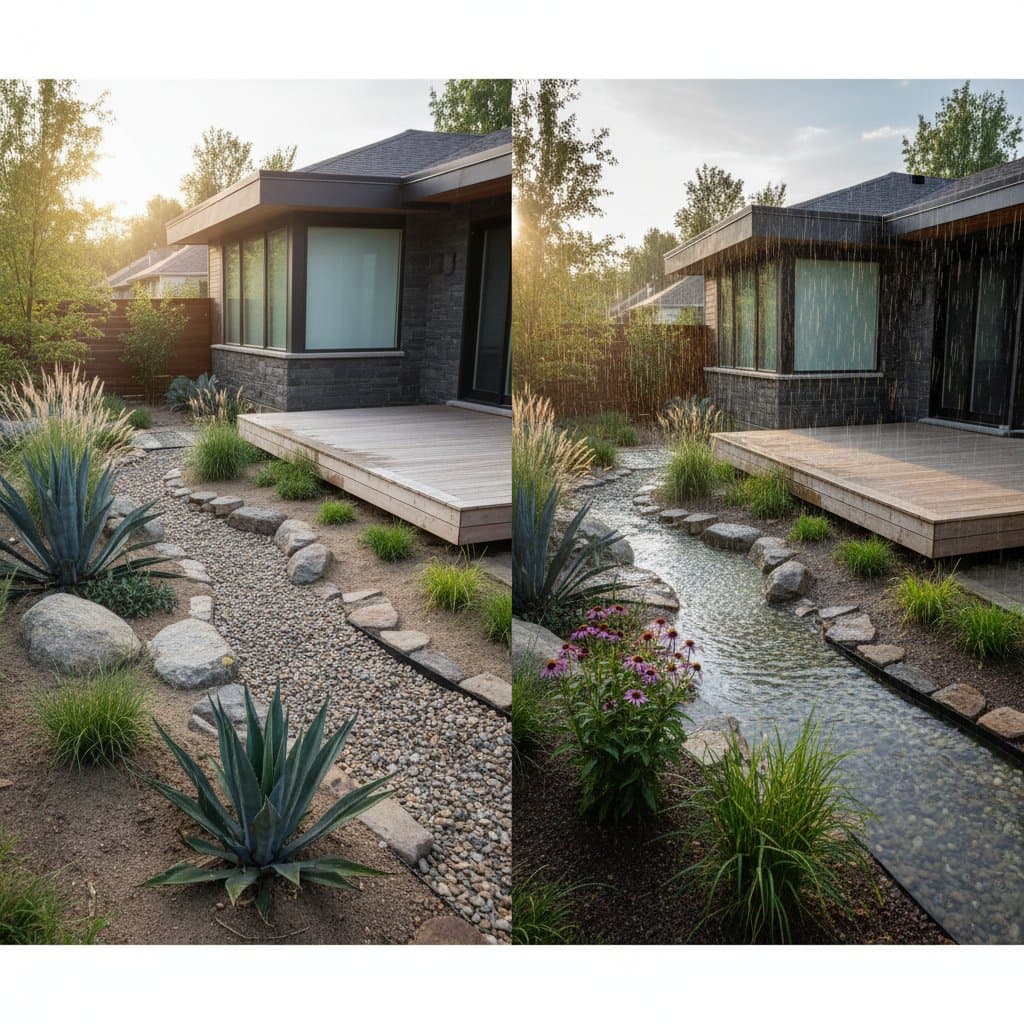
Resilient landscaping involves contouring the terrain and choosing appropriate vegetation to handle water fluctuations naturally. This method proves valuable in regions where water availability varies dramatically from scarcity to surplus. In arid climates, emphasis falls on moisture conservation and plants requiring minimal irrigation. In flood-prone zones, priorities include enhanced drainage, proper grading, and directed runoff management. Many properties require an integrated approach addressing both challenges.
Effective yard design incorporates grading that directs water away from structures, soil compositions that distribute moisture uniformly, and vegetation adapted to alternating wet and dry conditions. This strategy suits long-term planning over immediate visual enhancements.
Advantages, Drawbacks, and Suitable Conditions
Advantages
- Lowers irrigation expenses by as much as 50 percent.
- Minimizes water accumulation and prevents seepage into basements.
- Requires reduced applications of fertilizers and less frequent mowing.
- Enhances overall drainage while protecting building foundations.
Drawbacks
- Involves elevated initial expenses for grading and soil modifications.
- Plant rooting and establishment may require an entire growing season.
- Improper drainage installation risks channeling water toward adjacent properties.
Suitable Conditions: Properties on inclined terrain, those with heavy clay soils, or areas experiencing cycles of drought followed by heavy precipitation.
Project Costs and Influencing Factors
Resilient yard transformations typically cost between $4 and $12 per square foot, influenced by accessibility, existing soil conditions, and project scale. Grading and drainage installations form the foundation of these expenses.
| Scope Item | Material Cost Range | Labor Cost Range | Total Cost Range | Notes on Key Drivers |
|---|---|---|---|---|
| Soil Regrading | $1.50 - $3.00 | $2.00 - $4.00 | $3.50 - $7.00 | Steep inclines and restricted access increase labor demands |
| French Drain or Swale | $2.00 - $4.00 | $3.00 - $5.00 | $5.00 - $9.00 | Installation depth, pipe dimensions, and discharge location impact pricing |
| Drought-Tolerant Planting | $1.00 - $2.00 | $0.75 - $1.50 | $1.75 - $3.50 | Native seed varieties prove more economical than potted nursery stock |
| Rain Garden or Infiltration Bed | $3.00 - $5.00 | $4.00 - $7.00 | $7.00 - $12.00 | Soil permeability and digging depth determine expenses |
Three Primary Cost Influences
- Material Quality: Choices in soil enhancers and aggregate types.
- Labor Intensity: Extent of digging and drainage system configuration.
- Site-Specific Challenges: Ease of access, terrain gradient, and current plant cover.
Implementation Steps
Required Safety Gear: Sturdy gloves, protective boots, safety eyewear, and ear protection when operating mechanized equipment.
- Evaluate Current Drainage Patterns. Observe water flow following substantial rainfall. Identify depressions and trace surface runoff directions.
- Analyze Soil Properties. Excavate a hole 12 inches deep, introduce water, and measure drainage duration. Prolonged drainage indicates the need for sand or compost additions; rapid drainage suggests incorporating clay or organic materials.
- Perform Regrading. Establish a 2 percent slope directing water from the foundation. Employ a transit level or laser device for precise measurements.
- Incorporate Drainage Features. Position French drains, dry wells, or swales to channel water to designated outlets. Select 4-inch perforated piping equipped with filter fabric and surround with 3/4-inch clean gravel.
- Modify Soil Composition. Integrate compost to a 6-inch depth to achieve optimal water-holding capacity.
- Select and Install Vegetation. Organize plantings according to hydration requirements. Opt for deep-rooted native species tolerant of both drought and saturation.
- Apply Mulch and Define Borders. Layer 2 to 3 inches of organic mulch to conserve soil moisture and curb erosion.
Professional installations generally span 1 to 2 weeks. DIY efforts may extend over 3 to 5 weekends, varying with project magnitude.
Regulatory, Safety, and Warranty Considerations
Modifications to drainage patterns often necessitate a grading permit. Review municipal stormwater regulations prior to excavation. Direct runoff away from neighboring lots to avoid disputes. Any electrical elements, such as pumps or automated irrigation, require ground-fault circuit interrupter protection. Locate and mark underground utilities before commencing trenching operations.
For sump pump discharge lines or dry wells, consult manufacturer guidelines on warranties. Certain home builders may invalidate structural guarantees if grading alterations occur adjacent to foundations.
Common Pitfalls to Sidestep
- Compacting soil excessively during the regrading phase.
- Placing geotextile fabric beneath gravel in rain gardens, as it impedes water movement.
- Selecting plants with shallow root systems for sloped areas.
- Overlooking emergency overflow provisions in rain gardens.
- Neglecting to extend downspouts adequately.
One incorrect slope or obstructed drain can compromise significant investments in landscape improvements.
Ongoing Care and Durability Expectations
Maintenance Schedule
- Post-Installation: Examine grading and drainage after the initial heavy rain event.
- Seasonally: Clear accumulated debris from swales and flush drain intakes.
- Annually: Refresh mulch layers, trim excessive growth, and verify slope stability.
- Long-Term: Renew piping or gravel fills approximately every 15 years.
Maintain weed control in planting zones to support root development. Reapply mulch each spring to sustain consistent hydration levels.
Deciding Between Professional and DIY Approaches
Opt for DIY When:
- The project area measures under 1,000 square feet.
- Drainage installations remain shallower than 12 inches.
- Essential tools for grading and planting are available.
Engage Professionals For:
- Excavations exceeding 18 inches in depth.
- Projects involving foundation drainage or retaining structures.
- Situations requiring permits or official inspections.
Select contractors experienced in drainage and soil erosion management, particularly for complex terrains or structural integrations.
Preparation Checklist
- Confirm local permit requirements for grading and drainage alterations.
- Schedule utility line marking services at least 48 hours in advance.
- Gather tools including shovels, levels, and wheelbarrows for DIY work.
- Test soil pH and drainage in multiple yard locations.
- Research native plants suited to local climate extremes.
- Budget for unexpected costs like additional soil amendments.
Expert Recommendations for Optimal Results
- Stratify Soil Layers Appropriately. Position loam atop sand bases to balance drainage and retention.
- Incorporate Overflow Routes. Design rain gardens and swales with provisions for extreme storm events.
- Choose Versatile Plant Varieties. Species such as switchgrass, blue fescue, and daylilies adapt to both dry and wet conditions.
- Integrate Rain Barrels. Direct roof drainage into storage for irrigation during arid phases.
- Maintain Moderate Slopes. Gradients steeper than 3:1 benefit from erosion-control matting.
Achieving Lasting Yard Resilience
Implementing these strategies equips your property to face climate variability head-on. By prioritizing water management from the outset, homeowners secure reduced maintenance demands and enhanced environmental harmony. Begin with a site assessment to tailor these principles to your unique landscape, ensuring enduring protection and beauty.