How Much Does Wildfire-Resistant Landscaping Cost? Comprehensive Pricing Guide
Wildfire-resistant landscaping safeguards homes, conserves water, and lowers ongoing maintenance expenses. Professional installations for defensible space typically range from $4,500 to $18,000, with the average project costing $9,800 for a treated area of about 1,000 square feet. Smaller efforts, such as basic vegetation clearing, begin at $2,000, whereas comprehensive yard overhauls incorporating native plants and advanced irrigation systems surpass $25,000.
Three primary factors determine overall expenses: the size of the treated area, choices in plants and materials, and the level of design complexity. Local vegetation types, terrain slope, and site accessibility further influence prices. Data from the National Fire Protection Association indicates that properties with proper defensible space face up to 80 percent lower destruction risk during wildfires. Such landscaping not only bolsters home security and enduring property worth but also contributes to broader community fire resilience.
Detailed Cost Breakdown
Pricing for wildfire-resistant landscaping occurs on a per-square-foot basis for the treated defensible space. Expect $5 to $15 per square foot, varying with project details. Basic clearing of vegetation averages $1 to $3 per square foot, whereas complete fire-smart designs that integrate irrigation and hardscaping climb to $15 to $20 per square foot.
Many providers impose minimum fees of $1,000 for modest sites. Regional differences appear: Western states average $12,000 for a standard project, while rural or low-risk locations hover near $6,000. At the 25th percentile, straightforward defensible space preparation totals $3,500. Median projects reach $9,800, and those at the 75th percentile hit $15,500, incorporating high-end materials and automated irrigation controls.
Size and Scope
Treating an additional 1,000 square feet generally adds $5,000 to $15,000 to the budget, aligning with the per-square-foot rate. Compact urban lots may need only partial coverage, but sloped or expansive rural sites demand thorough grading and plant management. For instance, a 2,000-square-foot defensible zone on uneven ground with thick underbrush could total $18,000 for full compliance.
Benchmarks from Firewise USA demonstrate that removing flammable materials within 30 feet of a home reduces ignition chances by over 50 percent. Larger areas often necessitate repeated visits from crews, which elevates labor charges.
Material and Plant Quality
Entry-level options rely on drought-resistant plants such as lavender, yarrow, and stone mulch. These setups cost $5 to $8 per square foot and require little maintenance over several years.
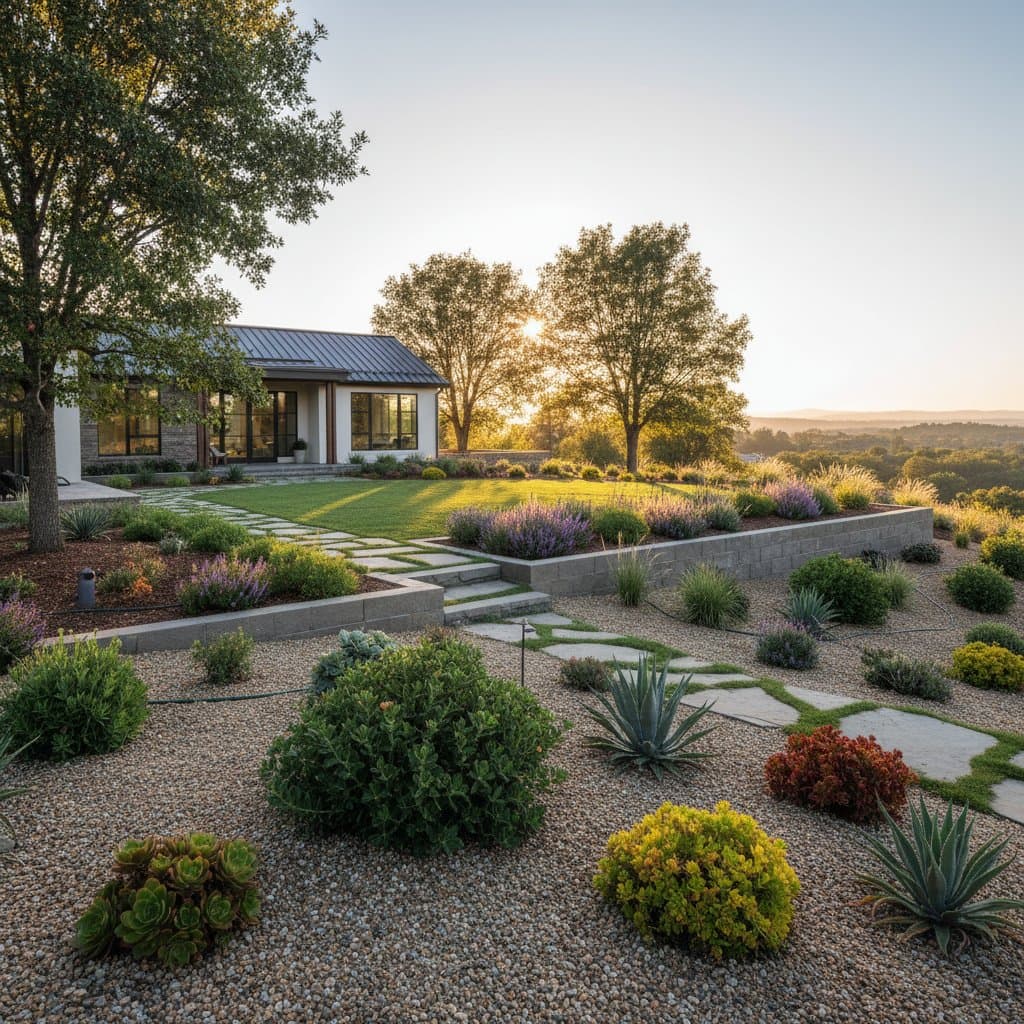
Mid-range designs feature custom layouts with native shrubs, efficient drip irrigation, and stone edging sourced from reputable suppliers. Rates fall between $10 and $14 per square foot, delivering enhanced visual appeal and ground stability.
Premium selections incorporate advanced systems like smart irrigation controllers, decorative aggregates, and established fire-safe trees including redbud or oak varieties. These command $15 to $20 per square foot yet may elevate property values by 3 to 5 percent.
Every category leverages non-flammable elements like stone pavers, metal borders, and decomposed granite to curb fire spread across surfaces.
Complexity and Accessibility
Challenging slopes, isolated locations, or abundant combustible materials increase expenses by 15 to 30 percent. High-risk areas frequently require certified arborists or fire-specialized teams. Adhering to municipal codes involves permit costs of $250 to $600.
Location-based adjustments apply: Remote mountainous zones, with scarce contractors, mark up prices by 20 percent over urban centers. Transporting gravel or stone incurs fees based on supplier proximity.
Service Types and Comprehensive Pricing
Basic Fire-Resistant Package
This package covers vegetation reduction, debris clearance, and zoned planting installation. Crews complete the work in two to three days, for a total of $4,000 to $8,000. It fits properties with manageable plant density and straightforward access, prioritizing a 30-foot defensible zone with fire-low plants replacing hazards.
Comprehensive Fire-Safe Landscape
Advanced offerings extend to irrigation overhauls, soil erosion barriers, and features like retaining walls or gravel paths. Budgets range from $12,000 to $20,000, roughly 40 percent above basic levels. Clients benefit from quicker returns via lower insurance rates and stronger market appeal.
Add-On Services Matrix
| Add-On Service | Estimated Cost | Savings When Bundled |
|---|---|---|
| Irrigation System Upgrade | $1,500 - $3,000 | 10% |
| Mulching and Soil Enhancement | $800 - $1,200 | 8% |
| Tree Trimming and Removal | $500 - $2,500 | 12% |
| Erosion Control Fabric | $600 - $1,000 | 7% |
Bundling services through platforms like Angi or HomeAdvisor yields up to 15 percent in discounts versus separate estimates.
Professional vs. DIY Analysis
DIY Cost Breakdown
Homeowners can tackle fire-resistant updates in small yards independently. Native plants from suppliers like Monrovia or High Country Gardens run $2 to $4 per square foot. Essential tools, including pruning equipment, rakes, and basic drip kits, total $300 to $600. Daily chipper rentals for debris processing add $100 to $200.
Overall DIY expenses average $2,500 to $5,000, aside from time investment. Plan for 40 to 60 hours on clearing, planting, and system assembly. Inexperience with irrigation or species selection risks extra spending on corrections.
Professional Advantages
Licensed experts deliver insured work, regulatory adherence, and optimal plant arrangements. Their operations yield superior outcomes and safety, sparing clients about 50 hours of effort. Bids encompass equipment valued at $1,000 to $2,000.
Professionals prove cost-effective when factoring in risks of DIY errors, such as fines for non-compliance or heightened fire vulnerabilities.
Strategies to Lower Wildfire Landscaping Expenses
Select drought-tolerant natives suited to your climate to cut irrigation needs and long-term care. Opt for bulk material purchases from local quarries, which reduces delivery fees by up to 20 percent. Schedule work during off-peak seasons, like early spring, for contractor discounts of 10 to 15 percent.
Combine services into one project to access bundling savings and minimize mobilization costs. Explore rebates from utility companies or fire departments, often covering 20 to 50 percent of irrigation upgrades. Consult multiple bids from certified Firewise providers to ensure competitive pricing without sacrificing quality.
Safeguarding Your Investment in Fire-Resistant Design
Regular maintenance, such as annual pruning and mulch refresh, extends the lifespan of wildfire-resistant features and preserves cost benefits. These landscapes not only mitigate risks but also foster eco-friendly habitats that attract pollinators and stabilize soil. By prioritizing defensible space, homeowners secure peace of mind alongside tangible gains in safety and resale potential.