Safety Notes
- Never touch electrical connections.
- Avoid cleaning during wet or windy conditions.
- Shut off power if you must handle cables or junction boxes.
Tasks Requiring Professional Expertise
Hire a licensed technician for the following activities:
- Electrical diagnostics or inverter replacement
- Roof penetrations or mounting repairs
- System rewiring or module replacement
- Any work under warranty conditions that requires certified labor
These tasks demand adherence to building codes, handling of high-voltage wiring, and prevention of potential roof damage. Improper execution can lead to safety hazards, system failures, or voided warranties.
Maintenance Practices and Expected Lifespan
Solar panels generally endure 25 to 30 years, with energy output degrading by approximately 0.5 percent annually. Consistent maintenance helps sustain production levels above 80 percent of initial capacity throughout and beyond the warranty period.
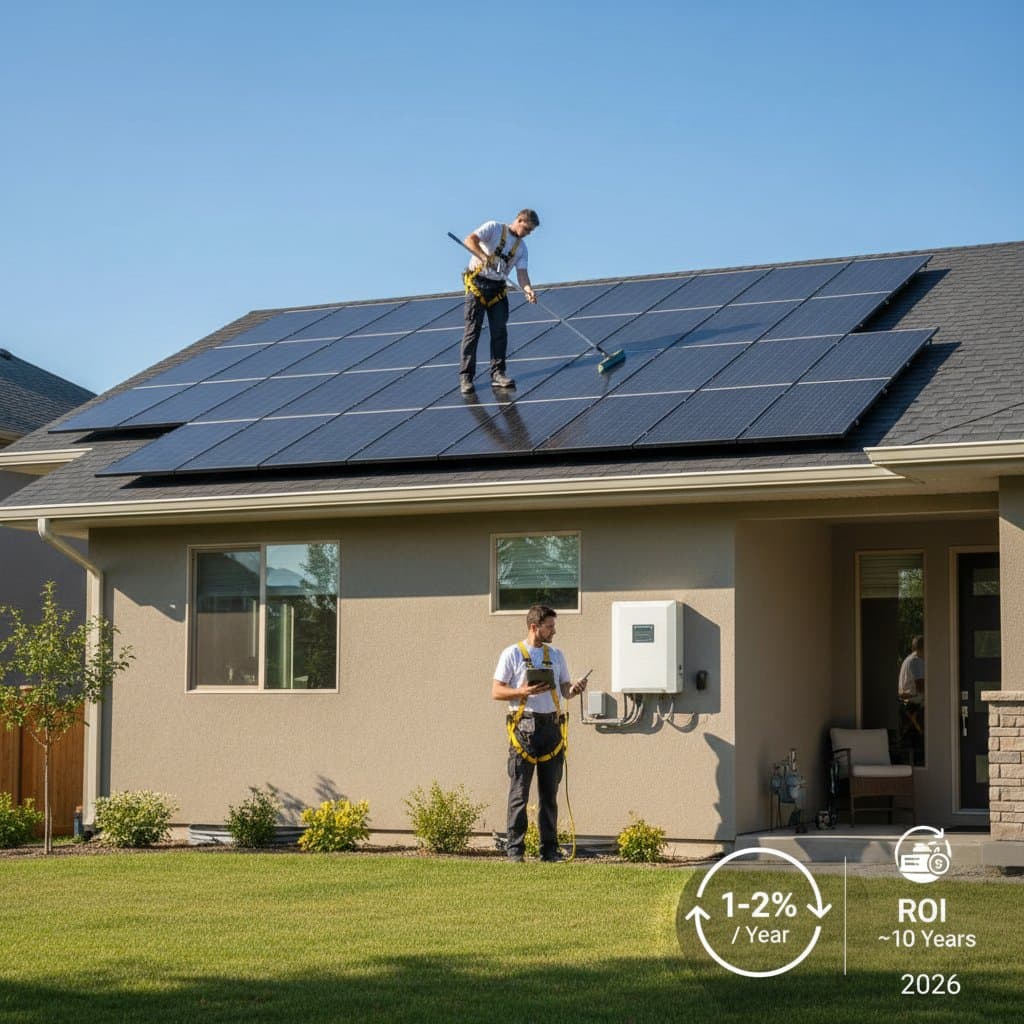
To achieve this longevity, implement a structured routine. Dust, pollen, and bird droppings can reduce efficiency by blocking sunlight, so address accumulation promptly. In regions prone to pollution or coastal salt spray, more frequent interventions become essential.
Essential Maintenance Checklist
- Clean panels twice yearly, using soft brushes and deionized water to avoid mineral deposits.
- Trim overhanging tree branches quarterly to minimize shading, which can cut output by up to 20 percent.
- Inspect loose conduits or wiring connections once a year, tightening as needed without electrical contact.
- Maintain detailed records of all service activities, including dates, observations, and power production data.
- Monitor the inverter display monthly for error codes or performance alerts, addressing issues immediately.
For areas with significant snowfall, remove accumulations gently using a long-handled foam squeegee to prevent structural stress on mounting hardware. Allow natural melting for light dustings to avoid unnecessary risks.
Factors Influencing Return on Investment and Payback Period
Solar installations deliver robust financial returns despite ongoing maintenance expenses. Homeowners typically recoup their investment in eight to twelve years, influenced by local electricity tariffs and available incentives. Post-payback, the system generates substantial net savings with minimal additional costs.
Several elements shape the overall return. Rising utility rates accelerate profitability, as each kilowatt-hour produced displaces more expensive grid power. Matching system capacity to household consumption optimizes outcomes; excess generation benefits from net metering policies in many jurisdictions.
Disciplined upkeep plays a pivotal role. Well-maintained panels can produce 15 to 25 percent more energy compared to those ignored, directly boosting savings. Explore local programs such as rebates, tax exemptions, and renewable energy credits to enhance viability.
Illustrative Financial Scenario
Consider a $20,000 solar array that offsets $1,800 in yearly electricity bills, with $250 allocated to maintenance. This setup reaches full payback in about ten years. Thereafter, annual benefits surpass $1,500, factoring in occasional component upgrades like inverter replacement every 10 to 15 years.
Sensitivity to variables matters. A 10 percent increase in local rates shortens payback by one to two years, while suboptimal sizing extends it. Proactive care, such as annual professional inspections costing $100 to $200, safeguards efficiency and averts costly downtime.
Steps to Optimize Your Solar System Performance
-
Establish a comprehensive maintenance log to document cleaning schedules, inspection findings, and inverter metrics. This record supports warranty claims and tracks trends over time.
-
Program calendar reminders for key intervals, such as post-pollen season cleanings in spring and pre-winter assessments in fall. Consistency prevents minor issues from escalating.
-
Solicit multiple quotes from certified service providers, ensuring estimates detail cleaning methods, safety protocols, and performance verification processes. Select firms experienced in your system type.
-
Familiarize yourself with warranty terms to identify mandatory professional services. Many manufacturers require certified labor for structural or electrical work to maintain coverage.
-
Regularly monitor output via inverter applications or smart meters. Compare monthly production against historical averages, investigating variances exceeding 5 percent.
Investing time in these practices fortifies your solar asset. Pristine panels, secure connections, and vigilant oversight collectively secure peak performance. Over the long term, this approach delivers decades of dependable energy at reduced costs, far outlasting the initial outlay.