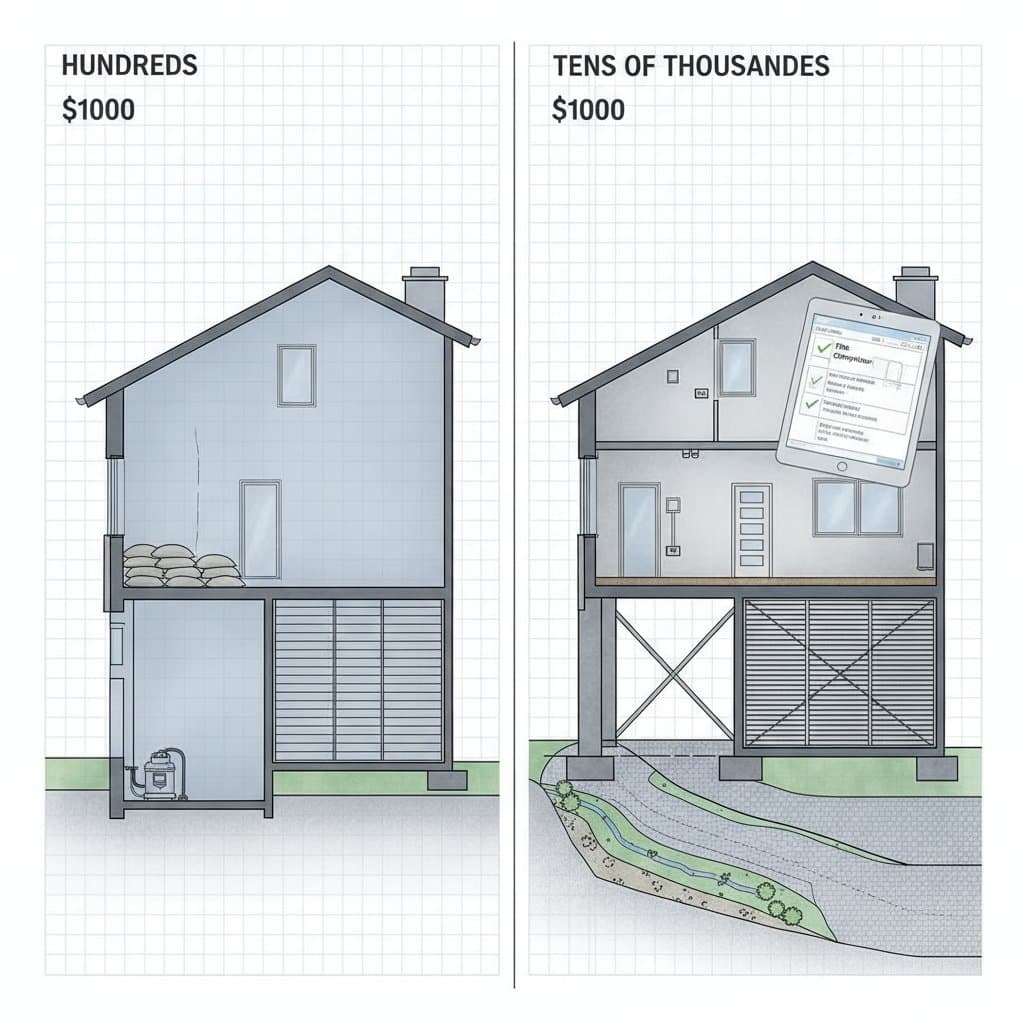
2026 Climate Adaptation: Flood Proofing Your Home Costs
Flood proofing protects your home from rising water and storm runoff. Costs range from a few hundred dollars for small fixes to tens of thousands for full retrofits. Choose between dry flood proofing, wet flood proofing, or elevation depending on your risk zone. Combine physical barriers, drainage, and grading to reduce both insurance and repair costs.
Quick Take
- Expect costs from a few hundred dollars for small fixes to tens of thousands for full retrofits.
- Choose between dry flood proofing, wet flood proofing, or elevation depending on your risk zone.
- Combine physical barriers, drainage, and grading to reduce both insurance and repair costs.
Pros and Cons
Pros
- Reduces flood damage and insurance claims.
- Adds resale value in flood prone areas.
- Improves safety and indoor air quality by limiting mold.
Cons
- High upfront cost for major modifications.
- Some methods require permits or engineering approval.
- May shift water toward neighboring properties if not designed correctly.
Step by Step Planning and Installation
Tools and Materials
- Tape measure, level, and chalk line
- Concrete patch and hydraulic cement
- Silicone and polyurethane sealants
- Sump pump with backup battery
- Flood vents, backflow valve, and drainage pipe
- Shovel, wheelbarrow, and gravel
- PPE including gloves, goggles, and respirator
- Ladder and drill for higher work
Time and Difficulty
Ranges from a few hours for sealing to several days for full retrofits. Moderate to high difficulty depending on scope.
1. Inspect the Site
Walk around your foundation after heavy rain. Note water flow, pooling, or seepage points. Inside, check for damp walls, musty smells, and efflorescence.
2. Measure and Document
Record floor and sill heights relative to nearby grade. Photograph drainage routes and downspouts. This helps an engineer size barriers or vents correctly.
3. Patch Foundation Cracks
Clean each crack and fill with hydraulic cement. For hairline gaps, use polyurethane sealant. Let it cure fully before testing with water.
4. Seal Openings
Caulk around windows, doors, utility penetrations, and sill plates. Use a compatible sealant for each surface type. Replace worn door sweeps and weatherstripping.
5. Install a Sump Pump
Dig a pit at the lowest point of the basement. Line it with gravel and set the pump basin. Connect discharge piping to drain at least ten feet from the house. Test with a bucket of water. Add a battery backup if local power is unreliable.
6. Add Flood Vents
If your home has a crawl space, install automatic flood vents that allow water in and out freely. This equalizes pressure and prevents wall collapse. Follow spacing rules based on enclosure size.
7. Improve Grading
Backfill around the foundation to slope soil away at least six inches over ten feet. Use compacted clay or loam, not sand. Add gutters and extensions to carry water clear of the foundation.
8. Protect Utilities
Raise electrical panels, outlets, and HVAC units above the base flood elevation. Label shutoff switches clearly. If moving gas or water lines, hire a licensed contractor.
9. Test and Inspect
Use a garden hose to simulate rainfall. Watch how water moves and drains. Verify no leaks at seams or joints. Adjust grading if puddles remain.
10. Document Work
Keep receipts, drawings, and photos. Insurers and city inspectors may request them for compliance or premium adjustments.
DIY versus Professional Help
Safe for DIY
- Sealing cracks, caulking openings, cleaning gutters, and grading soil.
- Installing sump pumps if you can handle plumbing and wiring safely.
- Adding temporary barriers like sandbags or plastic sheeting during storms.
Hire a Professional
- When the project involves structural changes or code compliance.
- If your basement walls bow or shift.
- When electrical or HVAC systems must be relocated.
- For flood vent sizing and engineering certification.
What the Professional Does Differently
- Calculates hydrostatic pressure and wall strength.
- Designs vent spacing and barrier height to meet flood zone requirements.
- Manages permits and inspection paperwork.
- Provides warranty and insurance documentation for future buyers.
Alternatives
Dry Flood Proofing
Keeps water out with sealants, coatings, and barriers. Best for homes with solid concrete foundations. Trade off requires perfect maintenance and may fail with prolonged submersion.
Wet Flood Proofing
Lets water in but minimizes damage with water resistant materials and drainage. Best for crawl spaces or unfinished basements. Trade off allows temporary water entry but enables faster drying and less structural stress.
Elevation
Raises the structure above flood level on piers, columns, or new foundation walls. Best for high risk zones or repetitive loss properties. Trade off carries highest cost but delivers greatest long term protection.
Checklist Flood Proofing Actions You Can Take Today
- Walk your foundation after rain and mark wet spots.
- Seal visible cracks with hydraulic cement.
- Clear gutters and test downspouts with a hose.
- Check sump pump power and backup battery.
- Move valuables off the basement floor.
- Verify flood insurance coverage and limits.
- Collect contractor quotes for vents or barriers.
- Keep emergency sandbags or water barriers ready.
- Review local codes before any structural work.
This list gets you moving before the next flood season hits.
Environmental and Safety Notes
- Always wear gloves, goggles, and masks when handling sealants or cement.
- Disconnect power before working near outlets or pumps.
- Dispose of old sealants and debris at approved waste centers.
- Avoid directing water toward neighboring lots or storm drains that feed back into your yard.
- Check ventilation if sealing basements tightly to prevent trapped moisture and mold.
Energy use can rise slightly if pumps run often, but the cost is far less than water damage repairs.
Pro Tips for Success
- Use two layers of defense with surface drainage outside and sealed walls inside.
- Keep backup power for pumps, especially in storm prone regions.
- Record water levels and pump cycles to spot changes over time.
- Combine flood proofing with energy upgrades like insulation or vapor barriers to boost efficiency.
- Join local resilience programs for rebates or inspection help.
Start Your Project
Begin with small measures such as sealed cracks and clean gutters. These steps can prevent thousands in damage. Scale up to major projects as your budget allows. Keep records for insurance and future buyers.