Flood-Resistant Flooring Costs and Warranties
Homeowners facing flood risks must prioritize materials that withstand water exposure. Flooring represents a critical vulnerability during heavy rains or groundwater surges, yet many overlook it in preparation efforts. Opting for flood-resistant options lowers repair expenses over time and accelerates recovery following incidents.
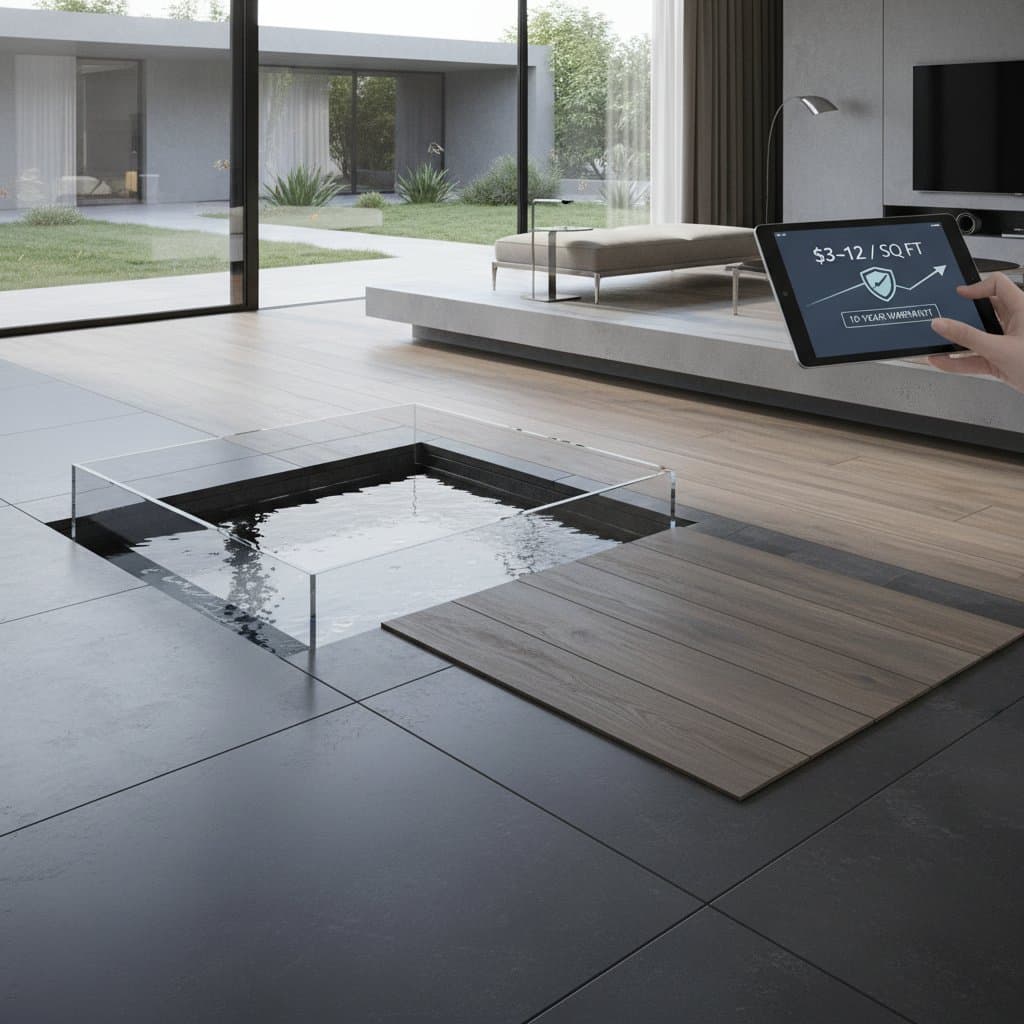
Quick Answer: Budget $3 to $12 per square foot for these materials, with warranties from 10 years to lifetime duration based on the selected type, installation approach, and manufacturer specifications.
Comparing Flood-Resistant Flooring Options
Various materials handle water differently, with some designed to repel surface moisture and others capable of enduring full submersion without structural compromise. Consider factors like aesthetics, subfloor compatibility, and maintenance demands when evaluating choices. The table below outlines key options to guide decisions.
| Flooring Type | Water Resistance | Average Cost (per sq. ft.) | Pros | Cons |
|---|---|---|---|---|
| Luxury Vinyl Plank (LVP) | Fully waterproof | $3 - $7 | Simple installation process, mimics wood grain effectively, resists mold formation | Susceptible to dents from heavy items |
| Ceramic or Porcelain Tile | Impervious with proper grouting | $4 - $10 | Endures for decades, cleans easily with standard methods | Feels cold without rugs, requires periodic grout upkeep |
| Polished Concrete | Inherently water-resistant | $2 - $8 | Withstands heavy use, offers sleek appearance, demands minimal ongoing care | Provides hard walking surface, risks cracking from foundation shifts |
| Rubber Flooring | Waterproof and slip-resistant | $5 - $12 | Cushions feet comfortably, ideal for basement environments | Offers fewer style variations |
| Engineered Vinyl Composite (EVC) | Waterproof core | $4 - $9 | Features robust interlocking system, remains stable in humid conditions | Exceeds basic vinyl in price |
Installation Timelines and Sequence
Proper execution ensures longevity and performance. Follow a structured process to address underlying issues and integrate protective layers effectively.
- Evaluate flood risk and subfloor integrity. Inspect for signs of prior moisture damage, such as discoloration or structural weaknesses.
- Extract existing flooring. Permit sufficient drying time to eliminate trapped humidity before proceeding.
- Apply vapor barrier or waterproof membrane. This step proves vital over wooden subfloors to block rising dampness.
- Position flooring per manufacturer guidelines. Employ sealants or adhesives formulated for moisture-heavy zones.
- Secure transitions and baseboards. These elements block pathways for water infiltration beneath the surface.
- Allow curing and conduct tests. Observe the specified waiting period prior to introducing foot traffic or performing cleanings.
Most projects span 2 to 5 days, encompassing demolition, moisture mitigation, and final hardening phases.
Essential Materials and Tools
Gather items suited to the chosen flooring to streamline the process and enhance results.
Materials:
- Selected flooring product (such as LVP sheets, tile sets, concrete polishing compounds, or rubber panels)
- Waterproof underlayment or vapor barrier sheets
- Durable transition strips and moisture-proof baseboards
- Silicone or polyurethane-based sealants
- Adhesives resistant to high humidity levels, if required for bonding
Tools:
- Precision utility knife or specialized flooring cutter
- Accurate tape measure and chalk line for alignments
- Rubber mallet paired with tapping block for secure fits
- Spirit level and spacing tools for even placement
- Wet saw dedicated to tile cutting tasks
- Personal protective equipment, including gloves, safety goggles, and a respirator for dust-generating activities like concrete work
Upkeep, Cleaning, and Expected Durability
Even robust materials require consistent attention to preserve their protective qualities.
- Post-flood response: Extract any pooled water without delay to prevent deeper penetration.
- Surface disinfection: Wipe with a solution of mild detergent or diluted bleach to eliminate contaminants.
- Subfloor drying: Ensure complete evaporation if removal of planks or tiles occurs, using fans or dehumidifiers as needed.
- Sealant renewal: Refresh applications on concrete surfaces or tile grout lines every 3 to 5 years to maintain barriers.
- Routine inspections: Examine edges and joints once a year for signs of separation or wear.
Under diligent maintenance, these installations endure 15 to 30 years. Concrete and tile variants often exceed this range with proactive care.
Frequently Asked Questions
1. Does flood-resistant flooring install directly over existing tile? Affirmative, provided the base remains flat, free of debris, and structurally sound. Incorporate an appropriate underlayment for overlay materials like vinyl or rubber.
2. Does laminate qualify as flood-resistant? Standard laminate does not perform well in water. Water-resistant models may handle minor spills but warp under prolonged exposure. Select vinyl or tile for reliable protection.
3. How to determine if a subfloor requires replacement after flooding? Apply pressure to the area. Softness, sponginess, or visible mold indicate the need for section removal and replacement prior to new flooring application.
4. Do adhesives for damp areas differ from standard types? Indeed. Seek products designated as waterproof or marine-grade, explicitly rated for elevated moisture settings.
5. Can flood-resistant flooring enhance home resale value? In regions susceptible to flooding, such upgrades appeal to buyers. Transferable warranties further underscore the preventive benefits.
Sustaining Floor Performance Over Time
Integrate flood-resistant flooring into a comprehensive home protection plan. Conduct regular checks, address leaks swiftly, and update seals as necessary to maximize durability. Document all product details, warranty terms, and upkeep activities for future reference.
Forward-thinking homeowners who select appropriate materials, execute precise installations, and uphold maintenance routines avoid substantial repair bills. This approach keeps living spaces secure, inviting, and straightforward to manage.