Why Solar Maintenance Matters in 2025
Solar panels offer a reliable path to clean energy, yet their long-term performance depends on consistent upkeep. In 2025, rising material costs and advanced system complexities mean maintenance expenses often exceed initial expectations. Homeowners who neglect these tasks face reduced efficiency, unexpected repairs, and potential warranty issues that erode savings.
This guide explores the true costs of solar maintenance, from routine cleanings to major component replacements. It provides practical strategies to balance expenses with performance, ensuring your investment delivers maximum value over decades.
Understanding Solar Maintenance Costs
Annual maintenance for a typical residential solar system ranges from $150 to $500, depending on system size and location. Cleaning alone accounts for $100 to $300 per visit, while professional inspections add $200 to $400. Inverter replacements, which may occur every 10 to 15 years, can cost $1,000 to $3,000, including labor.
Regional factors influence these figures significantly. Coastal areas require more frequent cleanings due to salt buildup, potentially doubling costs. Urban environments with high pollution demand similar attention. Inflation and supply chain issues in 2025 push prices upward by 5 to 10 percent compared to prior years.
Warranties typically cover manufacturing defects for 25 years but exclude routine service. Owners must budget separately for upkeep to avoid out-of-pocket surprises. Proactive care not only preserves efficiency but also extends system lifespan, often recouping costs through higher energy production.
Deciding Between Professional Service and DIY Approaches
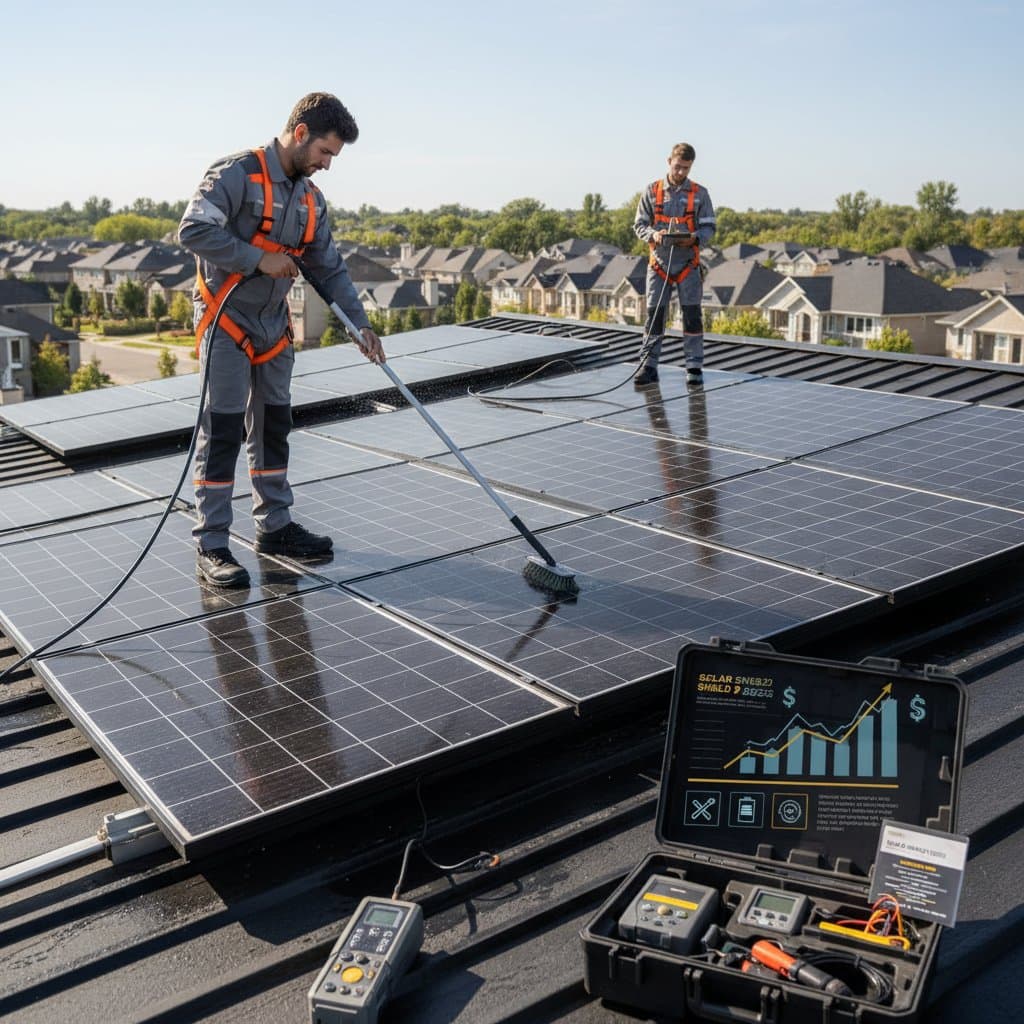
Choosing between hiring experts and handling tasks yourself requires careful assessment. Professional services ensure safety and compliance, but they carry fees. DIY options suit confident homeowners with the right setup, yet risks include injury or warranty invalidation.
Use this decision framework to evaluate your situation:
| Factor | Suitable for DIY When | Hire a Professional When |
|---|---|---|
| Skill Level | Experienced with roofing and basic electrical testing using a multimeter | Lacking training in electrical safety or roof work |
| Safety Concerns | Low-profile roof with gentle slope and stable weather | Steep, slippery, or multi-story roof with high-voltage components |
| Equipment Access | Owns essential tools like a sturdy ladder, safety harness, and soft-bristle brush | Missing secure access equipment or diagnostic tools |
If multiple factors point toward professional help, opt for it. A standard service call at $300 prevents accidents or coverage losses that could cost far more.
Troubleshooting Frequent Solar System Issues
Solar systems occasionally underperform due to environmental wear or component failures. Early detection minimizes downtime and repair expenses. Address issues systematically to restore output quickly.
Reduced Power Generation:
First, review inverter display against historical data. Debris or shading often causes drops; a gentle cleaning resolves most cases. Persistent low output signals deeper problems—measure voltage across panel strings to identify faulty connectors or failing microinverters.
Inverter Error Messages:
Consult the user manual for code interpretations, which commonly stem from grid fluctuations, poor grounding, or signal interruptions. Perform a single reset if safe. Recurring alerts necessitate a certified technician to diagnose and repair without risking system damage.
Leaks Near Panel Mounts:
Examine sealants and flashing around array bases. Water intrusion demands immediate action—halt all cleaning and engage both a roofer and solar specialist. Avoid non-approved sealants, as they may compromise roof integrity and void protections.
Arc Fault Alerts:
Shut down the system promptly to prevent fire hazards from overheated wiring. Only licensed electricians should inspect and restore circuits, ensuring compliance with safety standards.
Preparing for Maintenance Visits
Efficient preparation streamlines service and controls costs. Gather necessary items in advance to avoid delays or extra charges.
| Preparation Category | Key Requirements |
|---|---|
| Tools and Equipment | Sturdy ladder, safety harness, torque wrench for secure fittings, multimeter for electrical checks, soft brush for cleaning |
| Required Skills | Proficiency in basic electrical measurements and safe navigation on roofs |
| Safety Essentials | Protective gloves, slip-resistant footwear, hard hat, full fall protection system |
| Regulatory Needs | No permits for basic cleaning; licensed electrician required for any wiring work |
| Site Preparation | Clear access paths, power down the inverter, remove nearby obstacles like hoses |
| Environmental Factors | Select a calm, dry day with moderate temperatures; avoid windy or stormy conditions |
Thorough readiness reduces visit duration, often cutting labor fees by 20 to 30 percent.
Common Questions on Costs and Coverage
How often should solar panels receive cleaning?
Annual cleaning suffices for most setups, but dusty inland regions or coastal zones with salt exposure benefit from biannual sessions. Regular removal of buildup maintains peak efficiency close to manufacturer ratings.
Does the warranty include maintenance services?
Warranties protect against defects in materials and workmanship, not everyday upkeep. Owners bear responsibility for ongoing care to keep coverage intact.
Will DIY cleaning jeopardize my warranty?
Damage from harsh abrasives or unsuitable chemicals poses the risk, not the act itself. Adhere to guidelines from the manufacturer and maintain records of all activities.
What risks arise from skipping inspections?
Extended neglect leads to gradual efficiency declines and complicates warranty claims for hidden defects. Annual checks catch issues early, preserving output and eligibility.
Do maintenance contracts provide value?
They prove beneficial for hard-to-access rooftop arrays or systems under active warranty. Annual fees, typically $200 to $500, offset losses from inefficiencies or major failures.
Safeguarding Your Solar System's Future
Treat your solar installation as a durable asset demanding vigilant oversight. Annual professional evaluations, combined with monthly monitoring of production metrics, form the foundation of reliability. Address any output dips exceeding 5 percent through targeted cleanings or diagnostics.
These habits avert costly interventions like inverter swaps and uphold warranty terms. Well-tended systems generate consistent energy, accelerate payback periods, and enhance home safety. If your panels have gone unchecked since setup, obtain quotes from at least two vetted providers. Verify their expertise in safety protocols, outline service details, and schedule during optimal weather. Consistent effort ensures your solar setup fulfills its promise of sustainable, cost-effective power.