Why AI HVAC Systems Require Specialized Warranty Coverage
Key Benefits at a Glance
- Specialized warranties safeguard investments in AI HVAC systems, which involve higher installation and repair expenses compared to conventional units.
- These plans address software updates, sensor malfunctions, and connectivity disruptions that basic warranties overlook.
- Absence of appropriate coverage exposes owners to substantial expenses for components requiring expert intervention, such as faulty sensors or algorithm errors.
Understanding AI HVAC Technology
AI HVAC systems integrate connected sensors, advanced algorithms, and adaptive software to manage heating, cooling, and ventilation dynamically. These systems monitor variables like temperature, humidity, occupancy levels, and energy consumption, enabling real-time adjustments that enhance efficiency and indoor comfort. However, the inclusion of intricate digital elements demands specialized maintenance, underscoring the necessity of comprehensive warranty protection.
Advantages and Challenges
Advantages
- Predictive maintenance notifications minimize unexpected failures by anticipating issues through data analysis.
- Automated adjustments optimize energy consumption, leading to measurable reductions in utility bills.
- Sensor-driven feedback elevates indoor air quality and personalized comfort levels.
- Remote diagnostic capabilities allow technicians to resolve problems swiftly without on-site visits.
Challenges
- Repairs frequently involve proprietary software patches or custom components unavailable through standard channels.
- A limited pool of technicians possesses the expertise required for AI-integrated systems.
- Basic warranties typically exclude digital functionalities, leaving owners vulnerable to uncovered costs.
- Undocumented connectivity failures may invalidate warranty terms, complicating claims.
Ideal Scenarios for Smart Warranty Coverage
When to Pursue It
- Systems equipped with environmental sensors or remote learning capabilities benefit most from extended digital protection.
- Installations backed by manufacturer guarantees for performance metrics warrant complementary coverage.
- Homes dependent on mobile applications or cloud-based data management require safeguards for these features.
Potential Shortcomings
- Coverage limited to physical components neglects software vulnerabilities.
- Unauthorized installers may disqualify systems from diagnostic support under warranty.
- Policy fine print often omits provisions for software glitches or network interruptions, leading to denied claims.
Guide to Securing Appropriate Warranty Protection
Preparation Materials
- System model and serial number details.
- Complete installation documentation and registration confirmation.
- Inventory of integrated devices, such as sensors or modules.
- Network specifications for Wi-Fi-enabled components.
Estimated Time and Effort
Time: 1 to 2 hours. Difficulty: Straightforward for residential users.
- Review the standard manufacturer warranty to verify inclusion of hardware and software elements.
- Inquire about digital enhancement options, which typically extend to sensors and control interfaces.
- Verify authorized service providers; maintain a record of approved technicians to preserve validity.
- Complete online registration for the system, retaining all verification correspondence.
- Configure data transmission settings to ensure seamless logging to the manufacturer.
- Examine policy exclusions, particularly clauses related to connectivity disruptions or unauthorized software modifications.
- Arrange an initial professional inspection to confirm sensor accuracy and module functionality, thereby activating full terms.
Validation Indicators
Successful activation occurs when the system transmits data and processes updates error-free.
Immediate Resolutions
Address any synchronization failures by contacting the installer promptly within the initial period.
Documentation Practices
Organize all warranty documents and digital backups in a dedicated file, including receipts for services or replacements.
Pricing Considerations
Standard pricing for extended smart warranties ranges from $300 to $900 annually.
Cost Escalators
- Expansive multi-zone configurations increase complexity.
- Advanced cloud integration and remote oversight features add premiums.
- Premium sensors or brand-specific components elevate rates.
Cost Reducers
- Compact single-zone setups simplify coverage needs.
- Universal components compatible across models reduce expenses.
- Regional providers offering bundled in-house services provide savings.
Repair Versus Replacement Decision
Opt for replacement when out-of-warranty diagnostics for core AI elements exceed 50 percent of a new system's value, as repairs may prove uneconomical.
Homeowner Tasks Versus Professional Services
Suitable for Independent Handling
- Verifying application connectivity and signal strength.
- Refreshing network credentials or Wi-Fi configurations.
- Clearing debris from vents and filters to maintain airflow.
- Submitting warranty registration via online portals.
Circumstances Requiring Experts
- Inaccurate sensor readings or calibration drifts.
- Unresponsive algorithmic functions.
- Disruptions in control boards or cloud communications.
- Interventions involving electrical wiring or refrigerant handling.
Expert Advantages
Certified professionals employ specialized diagnostic tools to retrieve system histories, perform recalibrations, and restore AI settings. They ensure adherence to prevailing building regulations for ventilation and electrical safety.
Ongoing Maintenance Strategies
Conduct reviews every six months or prior to seasonal transitions.
Essential Procedures
- Gently clean sensors and vents using a soft brush or low-suction vacuum.
- Initiate full diagnostic scans via the control application.
- Analyze logs for anomalies or intermittent connections.
- Renew or adjust sensors according to performance indicators.
- Archive current configurations prior to applying software updates.
Expected Results
These practices promote uninterrupted performance, diminish claim frequencies, and sustain energy efficiencies.
Comparable Options
Basic Extended Warranty
Suitable for legacy or basic-stage systems; lower cost but omits digital and network protections.
Comprehensive Service Agreements with Oversight
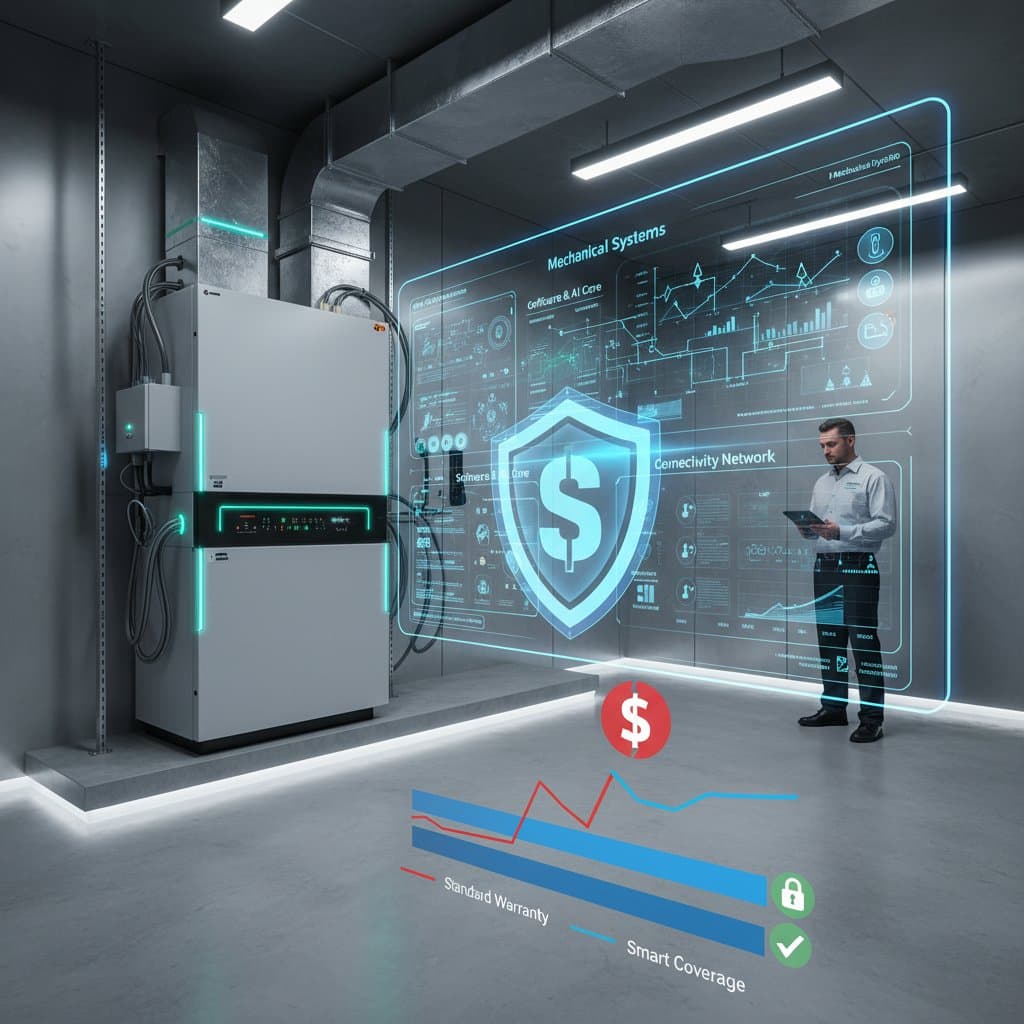
Ideal for expansive residences or intelligent structures; encompasses proactive diagnostics and routine upkeep, though at a higher price, fully addressing mechanical and technological aspects.
On-Demand Repair Services
Appropriate for imminent system upgrades; avoids initial investments but incurs full costs per incident.
Common Questions
Does smart warranty protection mandate continuous internet connectivity? Affirmative. AI systems depend on data uploads for monitoring; interruptions may hinder claim validations.
How should network changes, such as router replacements, be managed? Update details within the application and inform the provider to sustain oversight and compliance.
Are firmware updates included in coverage? Typically yes, provided installations occur within designated timelines; delays risk forfeiting digital protections.
Is warranty transferability possible upon property sale? Generally allowed by manufacturers, potentially with a nominal fee; review conditions prior to transactions.
Can power surges impact warranty status? Unprotected surges may do so; incorporate surge safeguards or home-wide protectors to fulfill requirements.
Do third-party thermostats qualify for coverage? Rarely; adhere to manufacturer-approved integrations to avoid invalidation.
Essential Verification List
-Retain records of all services and evaluations.
- Program alerts for routine maintenance intervals.
- Scrutinize exclusion clauses prior to agreement.
- Test Wi-Fi stability and data protocols.
- Engage certified professionals exclusively for significant repairs.
Securing Long-Term System Reliability
Emerging AI HVAC technologies present unique challenges in residential settings, including elevated part prices and scarce skilled labor. Partial warranties focused on traditional elements like compressors leave digital vulnerabilities exposed. Integrated smart coverage unifies mechanical and technological support, mitigating risks from prevalent failure points.
Consider a scenario where firmware malfunctions disrupt operations; conventional plans might cover hardware but not the underlying code, resulting in extended outages and fees. Enhanced policies enable providers to retrieve diagnostics, pinpoint issues, and deploy certified fixes, accelerating resolutions and minimizing expenses.
Moreover, these warranties enforce rigorous installation standards, often mandating certified commissioning to avert problems such as inefficient cycling or airflow imbalances. Bypassing these protocols jeopardizes not only coverage but also regulatory conformity.
Implementing Effective Protection
Examine existing HVAC documentation to identify gaps; many assume comprehensive safeguards when only mechanical aspects apply. Consult installers or manufacturers for tailored smart options and evaluate provisions meticulously.
Owners with application-dependent controls stand to gain from upgrades that shield against digital disruptions. Initial investments yield protection against overlooked failures in standard agreements. Maintain registration, connectivity, and authorized servicing to maximize benefits.
View warranty management as proactive stewardship rather than mere insurance. Perform regular diagnostics, apply timely updates, and log interactions diligently. This approach ensures AI HVAC delivers sustained efficiency and dependable home comfort.