The Real 2025 Costs of Multigenerational Renovations
Homeowners who add living space for parents, adult children, or extended family encounter a complex array of expenses. These projects integrate accessibility features, privacy measures, and building code requirements into a unified effort. The aim remains to achieve comfort alongside regulatory adherence. This guide details actual costs, project timelines, and key decisions to support informed planning.
Defining Multigenerational Renovations
Multigenerational renovations modify a single home to accommodate multiple age groups, enabling independent yet proximate living. Typical projects encompass basement suites, garage conversions, or complete accessory dwelling units (ADUs). Each approach involves distinct cost levels, zoning considerations, and inspection processes.
Pursue such renovations when family caregiving, housing affordability, or enhanced property value outweigh immediate resale concerns. These projects suit properties with adequate lot size, compliant zoning, and sufficient utility infrastructure to support additional square footage.
Advantages, Disadvantages, and Ideal Applications
Advantages
- Maintains family proximity with distinct living zones
- Increases property value and potential rental income
- Supports aging in place and avoids expenses of assisted living facilities
Disadvantages
- Elevates initial construction and permitting expenses
- Reduces privacy if spatial arrangements lack forethought
- Complicates electrical and plumbing integrations
Ideal Applications
- Properties with lots spacious enough for detached ADUs
- Basements featuring full-height ceilings and pre-existing egress windows
- Households committed to long-term occupancy
Detailed Cost Analysis and Influencing Factors
Expenses differ significantly based on geographic location, project type, and quality of finishes. The following table presents national average estimates for common project types.
| Project Type | Material Costs | Labor Costs | Total Estimated Range | Key Influencing Factors |
|---|---|---|---|---|
| Basement Suite Conversion | $30,000 - $70,000 | $25,000 - $60,000 | $55,000 - $130,000 | Plumbing requirements, ceiling height, moisture mitigation |
| Garage Conversion | $20,000 - $45,000 | $20,000 - $50,000 | $40,000 - $95,000 | Insulation needs, HVAC connections, loss of parking space |
| Detached ADU | $90,000 - $180,000 | $80,000 - $200,000 | $170,000 - $380,000 | Foundation work, utility extensions, separate metering |
| Interior Suite Addition | $40,000 - $100,000 | $35,000 - $90,000 | $75,000 - $190,000 | Structural modifications, soundproofing, finish selections |
Three Key Cost Influences
- Material Quality - Basic options such as builder-grade cabinets, vinyl flooring, and fiberglass showers reduce expenses. Premium choices like natural stone tile, quartz countertops, and custom woodwork increase costs substantially.
- Labor Intensity - Properties with outdated wiring systems or inadequate plumbing require extended labor efforts.
- Site-Specific Challenges - Restricted access, challenging soil conditions, or insufficient parking can inflate labor costs by 10 to 20 percent.
Project Execution Steps
Required Personal Protective Equipment: Gloves, eye protection, hearing protection, and dust masks.
Execution Sequence:
- Initial Feasibility Assessment - Confirm zoning regulations, egress requirements, and lot coverage restrictions prior to design development.
- Design and Budget Development - Create a floor plan that ensures independent living elements, including a bathroom, kitchenette, and dedicated exterior entry. Establish a budget incorporating a 15 percent contingency fund.
- Permitting Phase - Provide structural, electrical, and plumbing plans for review. Anticipate fees for plan examination and potential utility enhancements.
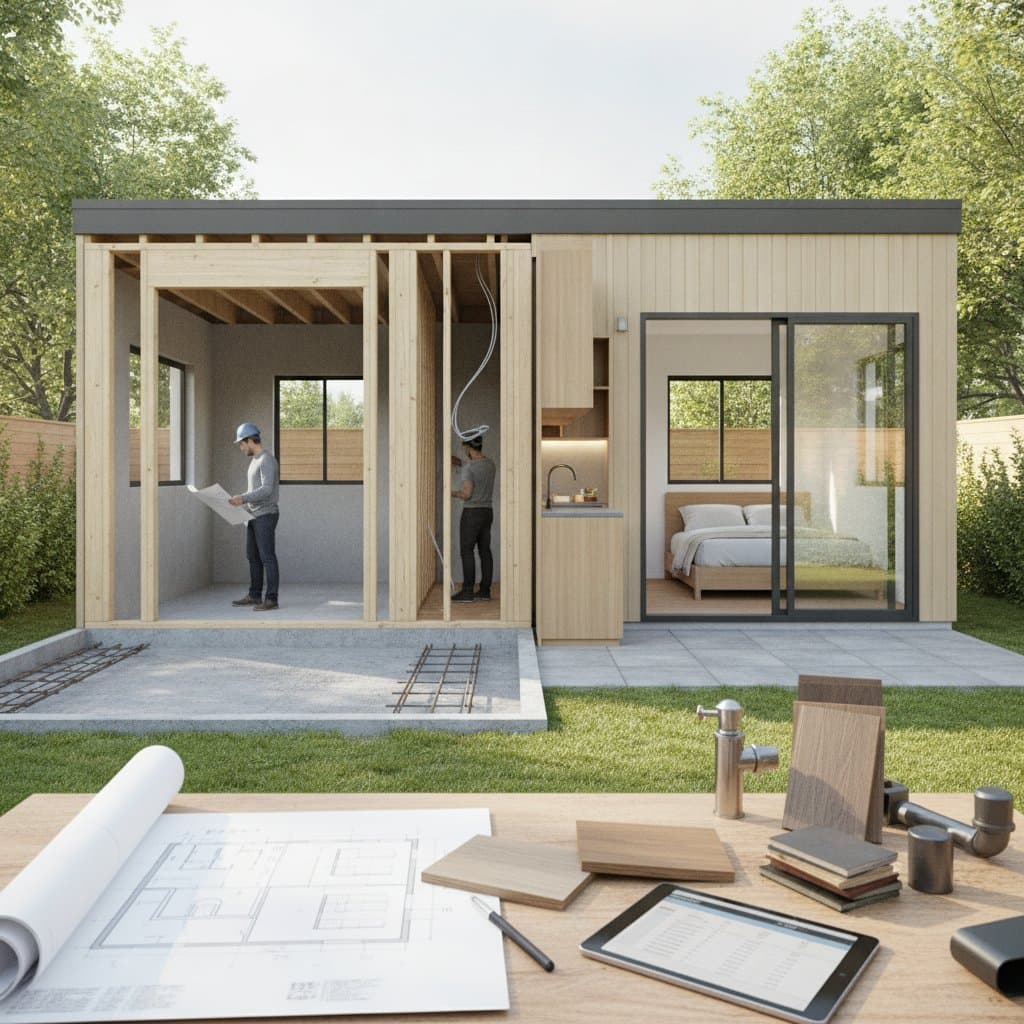
- Construction Phase - Proceed from demolition through framing, rough plumbing and electrical installations, insulation, drywall application, and final finishes.
- Final Inspections and Completion - Arrange inspections for structural, electrical, and plumbing components. Obtain the certificate of occupancy upon approval.
Basement suite projects typically span 6 to 10 weeks after permit issuance. Detached ADUs extend to 3 to 6 months, accounting for foundation and utility installations.
Essential Safety, Permitting, and Code Considerations
Electrical systems for independent suites demand GFCI and AFCI protection on all circuits. Bedroom windows must provide an unobstructed egress area of at least 5.7 square feet. Plumbing connections require certified fittings and proper venting to prevent sewer gas accumulation.
Fire-rated separations between units necessitate Type X drywall or comparable assemblies. Local authorities often mandate unique addressing for emergency response purposes.
Failure to secure inspections or employ unlicensed professionals risks invalidating insurance coverage and incurring penalties.
Common Pitfalls to Sidestep
Neglect moisture management in basements invites mold growth and compromises indoor air quality. Implement vapor barriers and enclosed sump systems as standard measures.
Overlook soundproofing, and noise travels through shared walls and floors without resilient channels or specialized insulation. Position quiet spaces, such as bedrooms, distant from mechanical equipment. Conduct thorough load assessments to ensure existing systems support added bathrooms or kitchens.
Ongoing Maintenance and Durability Expectations
Maintenance Schedule
- Post-Installation Period: Examine caulking, seals, and drains on a monthly basis during the initial season.
- Seasonal Tasks: Verify GFCI functionality, clean air filters, test sump pumps, and assess exterior drainage slopes.
- Yearly Reviews: Examine HVAC maintenance records, test smoke and carbon monoxide detectors, and refresh tile grout seals.
- Long-Term Refresh: Fixtures and finishes endure 15 to 25 years before significant updates become necessary.
Effective ventilation and humidity regulation prolong material longevity and avert expensive repairs.
Professional Versus DIY Guidelines
Apply the following criteria to determine involvement levels.
- Skill Alignment: Tackle straightforward tasks like light framing, flooring installation, or painting independently. Delegate electrical, plumbing, and egress modifications to licensed specialists.
- Risk Evaluation: Avoid projects involving gas lines, high-voltage elements, or load-bearing structures.
- Equipment Access: Renting specialized items such as trenchers or electrical panels proves impractical for brief undertakings.
A combined strategy proves effective: Manage demolition and finishing tasks personally while contracting experts for regulated components.
Contractor Bid Comparison
| Category | Specifications | Contractor A | Contractor B | Contractor C | Comparison Insights |
|---|---|---|---|---|---|
| Framing and Drywall | 2x4 walls, Type X drywall | $18,000 | $16,500 | $19,200 | Evaluate wall dimensions and fire resistance |
| Plumbing Rough-In | One bathroom plus kitchenette | $9,200 | $10,000 | $8,800 | Verify venting configurations and fixture compatibility |
| Electrical | 100A subpanel installation | $6,000 | $6,400 | $5,800 | Confirm wire material preferences |
| HVAC | Ducted mini-split system | $12,000 | $11,500 | $13,200 | Assess efficiency ratings and zoning capabilities |
Scrutinize bids item by item. Ensure details cover permits, waste disposal, and system testing. The lowest quote without explicit scope definitions frequently leads to unforeseen additional expenses.
Implementing Your Project
Begin by outlining family requirements. Identify private zones, shared areas, and utility allocations. Solicit at least three detailed quotes from design-build firms, requesting breakdowns of labor and materials. Confirm contractor licensing and insurance prior to agreements.
Arrange alternative accommodations during the build phase. Establish payment terms linked to inspection completions. Upon project finish, compile all permits and warranties for resale or loan purposes.
Multigenerational renovations yield enduring benefits when executed with precise budgeting, full permitting, and consistent upkeep. Beyond financial investment, the true measure lies in the secure, functional environment provided for family use.