Leverage 2025 Home Office Tax Deductions to Reduce Renovation Expenses
Essential Overview
- Deduct a portion of home office renovation costs if the space qualifies under IRS regulations for exclusive business use.
- Eligible expenses encompass direct costs such as materials and labor, plus indirect costs like utilities apportioned by square footage.
- Maintain meticulous records of measurements, receipts, and usage to substantiate claims during tax filing.
- Self-employed individuals or freelancers benefit most, as employees generally cannot claim this deduction.
- Plan renovations with tax implications in mind to lower net costs and enhance workspace efficiency.
- Consult IRS Publication 587 for precise rules, ensuring all actions align with current guidelines.
Understanding the Home Office Deduction
The home office deduction allows qualified taxpayers to deduct a percentage of home-related expenses when a specific area serves exclusively as a principal place of business. This provision applies to renovations that create or improve such a space, effectively reducing the overall financial burden of the project. For 2025, the IRS maintains these rules with adjustments for inflation, enabling deductions that can substantially lower taxable income.
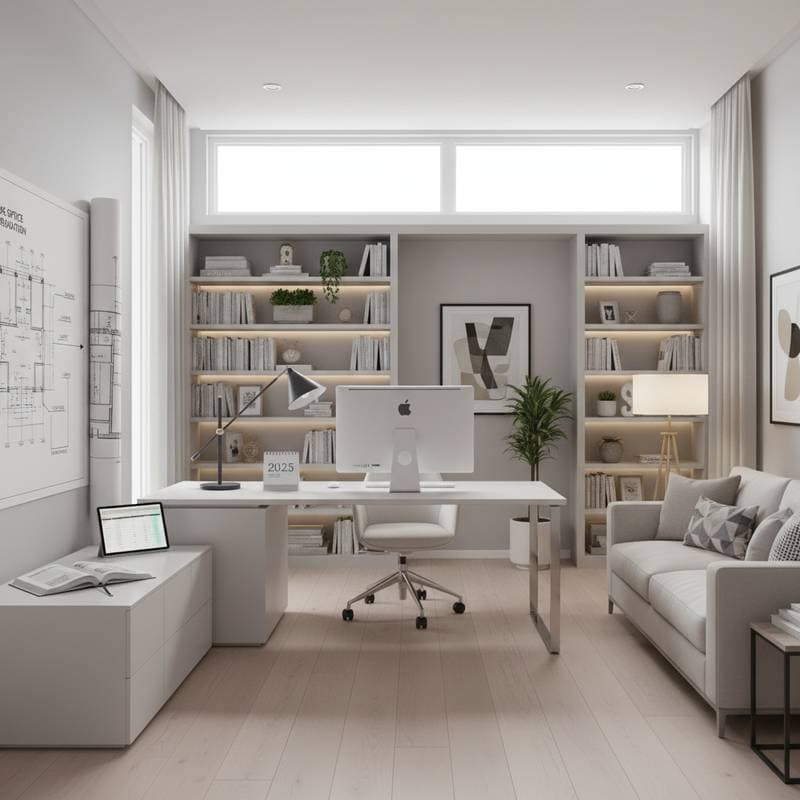
To qualify, the space must meet two key tests: regular and exclusive use for business, and it must function as your primary administrative or management location. This means a dedicated room or clearly defined area within a room, free from personal activities. Renovations that establish this dedicated zone, such as installing partitions or upgrading lighting, become partially deductible based on the office's proportion of your home's total square footage.
For example, if your home measures 2,000 square feet and your office occupies 200 square feet, you can deduct 10 percent of qualifying home expenses. This includes renovation outlays like painting walls or adding shelving, provided they enhance the business functionality without serving personal needs.
Benefits and Limitations
Benefits
- Reduces the effective cost of renovations by offsetting expenses against taxable income, potentially saving thousands.
- Extends to both direct improvements, such as new flooring or cabinetry, and indirect allocations like mortgage interest or property taxes.
- Promotes disciplined financial tracking, which supports long-term business organization and audit preparedness.
Limitations
- Enforces strict exclusive-use requirements; any personal use, even occasional, disqualifies the space.
- Demands comprehensive documentation, including photos, invoices, and usage logs, to withstand IRS review.
- Increases audit risk if records appear incomplete or if the deduction seems disproportionately large relative to income.
These trade-offs highlight the deduction's value for committed home-based workers, but they require upfront planning to avoid pitfalls.
Ideal Scenarios for Claiming the Deduction
Claim this deduction when you operate a sole proprietorship, freelance, or other self-employment venture from home. It proves particularly advantageous if you invest in a full room conversion, ensuring the area remains work-only. Situations where you cover all renovation costs personally, without employer reimbursement, also align well, as these outlays qualify fully.
The deduction falters in cases of W-2 employment, where home offices do not qualify unless the employer mandates it and does not reimburse. Mixed-use spaces, such as a room that also stores personal items or hosts guests, fail the exclusive-use test entirely. Similarly, undocumented expenses or inaccurate square footage measurements lead to disallowed claims and potential penalties.
Consider your lifestyle: if privacy and separation from family activities matter, a dedicated office maximizes both productivity and tax benefits. Evaluate local zoning laws too, as some areas restrict home businesses, impacting eligibility.
Detailed Guide to Implementation
Preparation Tools and Materials: Acquire a tape measure for accurate dimensions, a smartphone for timestamped photos, a digital spreadsheet for expense logging, and a secure folder for receipts.
Estimated Time: Allocate 1 to 2 hours initially for setup, plus ongoing 15 minutes monthly for updates.
Skill Level: Straightforward for most, though basic math aids in percentage calculations.
-
Determine Workspace Dimensions. Measure the length and width of the area dedicated solely to business activities, excluding hallways or shared zones. Multiply these figures to calculate square footage, and compare against your home's total area using public records or a floor plan.
-
Catalog Renovation Expenses. Collect all invoices detailing materials like paint, lumber, or electrical fixtures, as well as labor charges from contractors. Note dates, vendors, and specific items to tie them directly to the office space.
-
Categorize Direct Expenses. Identify costs exclusively for the office, such as custom desk installations or wall-mounted organizers. These receive 100 percent deduction allocation if confined to the workspace.
-
Apportion Indirect Expenses. For shared home costs like electricity or internet, apply the square footage percentage. If your office is 10 percent of the home, deduct 10 percent of annual utility bills, prorated for the months the space qualifies.
-
Document Visual Evidence. Capture photographs of the space before, during, and after renovations, highlighting boundaries like doors or dividers. Include timestamps to verify the timeline of exclusive use.
-
Organize and Secure Records. Digitize receipts into categorized folders—by expense type or date—and back them up. Physical copies in a fireproof binder provide redundancy for audits.
Verification Step: Review your documentation to confirm clear separation between work and personal areas, such as through furniture arrangements or signage.
Adjustments if Needed: Install additional barriers, like room dividers or locked cabinets, to reinforce exclusivity.
Final Organization: Label all files systematically to streamline access during tax preparation.
This process not only supports your deduction but also builds a professional foundation for your home business.
Renovation Cost Breakdown
Basic home office conversions typically range from $3,000 to $15,000, depending on scope and location. Factors elevating costs include electrical upgrades for multiple outlets, custom built-in storage, premium flooring materials, or modifications to heating and ventilation systems. Urban areas often incur higher labor rates, pushing totals upward.
To minimize expenses, repurpose existing rooms, perform cosmetic updates yourself, or source reclaimed materials from local suppliers. Situations warranting full replacement over minor repairs arise when the space features outdated wiring that fails safety inspections or inadequate insulation leading to energy inefficiency. In such cases, a comprehensive rebuild ensures long-term compliance and comfort, justifying the higher initial outlay through sustained deductions.
Budget wisely by obtaining multiple contractor quotes and prioritizing energy-efficient features, which may qualify for additional credits under separate IRS provisions.
Choosing Between DIY and Professional Services
Opt for do-it-yourself approaches on low-risk tasks like applying fresh paint, installing trim molding, laying laminate flooring, or replacing basic light fixtures. These require minimal tools and allow full control over costs, with expenses fully deductible if business-related.
Engage professionals for complex elements such as wiring new circuits, erecting interior walls, or integrating HVAC components, as building codes mandate licensed work and inspections. Experts handle permitting processes, ensure adherence to safety standards, and furnish detailed receipts essential for tax substantiation—differentiating their service from amateur efforts that might invite disallowances.
Weigh your expertise: if time constraints or skill gaps exist, professional involvement preserves deduction integrity while delivering a polished result.
Ongoing Upkeep for Sustained Benefits
Perform annual inspections of electrical outlets, lighting fixtures, and air circulation to maintain functionality and safety. Address issues promptly, such as replacing worn cords or cleaning vents, to prevent disruptions that could compromise exclusive use.
This routine fosters a comfortable environment, upholds IRS compliance for multi-year deductions, and avoids costly emergencies. Schedule these checks alongside tax reviews to integrate maintenance with financial planning seamlessly.
Viable Alternatives to Full Home Office Setup
Coworking Space Subscription: Ideal for those seeking clear boundaries from home distractions, offering flexible access without renovation hassles. Monthly fees provide networking opportunities, though they lack the permanence of a home deduction.
Prefabricated Outdoor Structure: Suited to limited indoor availability, these units install quickly in backyards and qualify as home offices if wired for utilities. Upfront costs exceed $10,000 but eliminate interior disruptions and support full deductions.
Room Partition Solution: A budget-friendly divider creates a defined workspace within an existing room for under $500. It qualifies only if it establishes true exclusivity, making it a starter option for testing commitment before major investments.
Each alternative balances cost, convenience, and tax eligibility based on your specific needs.
Common Questions Addressed
Do renters qualify for this deduction? Yes, provided you cover the renovation costs and maintain a qualifying exclusive-use area within your leased space.
What happens if the office serves dual purposes, like a guest room? It disqualifies entirely, as the IRS requires 100 percent business dedication.
Is a formal business license necessary? Not federally, but verify local regulations, as some municipalities mandate licenses for home-based operations to claim deductions.
Establish Your Deduction-Ready Workspace
Define your office boundaries today and initiate expense tracking with precise measurements and organized receipts. This preparation positions you to claim substantial savings come tax time, transforming your renovation into a strategic investment that enhances both your business and financial well-being.