The True Cost of Your Home Office Makeover
Creating a home office requires investment that ranges from a few hundred dollars to tens of thousands. This variation arises from choices such as converting a spare room, finishing a basement corner, or constructing a new addition. Select the approach based on your work-from-home frequency and specific space requirements.
A well-planned remodel integrates comfort, productivity, and potential resale value. Beyond materials and labor, account for design fees, electrical work, lighting installations, and necessary permits. These elements ensure the space supports long-term use.
Defining a Home Office Remodel
A home office remodel transforms an existing area into a dedicated workspace. Common updates include fresh paint, new flooring, enhanced lighting, custom storage solutions, and technology integrations. The aim is to foster a quiet, ergonomic environment suited to daily tasks.
Consider these conversion categories:
- Light remodel: Incorporate basic furniture, a coat of paint, and task lighting into an underused room.
- Moderate build-out: Install durable flooring, additional outlets, and integrated shelving.
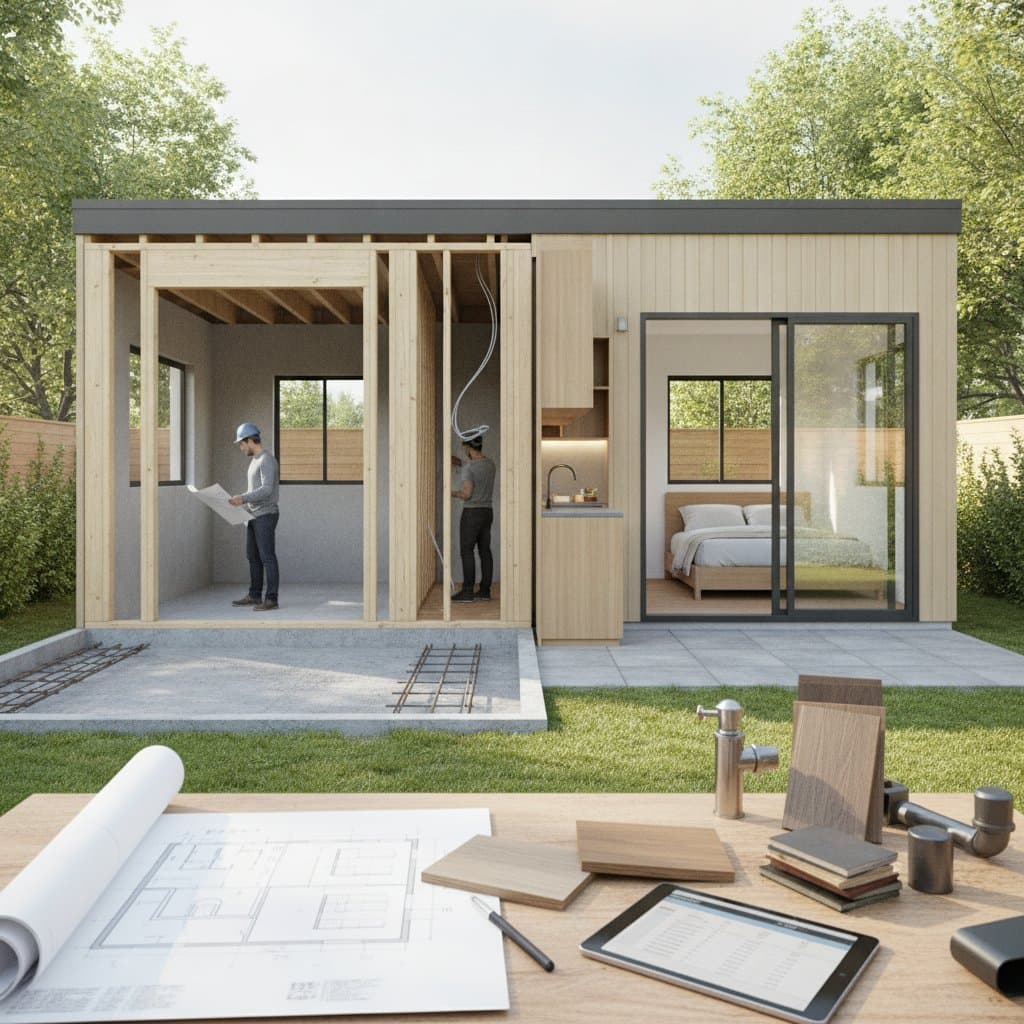
- Full conversion: Adapt unfinished spaces like basements, attics, or garages with complete finishing.
- Addition: Construct a new extension or bump-out tailored exclusively for professional activities.
Each level escalates in scope and expense, matching the degree of transformation needed.
Indicators for a Home Office Remodel
Regular remote work without adequate privacy signals the need for change. Persistent fatigue from uncomfortable furniture or dim lighting also warrants attention. Tangled wires, accumulated clutter, or inefficient layouts hinder efficiency.
If the area serves multiple purposes, such as guest sleeping or storage, productivity suffers. Homeowners preparing to sell benefit from adding versatile square footage that appeals to buyers. These cues guide decisions between simple refreshes and comprehensive overhauls.
Detailed Cost Breakdown and Influencing Factors
Home office remodels carry national average costs that vary by project scale. The table below outlines key line items with ranges and considerations.
| Line Item | Typical Range | Notes and Variables |
|---|---|---|
| Paint and preparation | $200 - $600 | Covers primer, two coats, and labor for a 100-square-foot room. |
| Flooring | $800 - $2,000 | Options like vinyl plank for durability or laminate for affordability. |
| Electrical upgrades | $300 - $1,200 | Scales with the number of outlets and dedicated circuits required. |
| Lighting | $150 - $500 | Ranges from adjustable desk lamps to professional recessed installations. |
| Built-in storage | $800 - $3,000 | Custom cabinets or floating shelves, influenced by material like oak or plywood. |
| Furniture | $600 - $2,000 | Includes ergonomic desk, adjustable chair, and modular filing units. |
| HVAC or insulation | $400 - $2,500 | Essential for unconditioned spaces; includes ductwork or spray foam application. |
| Finish carpentry | $500 - $1,500 | Encompasses baseboards, crown molding, and final trim details. |
| New addition or major conversion | $15,000 - $25,000 | Involves structural work, permits, and full-site preparation. |
The median total cost lands at approximately $7,500 for a standard project.
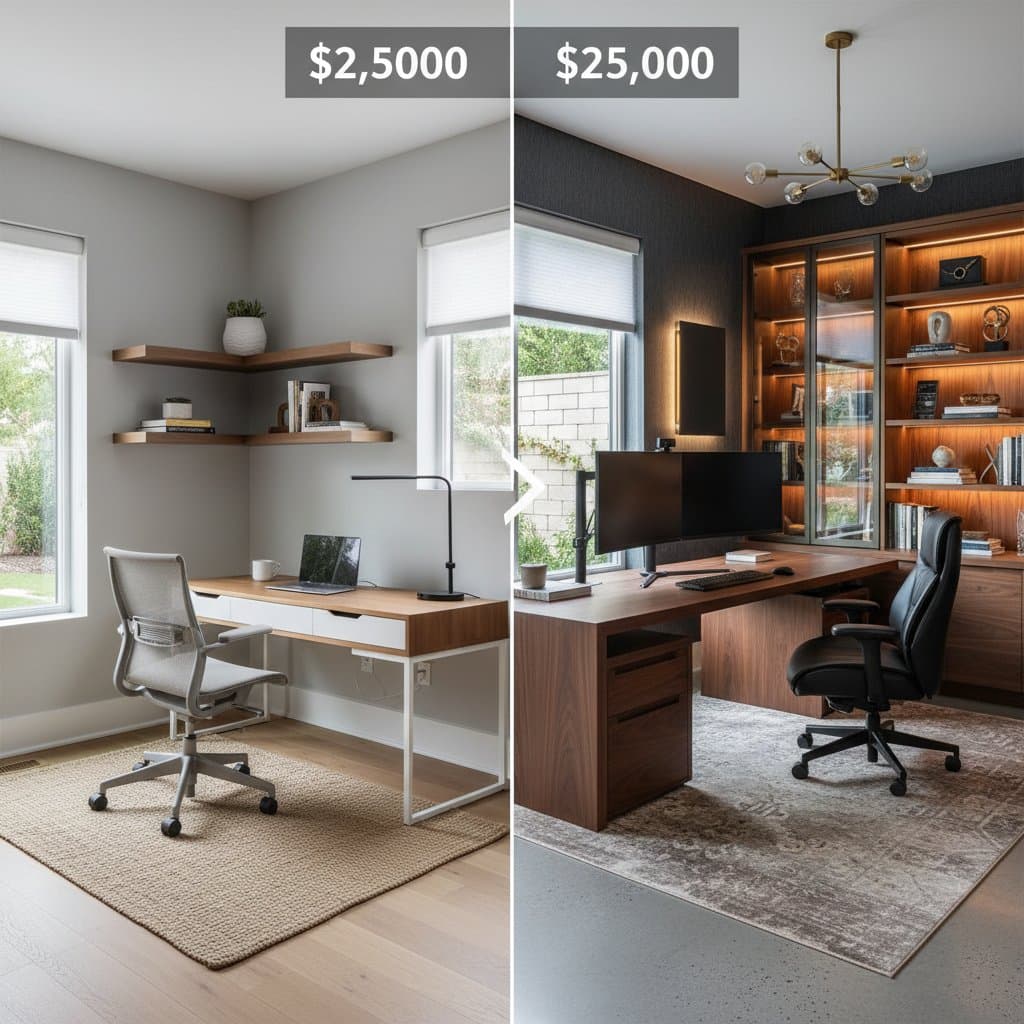
For budget-conscious setups, a DIY approach with store-bought paint and ready-made furniture keeps expenses at $1,500 to $3,000. Luxury versions featuring bespoke designs, premium millwork, and advanced climate control push totals to $20,000 or more.
Primary cost influencers encompass room dimensions, material grades, electrical demands, and the starting condition of the space. Larger areas or high-end finishes amplify expenses, while pre-finished rooms reduce labor needs.
Prioritizing Safety and Building Codes
Electrical modifications demand compliance with local regulations; hire a certified electrician for all wiring tasks. Basements or garages require ventilation systems to manage humidity and ensure air quality.
Fire prevention involves routing cords away from high-traffic paths and avoiding overloaded power sources. When working at heights, position ladders on stable surfaces and use extension tools for reach.
Control dust during demolition or finishing by deploying protective sheets and personal respiratory gear. These practices safeguard health and avoid costly code violations.
Accounting for Regional Variations
Adapt plans to local climate for optimal performance. In colder regions, prioritize insulation around windows and subfloors to maintain warmth. Hot, humid climates call for mold-resistant materials and paints with low volatile organic compounds.
Arid environments benefit from window treatments that block ultraviolet rays, preserving furniture colors. Coastal areas necessitate corrosion-resistant furnishings to withstand salty air exposure.
Permits become necessary for structural additions, electrical alterations, or HVAC changes; consult your municipal building office early. Vinyl plank flooring offers versatility across regions, while modular carpet tiles enhance sound absorption in cooler, drier settings.
Schedule projects strategically: spring and fall provide mild conditions for painting and airing out spaces. Winter suits enclosed interior tasks with reliable heating. Summer facilitates exterior groundwork for expansions.
Frequently Asked Questions
How does a home office impact home resale value?
A purpose-built office enhances marketability, typically recouping 50 to 70 percent of investment through buyer interest in flexible living spaces.
Are remodel expenses tax-deductible?
Deduction applies only to areas used solely for business, adhering to Internal Revenue Service guidelines for home offices.
What size suits a functional home office?
A minimum of 50 square feet accommodates essential elements like a desk, chair, and storage without feeling cramped.
When is a permit required for lighting?
Portable plug-in options bypass permitting, but fixed ceiling fixtures or outlet additions generally require approval.
Steps to Launch Your Remodel
Start by assessing your current setup and defining must-have features, such as natural light or acoustic panels. Gather quotes from three contractors to compare scopes and pricing. Allocate a 10 to 15 percent contingency fund for surprises.
Select durable, multifunctional pieces that align with your workflow, like height-adjustable desks for varied postures. Track progress with a timeline to minimize disruptions. The result is a tailored sanctuary that elevates daily output and home appeal.