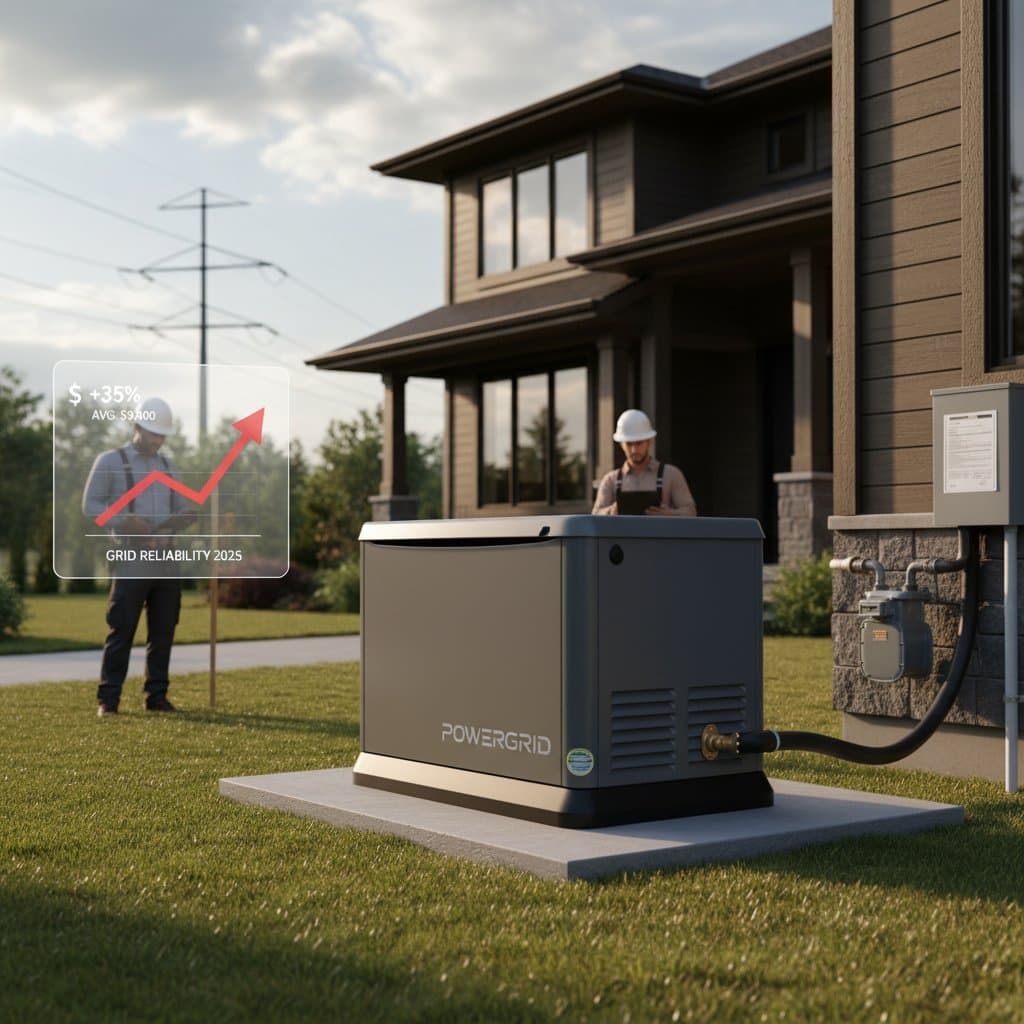
Grid Failures Drive 35% Surge in Generator Costs
Summary Box
National average cost: $9,800
Typical range: $6,500 to $14,000
Low end and high end: $3,000 for portable units to $22,000 for whole-home standby systems
Time to complete: 1 to 3 days
DIY or Pro: Professional installation required for standby units
ROI or resale impact: Moderate; enhances property value by demonstrating reliable power backup
Updated: August
Cost Breakdown
| Item | Unit cost | Typical quantity | Line total | Notes |
|---|---|---|---|---|
| Generator unit | $3,000 to $10,000 | 1 | $3,000 to $10,000 | Capacity ranges from 7 to 24 kilowatts, depending on home size and power needs |
| Transfer switch | $400 to $1,200 | 1 | $400 to $1,200 | Essential for seamless automatic startup during outages |
| Labor and installation | $2,000 to $4,500 | Flat | $2,000 to $4,500 | Covers gas line extensions, electrical wiring, and foundation preparation |
| Concrete or composite pad | $150 to $400 | 1 | $150 to $400 | Provides a stable, level base to reduce vibration and ensure longevity |
| Permits and inspection | $100 to $600 | Flat | $100 to $600 | Varies by local building codes and jurisdiction requirements |
| Fuel connection (gas or propane) | $300 to $1,000 | Flat | $300 to $1,000 | Involves potential trenching for underground lines to connect to existing supplies |
| Disposal or site prep | $100 to $300 | Flat | $100 to $300 | Includes removal of old equipment or minor landscaping adjustments |
Add-ons and allowances:
Options such as smart monitoring systems for remote alerts, sound enclosures to minimize noise, or cold-weather kits for reliable performance in low temperatures add $200 to $800. Extended warranties, which cover parts and labor beyond the standard period, typically cost $400 to $1,000.
Cost Factors
Several elements influence the final price of a generator installation, particularly in the context of escalating grid failures that heighten demand.
- Scope and size: Homes with greater energy demands require generators with higher kilowatt ratings, which elevate both the unit price and the associated fuel infrastructure costs. For instance, a 10-kilowatt model suits a modest residence, while a 20-kilowatt unit supports larger households with multiple appliances.
- Material grade and finish: Premium options featuring weatherproof enclosures and corrosion-resistant materials command higher upfront costs but offer extended durability, especially in regions prone to harsh weather or coastal exposure.
- Site conditions and accessibility: Challenging landscapes, such as sloped terrain or limited access points, extend labor time and may necessitate additional equipment. Long distances for gas lines from the main supply further increase expenses.
- Labor market and season: During periods of high storm activity, when grid outages become more frequent, contractor availability decreases, leading to elevated rates. Off-peak scheduling can mitigate these surges.
- Custom work and change orders: Modifications like rerouting electrical panels or integrating with existing smart home systems introduce complexity, often requiring revised permits and additional engineering assessments.
DIY vs Pro
Individuals with electrical and mechanical expertise may manage the setup of portable generators using manual transfer switches and weather-resistant extension cords. Position these units at least 20 feet from windows, doors, or vents to prevent carbon monoxide accumulation, and always operate them on a flat, dry surface.
Standby generators, however, demand the involvement of licensed electricians and plumbers due to their integration with natural gas lines and the home's primary electrical panel. Improper connections risk back-feeding electricity into utility lines, endangering repair crews, or causing irreversible damage to sensitive electronics. Most homeowner insurance policies and manufacturer warranties mandate professional oversight to validate claims.
How To Save Without Regret
Strategic planning allows homeowners to reduce expenses while securing robust backup power.
- Obtain quotes from at least three reputable contractors, ensuring each includes comprehensive fuel line assessments and connections in the estimate.
- Inquire about manufacturer rebates, which often offset 10 to 20 percent of equipment costs, or explore local utility incentives for energy resilience projects.
- Time installations for calmer seasons, avoiding the rush following major storms when demand spikes and prices follow suit.
- Leverage existing infrastructure, such as on-site propane tanks, by selecting a generator sized to match their capacity and avoiding new tank installations.
- Coordinate site preparation, like pouring the concrete pad or trenching, with concurrent landscaping or renovation work to share mobilization and equipment fees.
Timeline and Scheduling
Standby generator projects generally span two to three days once permits receive approval, allowing crews to focus on execution without interruptions.
The process unfolds in stages: initial site evaluation and preparation, followed by foundation installation, then precise connections for gas and electricity. Final testing and inspection confirm compliance and functionality. During widespread outages or post-storm recoveries, wait times for popular brands extend to several weeks, so proactive ordering proves essential.
Maintenance and Lifespan
Well-maintained standby generators deliver 15 to 20 years of service, providing peace of mind through repeated outages.
Establish a routine of monthly 15-minute test runs under load to circulate fuel and verify system readiness. Perform oil changes and filter replacements every 100 operating hours, or adhere strictly to the manufacturer's guidelines. Monitor for indicators like delayed startups or fluctuating power output, which prompt immediate professional diagnostics to prevent breakdowns.
Planning Your Generator Investment
Investing in a generator amid rising grid instability not only safeguards essential functions like refrigeration and medical devices but also preserves comfort and productivity during disruptions. By understanding cost drivers and maintenance needs, homeowners position themselves to select systems that balance affordability with long-term reliability. Consult local experts early to tailor solutions to specific property demands and regional challenges.
Methodology and Sources
This analysis draws from recent national and regional contractor bids, equipment supplier catalogs, and aggregated homeowner experiences. Figures account for variations in geography, fuel preferences, and workforce dynamics, offering a realistic benchmark for planning.