How Much Does a Legal Home Office Setup Cost? 2025 Permit and Compliance Guide
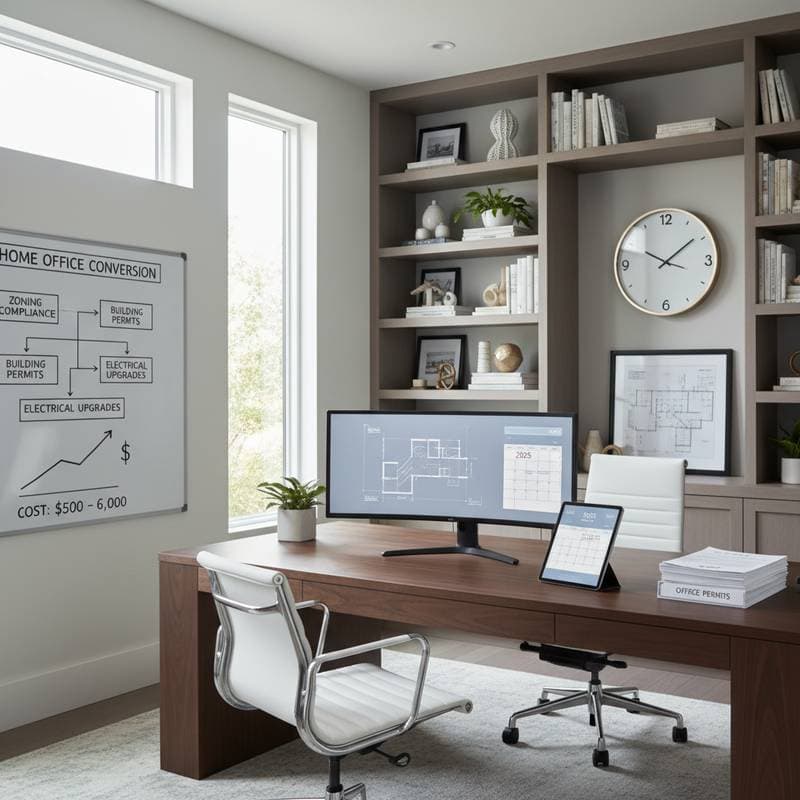
Creating a legal home office transforms extra space into an income-generating and productivity-enhancing environment. Setting up a compliant workspace costs between $500 and $6,000, with most homeowners paying around $2,800 for standard conversions that include zoning approval, electrical permits, and inspection fees.
Three primary factors influence the total investment: local zoning restrictions, permit type and scope, and the complexity of the remodel. Urban areas typically have higher permit fees and stricter regulations, while rural zones often allow home-based businesses more flexibility. According to the National Association of Home Builders, proper permitting increases resale value by up to 8 percent since buyers trust documented compliance.
A properly permitted home office ensures insurance coverage remains valid, avoids costly fines, and provides access to tax deductions for designated workspace use. Investing in legal compliance guarantees that the home office meets safety codes and zoning standards, protecting both property and business operations.
Detailed Cost Breakdown
Permitting costs for a home office include several layers. The average total ranges from $500 to $6,000, depending on local authority fees, architectural documentation, and inspection requirements.
Primary Pricing Structure
- Zoning approval: $100 to $800
- Electrical permit: $150 to $500
- Building or remodeling permit: $250 to $1,200
- Inspection and compliance review: $100 to $300 per visit
Some municipalities charge minimum service fees of around $250, even for small projects. Regional averages show that suburban homeowners pay about $2,300, while dense metro areas can reach $4,500 due to higher labor rates and stricter compliance checks.
At the 25th percentile, minimal upgrades cost around $700, standard projects reach $2,800, and complex remodels with structural changes average $5,600.
Zoning and Property Type
Each additional 100 square feet of workspace often adds $50 to $100 in permit-related expenses due to extended inspections or adjusted occupancy calculations. Detached structures, like backyard studios, require separate zoning clearances, which can add $500 to $1,500.
Local zoning boards determine whether a home qualifies for business use. Some areas restrict signage or client visits, influencing which permits become necessary. Homeowners in mixed-use neighborhoods often face faster approvals but higher inspection fees.
Material and Quality Tiers
Entry-level conversions that retain existing walls and wiring average $1,000 to $2,000, focusing mainly on electrical and safety compliance. Mid-range setups, such as converting a garage or basement, cost around $2,500 to $4,000. Premium remodels that include soundproofing, energy-efficient lighting, or separate HVAC systems can exceed $6,000.
Premium materials extend lifespan and reduce maintenance costs by up to 20 percent. Smart electrical systems from brands like Leviton and Lutron simplify inspection approvals due to integrated safety certifications.
Complexity and Compliance
Older homes often require wiring updates, asbestos checks, or structural reinforcements, increasing permit complexity and cost. Accessibility or fire code compliance can add $300 to $700. Regions with coastal or seismic regulations may require additional engineering reports.
City-based projects take longer to approve and cost about 25 percent more due to backlog in municipal offices.
Service Types and Comprehensive Pricing
Basic or Standard Permit Package
A standard legal home office setup includes:
- Site plan submission
- Zoning compliance review
- Basic electrical permit
- One inspection visit
This level suits homeowners converting an existing bedroom or den without major structural changes. Costs range from $900 to $2,000, usually requiring 8 to 12 labor hours for documentation and approval coordination.
Premium or Comprehensive Service Package
Comprehensive packages include:
- Full architectural drawings
- Building and mechanical permits
- Multiple inspections
- Project management and code liaison services
These packages range from $3,500 to $6,000, about 40 percent higher than standard setups, but they minimize risk and ensure faster approval timelines. For high-value properties, the return on investment can reach 12 percent due to enhanced documentation and resale transparency.
Add-On Services
| Add-On Service | Cost Range | Typical Savings When Bundled |
|---|---|---|
| Electrical panel upgrade | $400–$900 | 10% |
| HVAC zoning adjustment | $300–$700 | 8% |
| Fire safety inspection | $150–$300 | 5% |
Bundling related services through a single contractor often saves 10 to 15 percent and speeds up completion.
Professional vs. DIY Permit Handling
DIY Approach
Filing permits independently can cost $300 to $1,500 less in labor but requires time and administrative skill. Materials like blueprints or site maps may cost $100 to $400. Tools such as digital measuring devices or drafting software add another $100 to $250.
The average homeowner spends about 20 hours researching regulations, completing forms, and scheduling inspections. Mistakes can trigger delays or reapplication fees up to $500.
Professional Services
Hiring a licensed contractor or permit expediter provides notable advantages. Professionals reduce approval time by 30 to 50 percent, maintain insurance coverage, and handle communications with inspectors. Their expertise prevents code violations that could cost thousands to fix later.
The break-even point often arrives when a project exceeds $2,000, making professional assistance the financially safer choice for complex or time-sensitive conversions.
Practical Cost-Saving Strategies
Timing and Scheduling
Municipal departments tend to process permits faster and sometimes cheaper during off-peak months. Homeowners who schedule inspections early in the week often experience quicker turnaround.
Smart Planning
Request multiple quotes from local contractors to compare administrative fees. Paying upfront or combining projects can earn discounts of 5 to 10 percent.
Preparation Steps
Clear documentation, accurate floor plans, and pre-verified zoning data reduce rework costs. Homeowners who complete their own site sketches can save up to $300 in drafting fees.
Regional and Market Considerations
Urban centers like New York or Los Angeles often carry a 25 percent premium for permit processing and inspection due to density and demand. Suburban and rural areas may have fewer restrictions but longer approval windows.
Inflation and supply chain costs influence home office material prices, while labor shortages can delay inspection availability. In markets with strong real estate activity, compliant home offices add measurable value, increasing property appraisal potential by 5 to 10 percent.
Building a Compliant Workspace for Long-Term Value
A legally permitted home office delivers enduring benefits. It ensures safety, protects insurance coverage, and supports resale documentation. Homeowners who invest in proper permitting avoid penalties and gain confidence that their workspace meets every local requirement.
By understanding cost structures, choosing the right professionals, and preparing documentation carefully, homeowners secure both financial and operational stability for their home-based business.