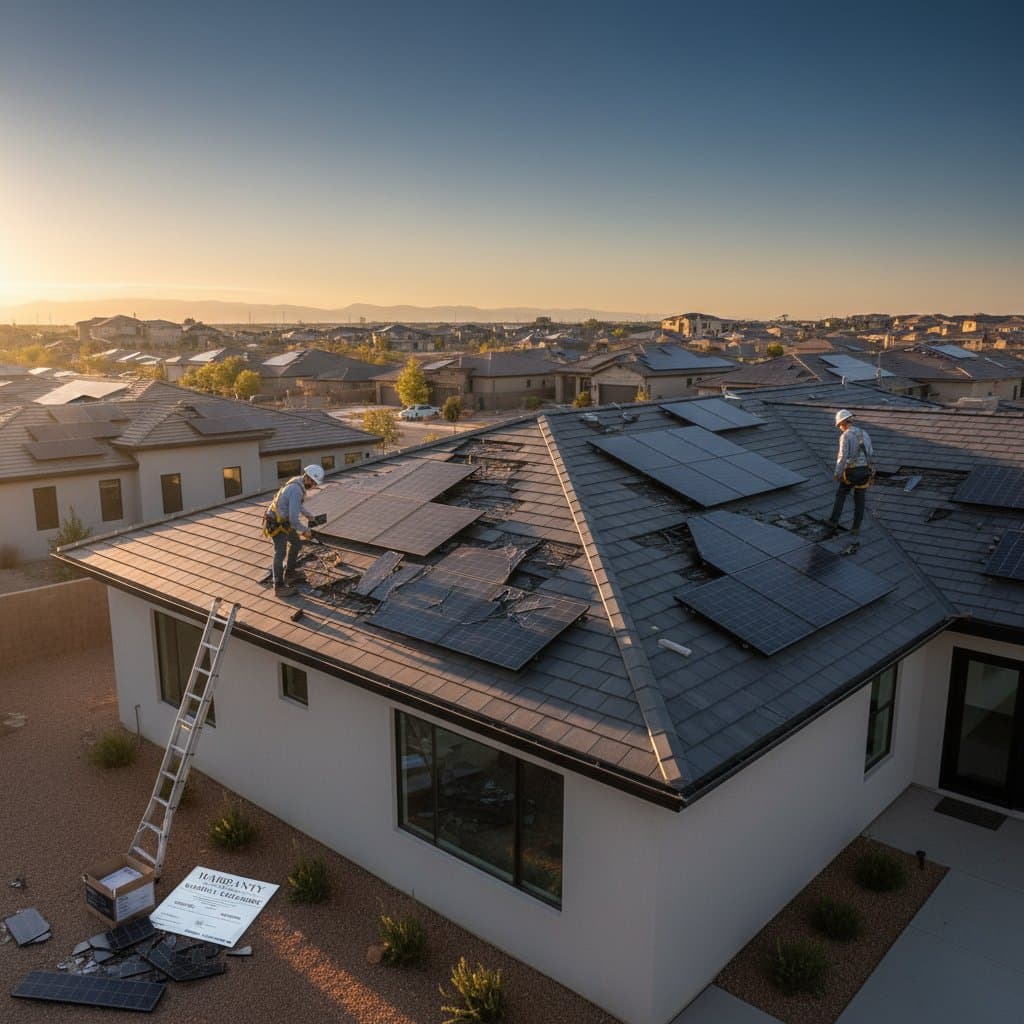
Understanding Solar Roof Repair Costs: A Guide to Coverage and Accountability
Solar energy systems turn home roofs into efficient power sources that lower electricity expenses by up to 70 percent. Damage to the roof beneath or near solar panels raises essential questions about responsibility and payment. Professional repairs for such issues generally range from $750 to $4,500, with a typical project costing around $2,100 that involves partial panel removal and roof patching.
Three key elements shape the final expense: the damage source, applicable warranty protections, and the contractor's approach to repairs. Areas prone to intense rainfall or strong ultraviolet radiation see elevated costs from faster material degradation. Quality solar installations extend roof durability by as much as 25 percent, per insights from the Solar Energy Industries Association, which underscores the value of expert upkeep for sustained reliability and security.
Breaking Down Repair Expenses
Repair costs for solar roof damage vary based on whether problems arise from installation flaws, everyday deterioration, or severe weather. Different handling by contractors and insurance providers means a clear grasp of pricing components avoids surprise charges.
Core Pricing Framework
Restoration work under solar panels typically runs $3 to $8 per square foot. Initial fees for assessments and minor fixes fall between $300 and $500. Data from HomeGuide indicates small repairs start at about $700 for the lower quartile, hit $2,100 at the median, and climb to $4,500 for the upper quartile involving broader replacements. Comprehensive roof overhauls with panel reinstallation surpass $10,000 in many cases.
Impact of Area and Project Scale
Every extra 100 square feet of damaged roofing adds approximately $400 to the estimate. For a standard 2,000-square-foot residence equipped with 25 panels, minor flashing fixes might total $2,000, while decking repairs could reach $4,000. Steep pitches or multi-story designs incur additional charges for safety gear. Jobs requiring panel detachment and remounting exceed regular roofing tasks by roughly 20 percent.
Material Options and Durability Levels
Basic asphalt shingles cost around $3.50 per square foot to install, lasting about 15 years. Mid-tier composites from manufacturers like CertainTeed or GAF command a 25 percent increase yet provide enhanced thermal resistance. High-end choices, including metal panels or integrated systems like Tesla Solar Roof tiles, hit $15 per square foot but ensure exceptional resilience against elements. Superior materials frequently include 25-year guarantees for both products and installation labor, enhancing overall financial returns.
Factors Adding Complexity
Difficult access elevates labor expenses by 10 to 30 percent. Tight panel arrangements demand precise handling during removal and replacement, extending work hours. Underlying decay or seepage near mounts may necessitate decking overhauls, potentially doubling costs. Compliance with local regulations often involves permits or checks, tacking on $150 to $500. Regional differences play a role too, with coastal zones showing 20 percent higher rates due to elevated wages and corrosion-resistant needs.
Repair Service Options and Their Costs
Choices span from essential fixes to full overhauls, guided by damage severity and warranty stipulations.
Standard Repair Packages
These basic offerings cover:
- Thorough inspections and moisture evaluations
- Selective panel removal and remounting
- Underlayment swaps for up to 100 square feet
- Sealing leaks and updating flashing
Such services range from $750 to $2,000 and require half a day of effort. They address concerns like minor leaks or fractured shingles under attachments.
Advanced Restoration Services
Elevated packages encompass:
- Complete section replacements on the roof
- Decking structural fixes
- Comprehensive reflashing for all mounts
- Prolonged guarantees against leaks
Priced at $3,000 to $4,500, these exceed standard options by 25 percent but deliver extensive safeguards and extended durability. For aging roofs approaching renewal, a thorough upgrade prior to panel reinstallation prevents costly repeat efforts and saves significant sums.
Supplementary Services
Frequent extras involve gutter clearing at $150, attic insulation reviews for $200, or infrared scanning for leaks at $250. Combining services often trims overall expenses by 10 to 15 percent, based on insights from platforms like Angi and Thumbtack. Arranging work in quieter seasons, such as late autumn or early spring, unlocks further reductions.
Weighing Professional Services Against DIY Efforts
Expenses for DIY Approaches
Tackling minor solar roof fixes involves $200 to $600 in supplies like shingles, sealants, and flashing materials. Essential tools, including voltage checkers, ladders, and harnesses, add $300 if bought new or $100 if rented. The task spans 6 to 10 hours, excluding panel handling. Risks encompass warranty invalidation or connector harm, with total outlays averaging $500 to $1,000. Faulty applications frequently result in leaks that demand pricier professional remedies later.
Benefits of Hiring Experts
Licensed solar specialists finish jobs 60 percent quicker than individuals and assure sealed performance. Their coverage includes up to $1 million in liability insurance, shielding clients from liability. Access to tools like panel hoists and imaging devices, valued over $5,000 to own, streamlines complex work. Considering efficiency, safety, and warranty integrity, professionals offer superior value despite initial premiums.
Choosing the Right Path
DIY suits straightforward tasks like caulking or shingle swaps distant from electrical areas. Expert intervention proves vital for issues touching mounts, wiring, or foundational elements. One error in setup can trigger $2,000-plus in subsequent water harm, highlighting the wisdom of professional assessments.
Strategies to Lower Repair Costs
Leveraging Optimal Timing
Rates for solar roof work dip 10 to 15 percent in off-peak seasons for contractors. Midweek appointments sidestep weekend premiums. Securing slots promptly with date flexibility boosts odds of favorable pricing.
Effective Selection Methods
Obtain three detailed estimates from certified providers. Bid comparisons yield average savings of 18 percent, per EnergySage data. Submit modest deposits with final payments post-completion to oversee standards. Leverage active warranties by engaging both roofing and solar firms for coordinated, low-cost resolutions.
Pre-Work Preparations
Remove obstacles and ensure roof access before crews arrive to shorten labor duration. Compile maintenance records and warranty details to expedite claims. These measures can shave up to $150 from bills.
Regional Influences and Long-Term Safeguards
Variations by Location
Repair expenses fluctuate widely by region. Urban centers in the Northeast or West Coast command 15 to 25 percent more due to stringent codes and higher labor. Southern states face added premiums for humidity-resistant materials, while Midwest prairies see costs moderated by simpler logistics. Always factor local climate patterns, as hail-prone areas may qualify for specialized insurance riders that offset weather-related claims.
Safeguarding Your Solar Assets
Routine inspections every six months detect issues early, averting major repairs. Integrate solar-compatible roofing during initial setups to minimize future disruptions. Explore extended warranties that bundle roof and panel protections, ensuring seamless coverage. These steps not only control costs but also maximize energy output, preserve home equity, and support sustainable living for years ahead.