Understanding Kitchen Island Costs in 2025
A kitchen island serves as a functional hub and design focal point. Selecting the right one requires balancing style, utility, and expense. Costs depend on material, dimensions, and build quality. Homeowners who approach this choice strategically often secure greater durability and value over time. This guide examines material-specific pricing, cost components, and planning strategies to support informed budgeting.
Focus on total project expenses, including fabrication and setup, to avoid surprises. Clear breakdowns reveal how choices influence both upfront and ongoing costs.
Breaking Down the Cost Components
Kitchen island expenses extend beyond raw materials. Quotes generally cover labor, fabrication, and ancillary services. Some providers bundle design or transport fees, so request itemized details upfront.
Key Cost Elements
| Component | Description | Share of Total Cost |
|---|---|---|
| Materials | Countertops, cabinetry, fixtures | 45% to 60% |
| Labor | Assembly, setup, utility integration | 25% to 35% |
| Design and Permits | Planning, measurements, regulatory compliance | 5% to 10% |
| Delivery and Cleanup | Shipping, waste removal, site preparation | 5% |
Allocate 10% of your budget for contingencies, such as plumbing adjustments or floor reinforcements. This buffer addresses common unforeseen issues.
Material Options and Their Pricing
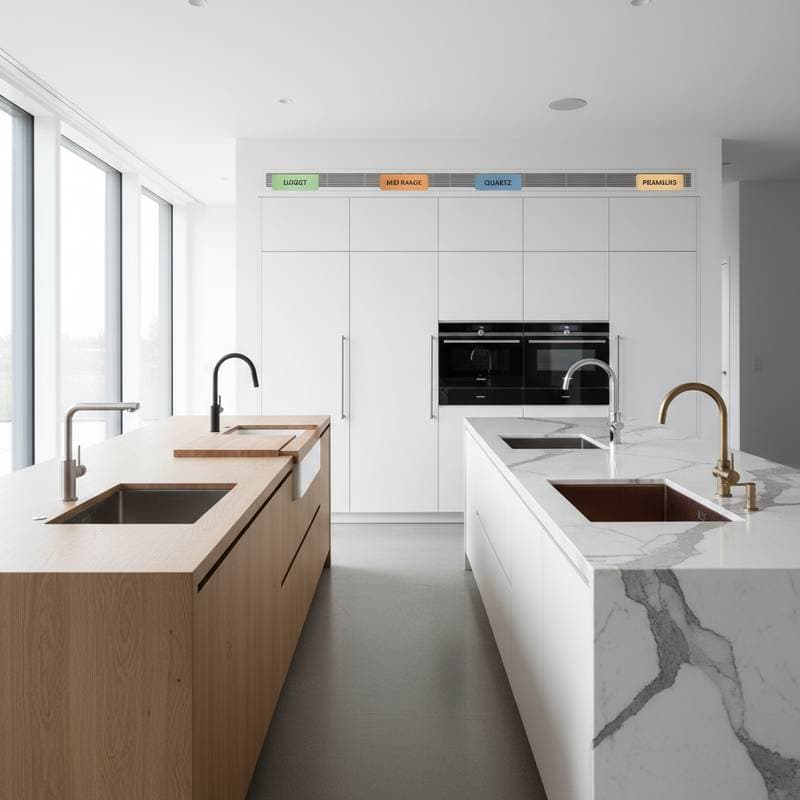
Evaluate materials based on budget, maintenance, and performance. Each offers unique benefits and trade-offs. Below, options progress from economical to high-end, with average 2025 costs for a standard 6x4-foot island (material and basic installation).
1. Laminate
Laminate provides an accessible entry point for kitchen upgrades. It mimics pricier surfaces at a fraction of the cost, ideal for rentals or temporary setups.
Pricing Overview
- Material: $20 to $50 per square foot
- Installation: Low labor due to lightweight panels and simple adhesion
Benefits
- Affordable and versatile in patterns
- Quick to install with minimal disruption
- Resistant to impacts in daily use
Drawbacks
- Prone to edge chipping over time
- Less heat-tolerant than stone
- Limited lifespan in high-traffic areas
Laminate suits cost-conscious projects where functionality trumps luxury.
2. Butcher Block
Butcher block introduces organic warmth through solid wood construction. Costs rise with species like maple or walnut, but it remains more affordable than stone alternatives.
Pricing Overview
- Material: $40 to $80 per square foot
- Installation: Moderate, involving precise cuts and sealant application
Benefits
- Repairable by sanding minor damage
- Rejuvenates with periodic oil treatments
- Enhances food prep with natural grain
Drawbacks
- Vulnerable to moisture without protection
- Demands routine care against stains
- Sensitive to humidity fluctuations
Opt for butcher block if you value tactile appeal and commit to upkeep.
3. Granite
Granite delivers timeless elegance from natural slabs. Sourcing from quarries affects availability and price, with premium varieties commanding higher rates.
Pricing Overview
- Material: $60 to $120 per square foot
- Installation: Elevated labor for heavy lifting and edge profiling
Benefits
- Exceptional hardness resists scratches
- Unique veining adds character
- Boosts home value through durability
Drawbacks
- Porous nature requires annual sealing
- Heavier weight demands sturdy support
- Color variations may complicate matching
Granite fits homeowners pursuing enduring, high-impact designs.
4. Quartz
Engineered quartz blends crushed stone with polymers for uniform appeal. It often edges out granite in price for equivalent quality, especially in urban markets.
Pricing Overview
- Material: $70 to $130 per square foot
- Installation: Comparable to granite, with focus on seam alignment
Benefits
- Impervious to stains and bacteria
- Extensive color options without variation
- Maintenance-free beyond basic cleaning
Drawbacks
- Avoids direct heat exposure
- Not ideal for exterior applications
- Seams noticeable on expansive surfaces
Quartz attracts those prioritizing consistency and ease.
5. Marble
Marble exudes sophistication with its soft veining. Though luxurious, its delicacy influences both cost and care requirements.
Pricing Overview
- Material: $80 to $150 per square foot
- Installation: Specialized handling to prevent fractures
Benefits
- Cool surface aids baking tasks
- Polishes to a high sheen
- Appreciated in upscale resale markets
Drawbacks
- Etches from acidic spills
- Frequent sealing essential
- Softer than granite, scratches easier
Marble rewards meticulous owners seeking refined aesthetics.
6. Concrete
Cast concrete allows bespoke forms and finishes. Expenses scale with additives like pigments or aggregates.
Pricing Overview
- Material: $50 to $100 per square foot
- Installation: Intensive on-site work for pouring and curing
Benefits
- Tailored to any dimension or curve
- Withstands heavy use when protected
- Integrates seamlessly with modern styles
Drawbacks
- Susceptible to cracking without reinforcement
- Lengthy drying periods delay completion
- Weight necessitates floor assessments
Concrete empowers creative, one-of-a-kind installations.
7. Stainless Steel
Stainless steel conveys industrial chic and resilience. It excels in professional-grade kitchens but reflects fingerprints.
Pricing Overview
- Material: $90 to $160 per square foot
- Installation: Requires precise welding and leveling
Benefits
- Hygienic and corrosion-resistant
- Handles extreme temperatures
- Longevity supports commercial appeal
Drawbacks
- Shows smudges and scratches
- Conducts heat and cold noticeably
- Louder during food preparation
Stainless steel thrives in high-performance environments.
Installation Process Overview
Smooth execution minimizes disruptions. Follow this sequence to align expectations with contractors.
- Consultation: Share visions, measurements, and material preferences.
- Design Phase: Obtain accurate plans and visualizations.
- Quoting: Secure detailed bids outlining all fees.
- Preparation: Fabricate components off-site.
- On-Site Setup: Install, connect services, and test.
- Final Review: Check quality and process payment.
Establish milestones with partial payments tied to progress.
Assessing Long-Term Value
Initial outlay represents only part of the equation. Factor in upkeep and market impact.
| Material | Expected Lifespan | Maintenance Needs | Resale Impact |
|---|---|---|---|
| Laminate | 10 to 15 years | Low | Neutral |
| Butcher Block | 15 to 20 years | Frequent oiling | Positive with care |
| Granite | 20 to 30 years | Annual sealing | Strong |
| Quartz | 25 to 30 years | Low | Strong |
| Marble | 20 to 25 years | Regular sealing | Premium appeal |
| Concrete | 25 to 30 years | Periodic sealing | Versatile |
| Stainless Steel | 30+ years | Low | Professional edge |
Durable selections like quartz or granite often yield better returns by appealing to future buyers.
Safeguarding Your Budget
Protect investments through proactive measures.
- Demand itemized written quotes.
- Verify contractor credentials and coverage.
- Clarify warranties on products and labor.
- Examine samples prior to commitment.
- Archive all project records.
Include dispute clauses favoring fair resolution.
Building Value Through Informed Choices
Material decisions shape kitchen functionality and finances. Weigh costs against longevity and lifestyle fit. Transparent planning with professionals ensures alignment with goals. This approach not only elevates your space but sustains its worth for years ahead.