How Much Does a Kitchen Island Cost? 2025 Pricing Guide
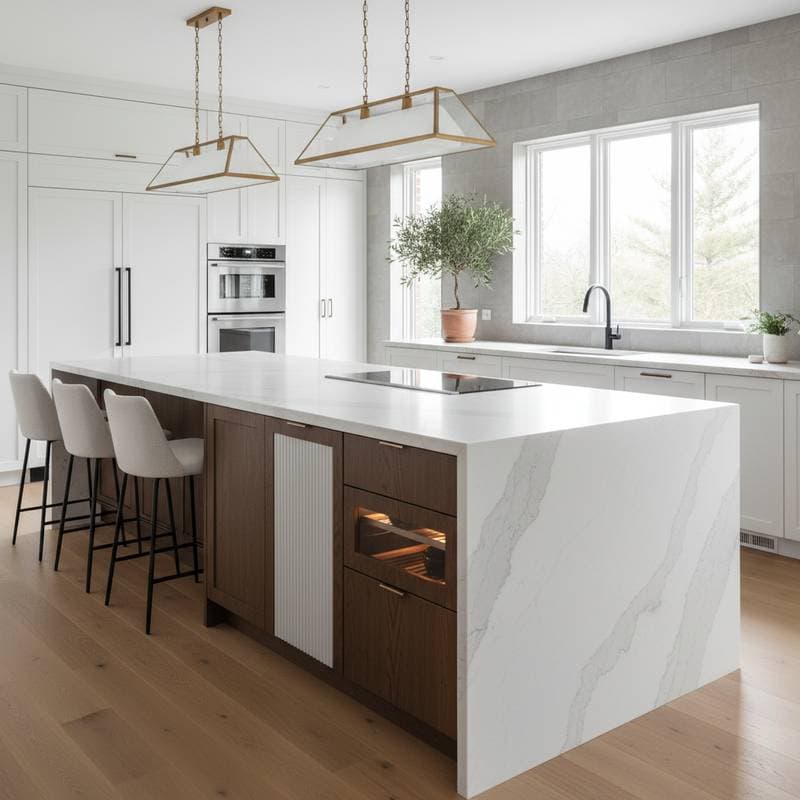
A well-designed kitchen island serves as a central hub for cooking, storage, and social gatherings. Professional installation for such an island ranges from $8,000 to $25,000, with the average custom build costing about $14,500. This price typically covers cabinetry, countertops, lighting, and utility connections.
Three primary factors shape the total expense: size and layout, materials and finishes, and utility connections. Regional labor rates and material availability further affect pricing. A thoughtfully installed island enhances kitchen efficiency by up to 40 percent and increases home resale value, as noted by industry standards from the National Kitchen and Bath Association. Opt for professional design and installation to achieve optimal ergonomics, energy savings, and enduring visual appeal.
Detailed Cost Breakdown
Pricing for kitchen islands operates on a per-square-foot basis combined with feature-specific charges. Basic prefabricated options begin at approximately $1,500, suitable for simple setups. Mid-range semi-custom islands fall between $6,000 and $12,000, offering more personalization without excessive complexity. High-end custom designs, featuring stone countertops, integrated appliances, and plumbing, range from $18,000 to $25,000.
The 25th percentile of costs aligns near $8,000 for modest projects, the median reaches $14,500 for balanced builds, and the 75th percentile nears $22,000 for elaborate installations.
Size and scope play a pivotal role in determining expenses. Consider a compact island measuring 4 by 2 feet, which might cost around $2,000 for basic construction. Each additional 2 feet in length adds $1,200 to $2,000, accounting for extra cabinetry, countertop material, and lighting fixtures. For instance, a 7-foot island with a granite top, integrated seating, and a sink could total $17,000, reflecting the expanded materials and labor involved.
Materials and quality levels drive substantial variations in price. Entry-level choices incorporate laminate or butcher block surfaces at $25 to $60 per square foot, providing affordability though with reduced longevity. Mid-tier selections utilize quartz or solid surface materials priced from $70 to $120 per square foot, striking a balance between durability and aesthetics. Luxury options employ natural stone such as marble or engineered quartzite, costing $150 to $250 per square foot, often paired with custom finishes, soft-close hardware, and comprehensive warranties.
Complexity introduces additional variables through plumbing, electrical, and structural modifications. Incorporating a sink or cooktop typically adds $2,500 to $5,000, influenced by proximity to existing lines. Floor reinforcement or HVAC rerouting may elevate costs by 10 to 15 percent. In urban centers like San Francisco or New York, expenses surpass rural figures by 20 to 30 percent, based on contractor insights from platforms such as HomeAdvisor and Angi.
Service Types and Comprehensive Pricing
Standard kitchen island packages encompass design consultations, prefabricated cabinetry, countertop installation, and basic electrical outlets. These installations require two to four days and range from $8,000 to $12,000. Such packages suit open layouts with readily accessible utilities.
Premium or custom packages integrate built-in appliances, bespoke cabinetry, stone surfaces, and accent lighting. Prices for these span $16,000 to $25,000, representing a 40 to 60 percent increase over standard options. The elevated investment yields superior longevity, enhanced storage solutions, and greater appeal in real estate markets.
Add-on services allow for tailored enhancements. Under-cabinet lighting costs $300 to $800 and illuminates workspaces effectively. Seating extensions run $1,000 to $2,000, expanding the island's role in dining. Wine racks add $500 to $1,200, optimizing storage for collections. Integrating these during the primary installation phase often secures 10 to 15 percent savings versus standalone additions. Data from services like Thumbtack and Houzz indicate that combining island work with flooring or broader countertop projects frequently unlocks volume discounts.
Professional Installation Versus DIY Approaches
A do-it-yourself kitchen island, assembled from stock cabinets sourced from retailers like IKEA or Home Depot, totals $2,000 to $4,500. Key components include prefabricated cabinets at $1,200, a countertop slab from $800 to $1,500, and hardware for $200. Essential tools such as a circular saw, drill, and level contribute another $300 if not already owned. Completion demands 20 to 30 hours and proficiency in carpentry and basic electrical work. Potential pitfalls include measurement errors or building code infractions, which necessitate expensive corrections.
Engaging professional installers streamlines the process and includes warranty protection. Experts finish projects in under a week, guarantee regulatory compliance, and produce refined results. Their specialized tools and supplier discounts help mitigate labor expenses. Over time, the reliability of professional work offsets initial outlays, often equaling DIY costs within five years when considering maintenance and durability.
Strategies to Control and Reduce Costs
Select project timing wisely to lower rates. Contractors often offer up to 15 percent reductions for winter schedules or midweek starts, when demand dips.
Approach shopping methodically for optimal value. Obtain three detailed written quotes to benchmark fair pricing. Discuss bundling services or phased payments to shave an additional 5 to 10 percent from the total.
Prepare thoroughly to minimize on-site expenses. Clear the work area in advance, verify all measurements, and procure materials ahead of time. These steps shorten installation duration, potentially saving $300 to $500 in labor fees.
Market Influences and Long-Term Value
Current market dynamics, including supply chain fluctuations and skilled labor shortages, can impact 2025 pricing. Opt for versatile designs that adapt to evolving needs, such as modular cabinetry for future expansions. Consult local trends to select materials that retain value, like sustainable quartz over fleeting fads.
To maximize return on investment, prioritize islands that integrate seamlessly with your kitchen's workflow. Focus on features that enhance daily use, such as ample prep space and hidden storage. A strategic island not only elevates functionality but also positions your home favorably for future sales, delivering enduring benefits.