Unveiling Hidden Fees That Drive Up 2025 Kitchen Island Costs
Homeowners frequently wonder why kitchen island installations exceed original estimates. The primary reason lies in hidden fees, which emerge during phases such as demolition, rough-ins, or inspections. Recognizing these potential expenses enables better budget planning and minimizes disruptive change orders throughout the remodel process.
Essential Components of a Kitchen Island
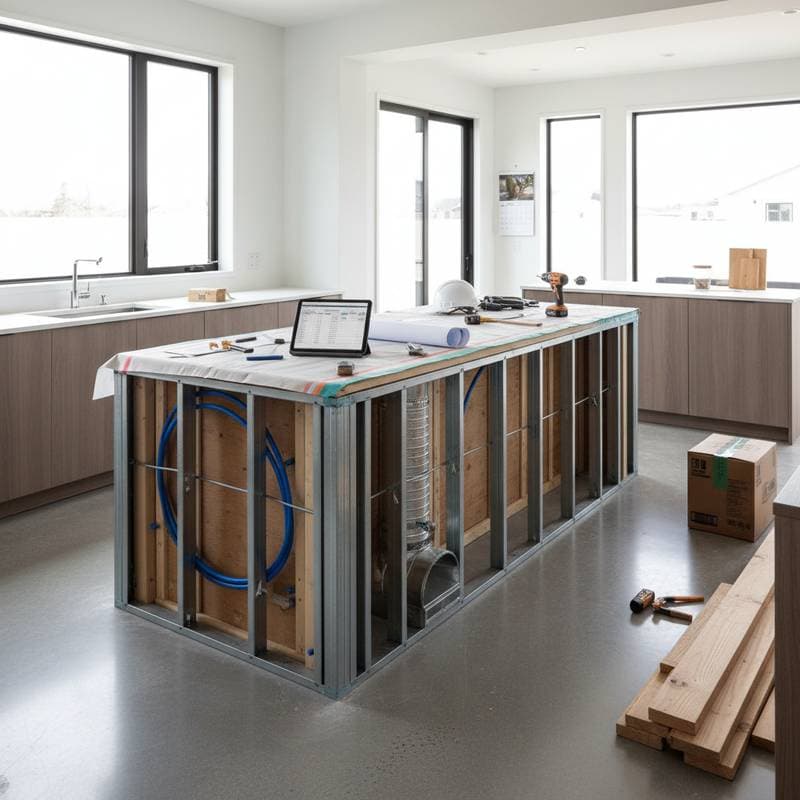
A kitchen island extends beyond a simple cabinet and countertop. It integrates with flooring, electrical systems, plumbing, and occasionally HVAC elements. These integrations also influence lighting, appliance placement, and overall traffic patterns. Clear scoping of these aspects from the outset prevents additional costs.
Typical dimensions for a standard island measure six feet in length and three feet in depth, featuring drawers and a solid surface top. Incorporating seating, a sink, or a cooktop increases both expense and intricacy. The greater the number of interconnected systems, the higher the likelihood of concealed fees.
Key Hidden Fees and Their Origins
1. Electrical Upgrades
Outlets on islands require GFCI protection. If the electrical panel lacks capacity or features outdated circuits, installing a new line costs between $250 and $800. For a cooktop or microwave drawer, a dedicated 240-volt circuit becomes necessary, potentially reaching $1,200, including conduit and breaker modifications.
2. Plumbing Relocation
Adding a sink, dishwasher, or prep sink involves routing supply and drain lines beneath the floor. When joists align unfavorably or the foundation consists of concrete, expenses escalate quickly. Basic rough-in work ranges from $700 to $2,000, with higher amounts for concrete cutting and patching.
3. Structural Reinforcement
In older residences, joists may prove undersized or subfloors uneven. Strengthening them to support a stone countertop adds $300 to $1,000. Although this labor remains invisible, it averts future issues like cracks or sagging.
4. Venting and HVAC Adjustments
Islands with cooktops demand proper venting. Routing ducts beneath the floor, through joists, or to an exterior wall can surpass $1,500. Even relocating air registers to maintain balanced airflow incurs $200 to $400.
5. Countertop Cutouts and Edge Detailing
Fabricators impose additional charges for sink cutouts, waterfall edges, or irregular shapes. Allocate $150 to $400 per cutout and $25 to $40 per linear foot for custom edges.
6. Permit and Inspection Fees
Jurisdictions mandate permits for electrical or plumbing alterations. These fees span $100 to $600 based on project scope and location. Omitting permits risks invalidating insurance coverage or complicating property resale.
Detailed Cost Breakdown
| Scope Item | Material Cost Range | Labor Cost Range | Total Range | Notes on Drivers |
|---|---|---|---|---|
| Basic island cabinet and top | $1,200 - $3,000 | $800 - $1,500 | $2,000 - $4,500 | Size, finish, and top material |
| Electrical outlet and circuit | $100 - $400 | $150 - $800 | $250 - $1,200 | Panel capacity and wiring length |
| Plumbing for sink or dishwasher | $300 - $800 | $400 - $1,200 | $700 - $2,000 | Floor type and drain access |
| Venting system | $400 - $900 | $700 - $1,500 | $1,100 - $2,400 | Duct path and exterior venting |
| Permits and inspections | N/A | N/A | $100 - $600 | Local code requirements |
Timeline and Workflow Considerations
Installation of a basic island without plumbing or electrical components requires two to three days. Introducing a sink or cooktop extends the timeline to a full week, accounting for rough-ins, inspections, and countertop fabrication delays. Countertops typically demand one week between templating and installation. Sequence tasks to align flooring, painting, and lighting completion prior to island delivery.
Ensuring Safety, Permits, and Code Adherence
All kitchen outlets necessitate GFCI protection. Islands equipped with sinks require vented drains and accessible cleanouts. Obtain permits without exception. Inspectors verify clearances, grounding, and trap configurations. Faulty wiring or unvented drains pose risks of leaks, electrical shocks, or violations. Employ appropriate personal protective equipment, such as safety glasses, gloves, and dust masks, when cutting flooring or drilling joists.
Common Errors Leading to Extra Expenses
- Neglecting to verify layout dimensions before ordering countertops. A misalignment of even half an inch may necessitate complete remakes.
- Underestimating plumbing challenges beneath slab floors. Concrete cutting introduces significant time and repair demands.
- Overlooking clearance for stools at seating areas. Provide 24 inches per person and 15 inches of knee space.
- Delaying appliance orders. Precise specifications determine countertop cutouts.
- Disregarding weight capacities. Substantial quartz or granite surfaces require robust cabinet support and occasional concealed steel brackets.
Longevity and Upkeep Strategies
A properly constructed island endures alongside the kitchen, spanning 15 to 25 years. Seal seams regularly, maintain clean caulk joints, and apply wax or oil to wood finishes annually. Inspect outlets and plumbing connections bimonthly for leaks or looseness. Reseal stone surfaces every one to two years, adjusted for usage intensity.
Recommended Maintenance Schedule
- Post-installation: Examine joints and caulk for gaps.
- Seasonal: Secure hinges and align drawer slides.
- Annual: Reseal countertops and review plumbing integrity.
- At lifespan end: Refinish or update hardware and surfaces.
Deciding Between DIY and Professional Installation
Evaluate options using this decision framework.
| Factor | DIY Suitability | Professional Recommendation |
|---|---|---|
| Skill Level | Basic carpentry and assembly | Electrical or plumbing integrations |
| Safety Risk | Low for superficial tasks | Elevated for wiring or gas lines |
| Tool Access | Standard household tools | Specialized saws or pipe cutters |
| Code Impact | Minimal for straightforward setups | Essential for system connections |
DIY suits prefabricated islands lacking utility connections. Engage licensed professionals for integrations with home systems. Errors in wiring or venting heighten fire hazards or inspection failures.
Strategies to Mitigate Hidden Fees
- Request a comprehensive scope of work that details all utilities, materials, and finishes.
- Solicit itemized bids distinguishing materials from labor.
- Verify inspection schedules to prevent delays in countertop placement.
- Reserve a 10 to 15 percent contingency in your budget for unforeseen site conditions or code updates.
- Secure material prices upfront to shield against project-mid fluctuations.
Sample Bid Comparison
| Line Item | Spec or Scope | Contractor A | Contractor B | Contractor C | Variance Notes |
|---|---|---|---|---|---|
| Electrical rough-in | 20 amp GFCI circuit | $850 | $620 | $1,000 | Panel upgrades in A and C |
| Plumbing tie-in | Sink and dishwasher | $1,600 | $1,200 | $1,450 | B omits concrete patching |
| Countertop fabrication | Quartz, 6 ft x 3 ft | $2,400 | $2,100 | $2,800 | B offers quicker turnaround |
| Permits | Electrical and plumbing | $400 | $300 | $500 | Variations in municipal fees |
Project Preparation Checklist
| Category | Requirements |
|---|---|
| Tools required | Level, drill, saw, clamps, wrenches |
| Skills required | Fundamental carpentry, precise measurements |
| Safety gear | Gloves, eye protection, dust mask |
| Permits needed | Electrical, plumbing, or venting where applicable |
| Prep tasks | Clear access paths, level floor, isolate utilities |
| Site constraints | Control indoor temperature and humidity for adhesives |
Securing a Budget-Friendly Outcome
Achieve a controlled kitchen island project by emphasizing precision prior to any demolition. Secure documented scopes, validate code obligations, and schedule inspections proactively. Hidden fees arise from unverified assumptions rather than thorough records. Invest effort in planning subsurface systems alongside aesthetic choices. This approach ensures cost predictability and seamless final execution.