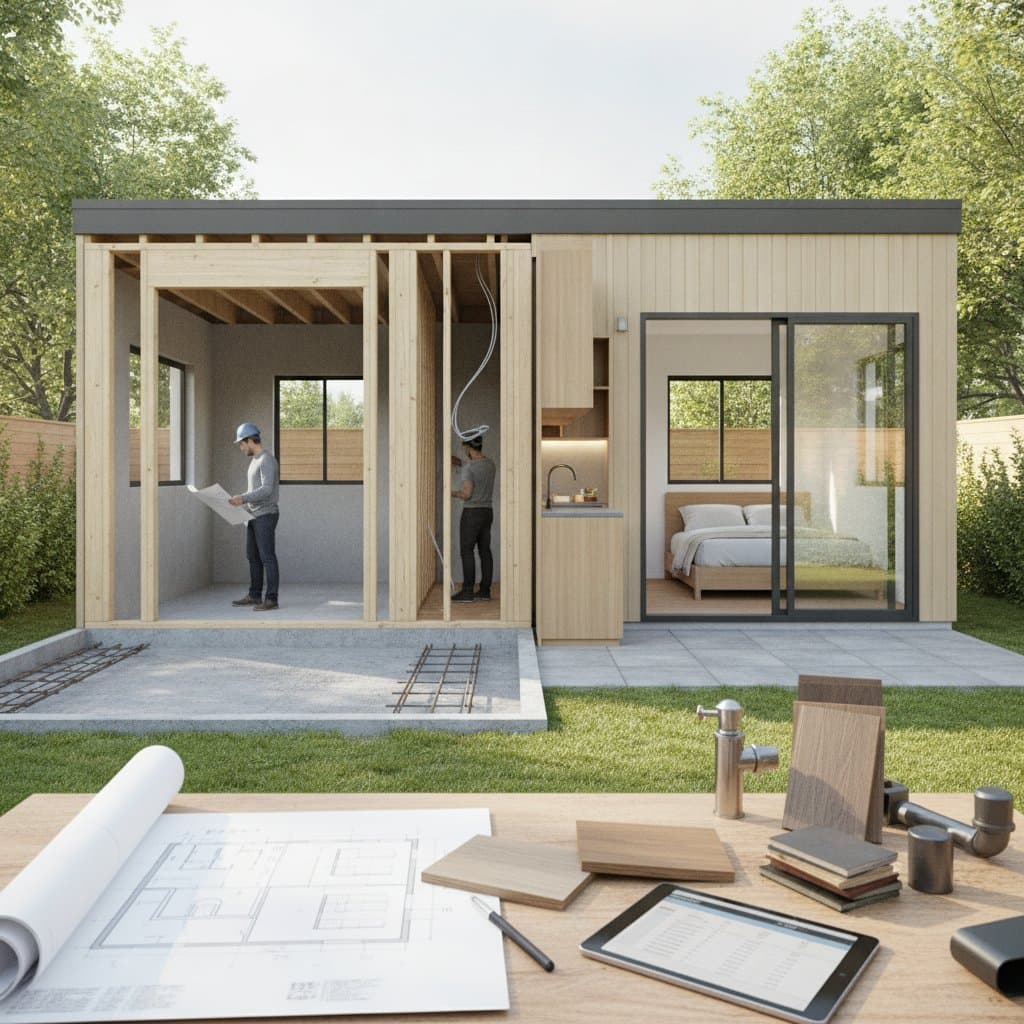
Understanding Permit Costs for Multigenerational Home Additions in 2026
Quick Overview
Permit fees for multigenerational additions range from $1,200 to $9,000, based on project size and local building codes. Costs increase with expansions involving plumbing, electrical systems, or structural modifications outside the existing home footprint. Early planning helps mitigate approval delays, which can extend timelines by weeks and incur additional holding expenses.
Benefits and Challenges
Benefits
- Provides additional living space and privacy for family members across generations.
- Enhances home resale value and offers options for rental income.
- Lowers potential long-term expenses related to separate housing or caregiving facilities.
Challenges
- Involves significant initial outlays for design and permitting.
- Adheres to strict regulations regarding size, access points, and utility connections.
- Often results in elevated property taxes following completion and reassessment.
Step-by-Step Guide to Permit Approval
Estimated Time: 4 to 8 weeks for a fully prepared application
Complexity Level: Moderate to high, influenced by prior experience with building processes
Required Resources
- Detailed, scaled site plan showing property boundaries and proposed addition.
- Professional architectural drawings with elevations and cross-sections.
- Engineering calculations for structural integrity and energy efficiency.
- Completed permit application forms from the local jurisdiction.
- Initial application fee or required deposit.
Detailed Steps
-
Verify Zoning Regulations. Contact your local building department to review setback requirements, maximum height allowances, and occupancy limits. This step prevents designing features that violate local rules and require costly redesigns.
-
Engage a Licensed Designer or Architect. Many municipalities mandate professionally stamped plans for additions creating new living units. Design fees typically range from $2 to $5 per square foot, depending on complexity and location.
-
Develop Comprehensive Plans. Incorporate floor plans, exterior elevations, foundation specifications, and layouts for mechanical, electrical, and plumbing systems. Incomplete submissions represent the primary cause of permit rejections; ensure all details align with current codes.
-
File the Permit Application. Submit both printed and digital versions as specified by your jurisdiction. Note that some areas demand separate applications for building, plumbing, electrical, and mechanical components to streamline reviews.
-
Address Reviewer Feedback. Plan examiners frequently identify issues with energy standards, emergency egress requirements, or load-bearing paths. Promptly revise and resubmit to avoid prolonged delays.
-
Settle Remaining Fees. Approval marks only the beginning; allocate funds for inspection deposits, school impact fees, or other local assessments before commencing construction.
-
Display the Permit On-Site. Maintain visibility of the approved permit throughout the build. Failure to do so risks issuance of stop-work orders and potential fines.
Expert Advice: Clearly label each drawing sheet with the property address and revision date. This practice assists department staff in tracking document versions and minimizing errors during review.
DIY Options Versus Professional Assistance
Suitable for DIY Efforts
- Collecting essential property records and taking precise measurements.
- Completing straightforward online permit forms.
- Coordinating with inspectors during the construction phase.
Best Handled by Professionals
- Creating code-compliant architectural and engineering drawings.
- Performing calculations for structural loads and energy performance.
- Overseeing subcontractor work and inspection compliance.
Rationale for Professional Involvement
Licensed experts possess in-depth knowledge of evolving local codes, reducing the likelihood of application denials that lead to wasted time and fees. Errors in planning or paperwork may provoke stop-work directives, fines, or mandatory demolitions, amplifying overall project costs.
Alternative Approaches to Multigenerational Living Spaces
Approach 1: Interior Space Conversion
Ideal for utilizing existing basements or garages with established structures and entryways. Permit expenses generally fall between $800 and $3,000. The main drawback involves shared walls, which limit privacy compared to standalone additions.
Approach 2: Attached Addition
Integrates new space directly with the primary residence under a unified roofline. This configuration promotes superior energy efficiency through shared systems. However, it necessitates rigorous structural and seismic evaluations, with permit costs ranging from $2,500 to $7,000.
Approach 3: Detached Accessory Dwelling Unit
Offers complete independence and separation from the main home. Construction and permitting prove more expensive, typically $5,000 to $9,000, yet provide greater potential for future rental use or guest accommodations.
Frequently Asked Questions
Do separate permits apply to plumbing and electrical work?
Yes, most jurisdictions require individual permits and inspections for each trade to verify compliance with safety standards.
Is occupancy permitted prior to final inspection?
No, residing in an uninspected addition invites substantial fines or orders to vacate until all approvals are secured.
How does this affect property taxes?
Local assessors reevaluate the home's value post-inspection, leading to tax increases proportional to the added square footage and improvements.
Are online permit submissions an option?
Certain municipalities support digital applications, though structural plans often demand physical engineer or architect stamps for validation.
What recourse exists if neighbors raise objections?
Adherence to zoning laws safeguards your building rights. Maintain compliance with noise ordinances and setback distances to resolve potential conflicts amicably.
Pre-Construction Checklist
- Review and confirm all zoning, setback, and occupancy regulations.
- Secure services of a licensed designer or architect.
- Assemble complete, scaled drawings including all necessary details.
- File applications for building and trade-specific permits.
- Promptly address and resubmit based on review feedback.
- Fulfill all impact, inspection, and final fees.
- Ensure the permit remains posted and visible throughout construction.
- Retain duplicates of all documents for records, maintenance, or future financial needs.
Securing Approval and Maximizing Benefits
Navigating permits for multigenerational additions involves bureaucratic steps, yet these measures safeguard your investment and family well-being. Initiate the process with thorough zoning verification, compile meticulous documentation, and collaborate with qualified specialists. Such preparation shortens review periods and eliminates unforeseen expenses. Upon approval, adhere to inspection timelines, document modifications diligently, and position your addition as a compliant, secure haven for enduring family use.