2026 ADU Costs: Granny Flat Investment Breakdown
Summary Box
National average cost: $205,000
Typical range: $150,000 to $300,000
Low end and high end: $90,000 small garage conversion, $400,000 custom detached build
Time to complete: 5 to 9 months
DIY or Pro: Mostly Pro, with limited homeowner roles in design and finish work
ROI or resale impact: 65 to 85 percent return, depending on rental demand and property value
Updated: March 2026
Cost Breakdown
| Item | Unit cost | Typical quantity | Line total | Notes |
|---|---|---|---|---|
| Foundation and framing | $45 to $70 per sq. ft. | 500 sq. ft. | $22,500 to $35,000 | Concrete slab or raised pier base |
| Roofing and siding | $20 to $35 per sq. ft. | 500 sq. ft. | $10,000 to $17,500 | Matches main home materials |
| Windows and doors | $500 to $1,200 each | 6 to 8 | $3,000 to $9,600 | Energy rated glass adds cost |
| Plumbing and electrical | $40 to $80 per sq. ft. | 500 sq. ft. | $20,000 to $40,000 | Full kitchen and bath rough-in |
| Interior finishes | $25 to $50 per sq. ft. | 500 sq. ft. | $12,500 to $25,000 | Cabinets, flooring, paint |
| HVAC system | $4,000 to $9,000 | 1 unit | $4,000 to $9,000 | Mini split or ducted system |
| Permits and design | $4,000 to $10,000 | Flat | $4,000 to $10,000 | Includes site plan and city fees |
| Site work and utilities | $6,000 to $15,000 | Flat | $6,000 to $15,000 | Grading, trenching, hookups |
| Disposal and cleanup | $1,000 to $3,000 | Flat | $1,000 to $3,000 | Hauling debris and waste |
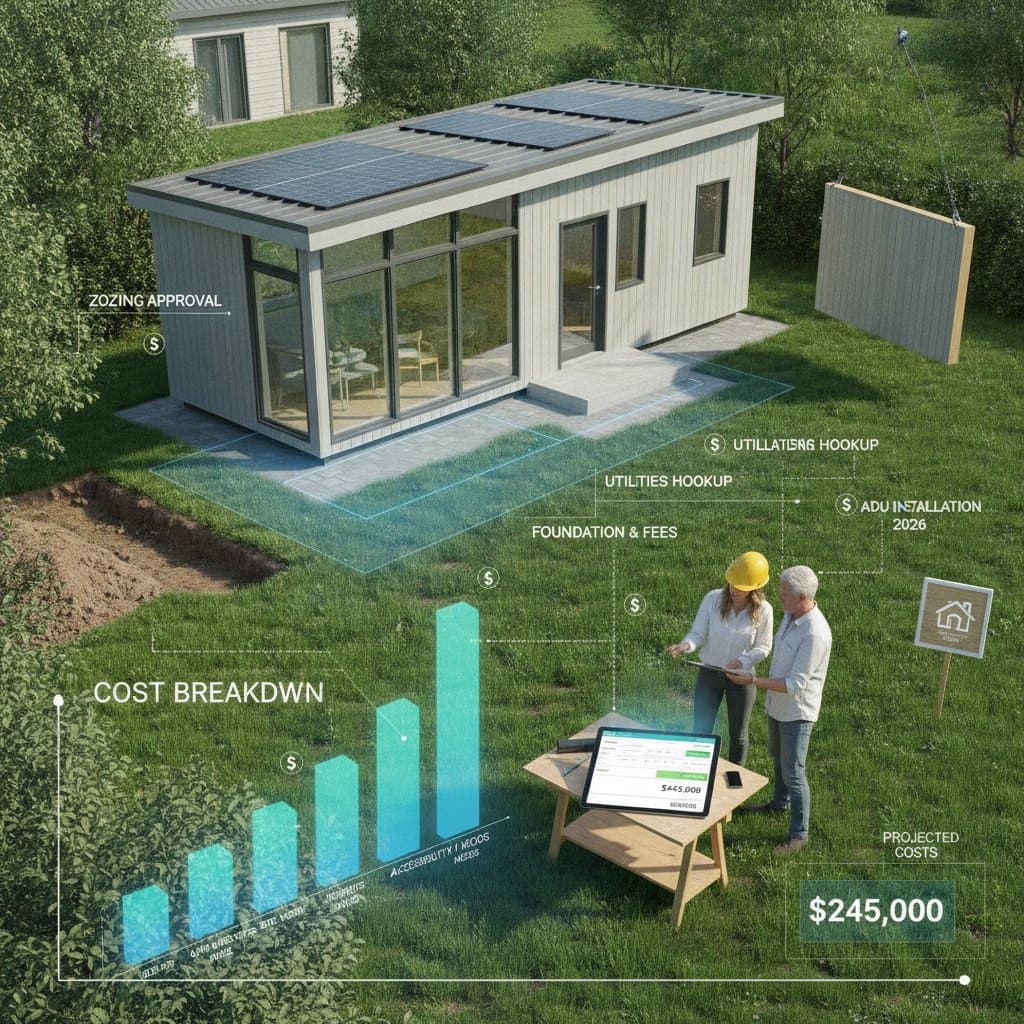
Total estimated cost: $150,000 to $300,000 typical range
Cost Factors
Scope and size influence expenses significantly. Larger detached units demand new foundations, framing, and utility extensions, which elevate costs per square foot compared to simpler garage conversions.
Material grade and finish levels play a key role. Builder-grade options maintain lower budgets, while custom cabinets and premium siding increase expenses by 15 to 25 percent.
Site conditions affect preparation needs. Sloped terrain or unstable soil requires additional excavation and reinforced foundations, adding thousands to the bill. Level, accessible sites streamline the process and reduce outlays.
Labor market dynamics and seasonal timing matter. Regions with high demand or peak construction periods see elevated rates. Scheduling during quieter months often yields more competitive bids.
Custom features and modifications contribute to variability. Elements such as skylights, vaulted ceilings, or enhanced insulation push totals beyond initial projections.
DIY vs Pro
What You Can Do
Homeowners with relevant skills may manage certain tasks independently:
- Interior painting to achieve a fresh, uniform look
- Flooring installation using prefinished materials for efficiency
- Trim and hardware placement for personalized touches
- Basic landscaping and exterior cleanup to enhance curb appeal
Completing these elements safely and accurately can reduce overall expenses by $5,000 to $15,000.
What Requires a Pro
Specialized work demands professional expertise:
- Structural framing and foundation pouring to ensure stability
- Electrical wiring and plumbing installations for compliance and safety
- HVAC system setup to optimize performance and efficiency
- Roofing application and exterior sheathing for weather resistance
Licensed contractors handle these areas to meet building codes. Attempting them without qualifications risks insurance invalidation or inspection failures.
Safety and Code Notes
Verify local zoning regulations prior to any project initiation. Municipalities typically mandate permits, detailed plan reviews, and phased inspections. Delegate electrical and gas installations to certified professionals. Inadequate structural support or drainage solutions may lead to long-term issues like collapse or water damage.
How To Save Without Regret
Opt for straightforward designs. A rectangular layout with an integrated roofline minimizes framing complexity and labor demands.
Select standard dimensions. Off-the-shelf windows and doors avoid the premiums associated with bespoke fabrication.
Coordinate multiple improvements. Integrate driveway repairs, utility extensions, or landscaping into the ADU project to distribute equipment and labor costs.
Solicit multiple estimates. Secure at least three detailed proposals, confirming each covers:
- Itemized project scope
- Specified material brands and quality levels
- Preparation of surfaces and post-work cleanup
- Inclusion of permit and disposal charges
- Comprehensive warranty provisions
- Milestone-based payment terms
Timeline and Scheduling
Procure materials with lead times ranging from two to ten weeks. Delays in prefabricated components like trusses or windows can postpone framing. Once permits clear, anticipate on-site crews for four to six months.
Schedule inspections at critical junctures: post-foundation, after framing, following rough-ins, and at final completion.
Address utility integrations promptly to prevent disruptions. Assess the primary residence's electrical and sewer capacities before ground disturbance to avoid costly retrofits.
Maintenance and Lifespan
A well-constructed ADU endures alongside the main structure when maintained diligently. Routine upkeep preserves its integrity and value.
Perform essential checks regularly:
- Examine roof and flashing biennially for wear or damage
- Replace HVAC filters every three months to sustain airflow
- Renew caulking around windows and doors as deterioration appears
- Flush the water heater yearly to prevent sediment buildup
These practices extend functionality and mitigate repair needs.
Building Value Through Informed Choices
Investing in an ADU represents a strategic enhancement to property assets. By understanding cost drivers and implementation strategies, homeowners position themselves for substantial returns. Whether for rental income or family accommodation, a thoughtfully planned granny flat elevates living spaces and financial outcomes. Consult local experts to tailor this investment to specific circumstances and maximize long-term benefits.