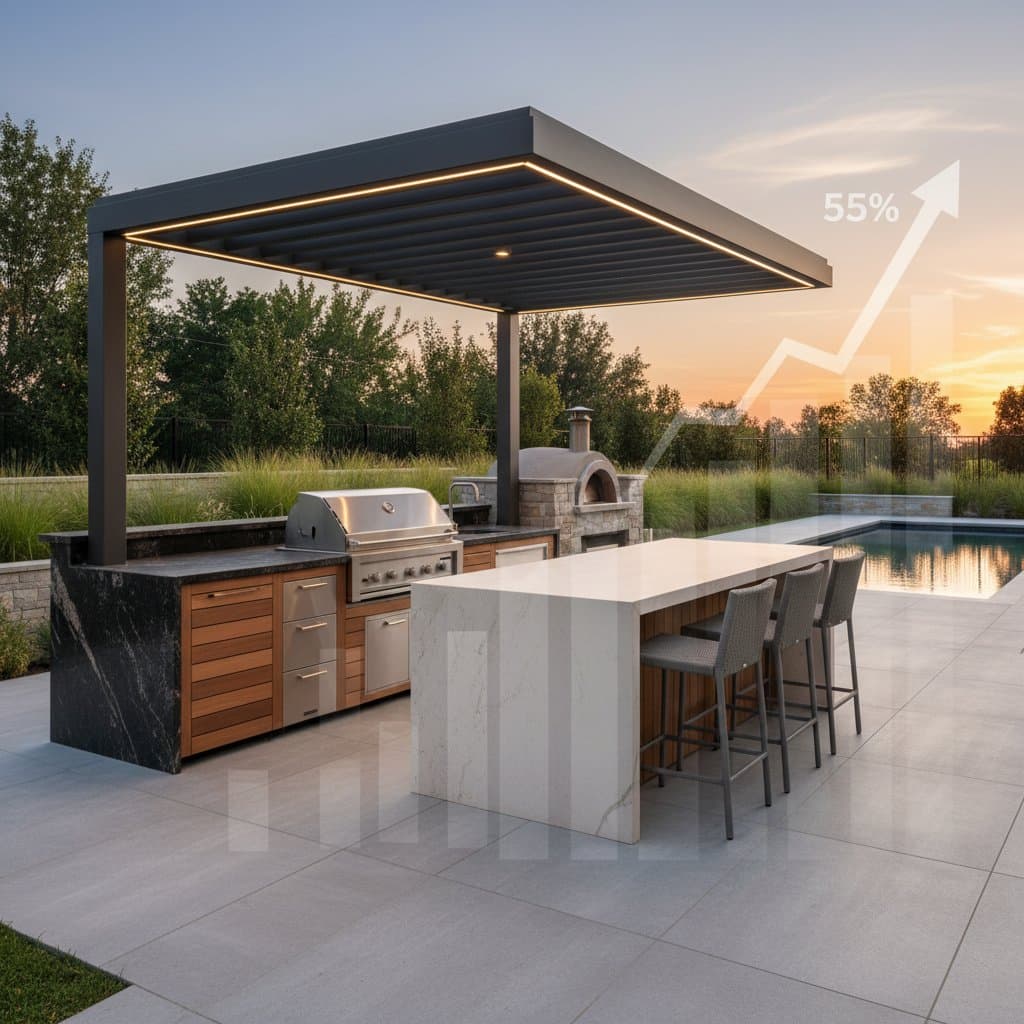
Outdoor Kitchens: A 55% Cost Increase Projected for 2026
Outdoor kitchens have transitioned from exclusive luxuries to essential backyard features for many homeowners. However, this growing appeal comes at a price. Industry forecasts indicate a 55 percent escalation in overall expenses by 2026, driven primarily by supply chain disruptions, inflation in raw materials, and heightened demand for premium elements. Homeowners considering an expansion of their outdoor living areas should assess these shifts carefully, identify controllable elements, and adopt strategies to maintain quality within a realistic budget.
Key Factors Driving the Cost Increase
The pricing of outdoor kitchens depends on several interconnected elements that are experiencing upward pressure.
- Materials: Premium options like stainless steel countertops, natural stone veneers, precast concrete, and weather-resistant composites face significant price inflation due to global supply constraints.
- Labor: Shortages of qualified tradespeople, including masons for foundational work, electricians for wiring, and plumbers for installations, result in higher hourly rates and extended project timelines.
- Design Complexity: Requests for integrated features such as multiple built-in appliances, shaded seating areas, and ambient lighting contribute to elevated expenses through additional customization.
- Permitting and Utilities: Compliance with local building codes requires professional inspections and connections for gas lines, electrical outlets, and water supplies, incurring fees and specialized labor.
- Market Demand: Persistent interest in outdoor enhancements, particularly in climates supporting extended use, sustains competitive bidding among contractors and suppliers.
These factors collectively amplify costs, with regional variations influenced by local availability and economic conditions.
Current Cost Ranges and Influencing Elements
Prior to the anticipated rise, outdoor kitchen investments span a broad spectrum based on scope and materials. The following outlines typical ranges for new constructions.
- Entry-Level Configurations: $4,000 to $10,000. These include prefabricated grill stations, compact refrigeration units, and basic stone or brick facings for a straightforward setup.
- Mid-Range Projects: $12,000 to $25,000. Expect custom-fabricated surfaces, integrated grills, sinks, cabinetry for storage, overhead lighting, and adjacent seating arrangements.
- High-End Developments: $30,000 to $60,000 and beyond. Such builds feature zoned cooking areas, wood-fired ovens, advanced refrigeration systems, and fully equipped bar stations.
Elements that elevate expenses include:
- Selection of high-grade natural stone over engineered alternatives like tile or poured concrete.
- Extension of gas pipelines or plumbing systems from the home's interior.
- Installation of robust, corrosion-resistant stainless steel enclosures.
- Addition of protective structures such as pergolas or enclosed roofs.
- Incorporation of sophisticated systems for illumination or audio entertainment.
Conversely, strategies to moderate costs involve:
- Opting for modular, assembly-required components rather than site-built masonry.
- Limiting plumbing to cold-water access only, avoiding full hookups.
- Utilizing durable yet affordable composite or concrete work surfaces.
- Performing self-assembly on prefabricated frameworks to reduce professional fees.
Projections suggest these categories will appreciate by 40 to 55 percent in the coming years, underscoring the urgency of timely planning.
Deciding Between DIY and Professional Installation
Homeowners with relevant skills can undertake portions of the project independently, but certain aspects demand expert intervention.
Pursuing a DIY Approach:
Individuals experienced in basic construction can manage site preparation, concrete pouring for foundations, and assembly of modular kits. Select interlocking cabinet systems and appliances with pre-installed wiring to sidestep complex utility integrations. A modest installation typically requires 40 to 60 hours of direct labor, spread over weekends to accommodate learning curves.
Situations Requiring Professional Expertise:
Engage licensed contractors for projects involving gas line extensions, electrical circuitry, or connections to the home's primary water system. Structural additions like roofs, pergolas, or load-bearing masonry walls necessitate engineering assessments, especially when adjoining existing decks or patios. Professionals ensure adherence to safety standards and warranty compliance.
Required Skill Levels:
Intermediate proficiency suffices for modular assemblies, while advanced capabilities are essential for comprehensive masonry endeavors.
Essential Safety Measures:
Disconnect all utilities prior to any connections. Employ grounded electrical outlets exclusively. During operations involving cutting, mixing, or heavy lifting, utilize protective gloves, safety goggles, and hearing protection to mitigate risks.
Maintenance Practices for Longevity
With proper care, outdoor kitchens endure 10 to 20 years, even in variable weather conditions. Consistent upkeep preserves functionality and aesthetics while preventing costly repairs.
Routine Monthly Maintenance:
Clean countertops using a solution of mild soap and water, followed by thorough drying. Scrape and wash grill grates immediately after cooking sessions to remove residues. Examine metal components for early signs of corrosion and apply protective coatings as needed.
Seasonal Upkeep Procedures:
Apply fresh sealants to stone or concrete surfaces to guard against moisture penetration. Conduct visual and pressure tests on gas and water lines to detect potential leaks. Secure protective covers over appliances during periods of inclement weather or storage.
Periodic Interventions Every Few Years:
Restore wood accents through refinishing or metal surfaces via repainting to maintain appearance. Replace deteriorated gaskets, seals, and filters in appliances to sustain efficiency.
Investments in well-maintained outdoor kitchens enhance property appeal, recouping 60 to 80 percent of initial outlays upon resale, particularly in markets favoring expansive living areas.
Strategies to Navigate the Impending Cost Surge
For those intending to proceed, securing commitments from suppliers and contractors promptly is advisable. Numerous vendors offer price locks for 30 to 90 days upon receipt of deposits, shielding against interim fluctuations. Implementing a phased construction model allows for cost distribution over time without delaying usability.
- Initial Phase: Establish the foundation slab, install essential utilities, and set up the primary grilling area to enable immediate outdoor cooking.
- Subsequent Phase: Integrate countertops, storage solutions, and seating elements in the following season, building on the established base.
- Final Phase: Complete the installation with overhead structures, enhanced lighting, and decorative finishes at a later interval.
This methodical progression provides functional benefits early while accommodating budgetary constraints and material availability.
Integrating Sustainability for Enduring Benefits
Constructing an outdoor kitchen presents opportunities to balance durability with environmental stewardship. Prioritize materials incorporating recycled elements, such as composite decking boards or reconstituted stone aggregates. Repurpose existing patio surfaces through resurfacing rather than complete demolition to minimize waste.
Source salvaged stone from local suppliers or incorporate reclaimed bricks to reduce both expenses and ecological impact. Select energy-efficient cooking appliances and LED fixtures to lower ongoing energy consumption. Gas-powered grills offer cleaner combustion compared to traditional charcoal models, while pellet variants utilize sustainable biomass fuels. Designate space for recycling receptacles or composting units to enhance the area's practicality and promote eco-conscious habits.
Frequently Asked Questions
What will outdoor kitchen costs look like after the 55% increase?
Mid-range projects may range from $18,000 to $38,000 post-surge, varying by location, material selections, and feature complexity.
Is it feasible to construct an outdoor kitchen independently?
Affirmative, provided modular kits are chosen and utility-related tasks are delegated to licensed professionals for gas, water, and electrical work.
Are permits necessary for an outdoor kitchen?
Local regulations typically mandate permits for fixed installations involving gas or electrical lines. Temporary or plug-in setups generally bypass these requirements.
Realizing Your Outdoor Kitchen Vision
The approaching cost escalation challenges but does not preclude achieving an outdoor kitchen that enriches daily life. Focus on essential utilities, resilient materials, and expandable modular designs to future-proof your investment. By initiating the process without delay, homeowners secure favorable pricing and cultivate a versatile extension of their home that boosts enjoyment and market value.