Understanding Home Warranty Coverage for Solar Panels in 2025
Key Facts at a Glance
National average cost: $18,000 to $25,000 for a complete solar installation
Typical range: $15,000 to $30,000
Low end and high end: $10,000 for compact grid-tied systems; $40,000 for expansive battery-integrated setups
Installation duration: 2 to 5 days
DIY or professional: Professional installation required for electrical connections and permits
Return on investment and resale value: Properly maintained systems boost home value by 4 to 6 percent
Last updated: March 2025
Detailed Cost Breakdown
Solar installations involve multiple components, each contributing to the overall expense. The following table outlines typical costs for a 6,000-watt system, a common size for average households.
| Item | Unit Cost | Typical Quantity | Line Total | Notes |
|---|---|---|---|---|
| Solar panels | $0.90 to $1.50 per watt | 6,000 watts | $5,400 to $9,000 | Includes 25-year product warranty |
| Inverter | $1,000 to $3,000 | 1 | $1,000 to $3,000 | Covered by 10- to 15-year warranty |
| Mounting hardware | $0.10 to $0.30 per watt | 6,000 watts | $600 to $1,800 | Options for roof or ground mounting |
| Labor | $0.50 to $1.00 per watt | 6,000 watts | $3,000 to $6,000 | Requires licensed electrician |
| Permits and inspection | Flat fee | 1 | $250 to $750 | Handled by local building authorities |
| Disposal or roof repair | Flat fee | 1 | $300 to $800 | Applies if roof modifications are involved |
After applying federal tax credits, the total system cost often falls between $10,000 and $20,000. These figures vary by location and system complexity. Homeowners should obtain multiple quotes to identify the best value.
Components Covered by Home Warranties
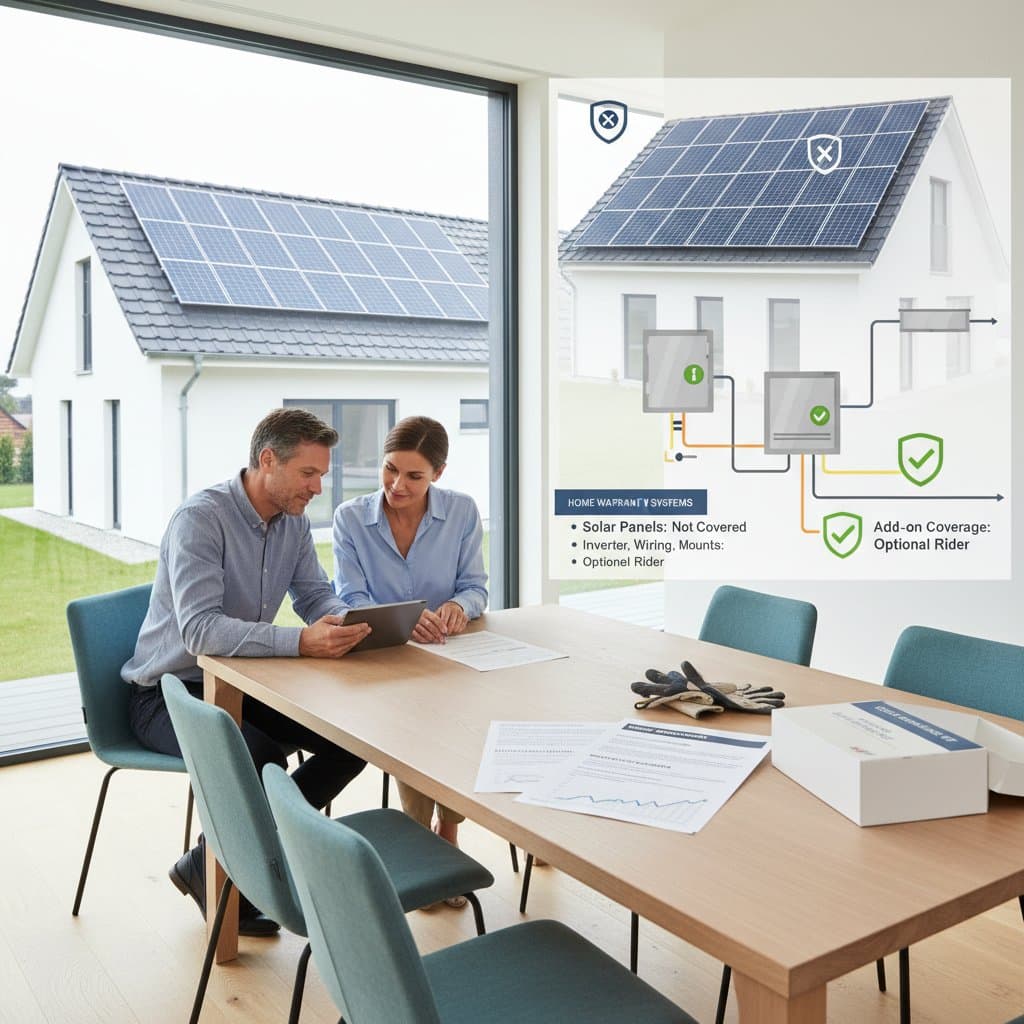
Standard home warranty plans exclude solar equipment from basic coverage. Protection becomes available through optional add-on riders or if solar systems fall under new construction warranties from builders. These riders typically address electrical elements rather than the panels themselves.
Commonly covered items include:
- Inverters and associated wiring connections
- Monitoring systems or controllers
- Mounting hardware, particularly when it impacts roof structure
Solar panels, batteries, roof penetrations, and any losses in energy production remain uncovered. Manufacturers provide dedicated warranties for panels, offering 20 to 25 years for performance guarantees and 10 to 12 years for workmanship. Homeowners rely on these for panel-specific issues.
When an inverter malfunctions, a home warranty can cover repair or replacement costs once the service fee applies. Cracked panels or reduced output require claims directly with the manufacturer. Understanding these distinctions prevents unexpected expenses.
Factors Influencing Costs and Coverage
Several variables affect both installation expenses and warranty applicability. System size plays a primary role, as larger arrays demand more materials and labor for repairs. Premium panel brands with higher efficiency ratings carry elevated upfront costs but extend warranty durations.
Roof characteristics, such as access and slope, complicate installations on steep or elevated structures, raising labor fees. Environmental conditions like hail, heavy snow, or extreme heat accelerate wear and may invalidate certain coverages if not addressed. Installations by certified professionals ensure compliance with warranty terms during claims.
Homeowners in regions with frequent severe weather should prioritize riders that specify exclusions for natural disasters. Documenting installation details strengthens future claims. These factors guide informed decisions on coverage selection.
Professional Installation Versus DIY Maintenance
Professional expertise proves essential for core solar setup tasks. Electrical connections to the home's service panel demand licensed electricians to meet safety codes and permitting requirements. Inverter replacements or rewiring similarly require specialized skills to avoid hazards.
Capable homeowners can handle basic upkeep without professional help. Cleaning panels with a soft brush and mild detergent removes debris and maintains efficiency. Monitoring energy output via apps or meters allows early detection of issues, while ground-level inspections check for loose connections.
Safety remains paramount in all activities. Solar systems retain live current even when disconnected, so treat all lines as energized. Always deactivate the inverter and adhere to manufacturer lockout procedures before any wiring contact. Unauthorized DIY repairs risk voiding manufacturer warranties, so review policy terms carefully.
Strategies to Maximize Protection and Savings
Integrating solar coverage into a home warranty enhances overall security. Add a dedicated rider during policy renewal to include key components without overhauling the entire plan. Registering all equipment serial numbers with manufacturers activates performance guarantees promptly.
Annual professional inspections, costing $150 to $300, preserve warranty validity and identify potential problems early. Comparing quotes from at least three providers ensures comprehensive terms for inverters, batteries, and roof elements. Clear policy language on service fees, coverage limits, and exclusions supports confident choices.
Essential Checklist for Quote Evaluation
- Verify itemized coverage for each component
- Confirm service fees and annual limits
- Check if protection extends to power output or hardware only
- Review definitions of exclusions for natural events
- Assess transferability to future home buyers
These steps align coverage with specific needs. Bundling options often yield discounts, balancing cost with reliability.
Navigating Claims and Timelines
Filing a warranty claim begins with contacting the provider and describing the issue. Technicians typically arrive within 2 to 5 business days for assessment. Replacement parts, especially for inverters, may require 1 to 3 weeks based on availability.
Manufacturer claims for panels involve submitting proof of purchase and installer certifications. Shipping and labor costs often fall outside coverage, so budget accordingly. Maintaining organized records accelerates the process and reduces downtime.
Prompt action minimizes energy production interruptions. Track claim statuses through provider portals for updates. This proactive approach sustains system performance.
Ensuring Long-Term System Reliability
Regular maintenance extends solar panel lifespan beyond 25 years. Professional cleanings remove accumulated dust and bird droppings, optimizing energy capture. Inspecting seals and mounts prevents water ingress during rain.
Monitoring software alerts to efficiency drops, signaling timely interventions. Avoid harsh chemicals or pressure washing, which can damage surfaces. In harsh climates, reinforce structures against wind or ice loads.
Combining home warranty riders with manufacturer protections creates layered safeguards. This investment not only protects financial outlays but also supports sustainable energy goals. Homeowners gain peace of mind knowing their systems operate efficiently for decades.