ADU Costs Drop 25 Percent Under Updated Building Rules
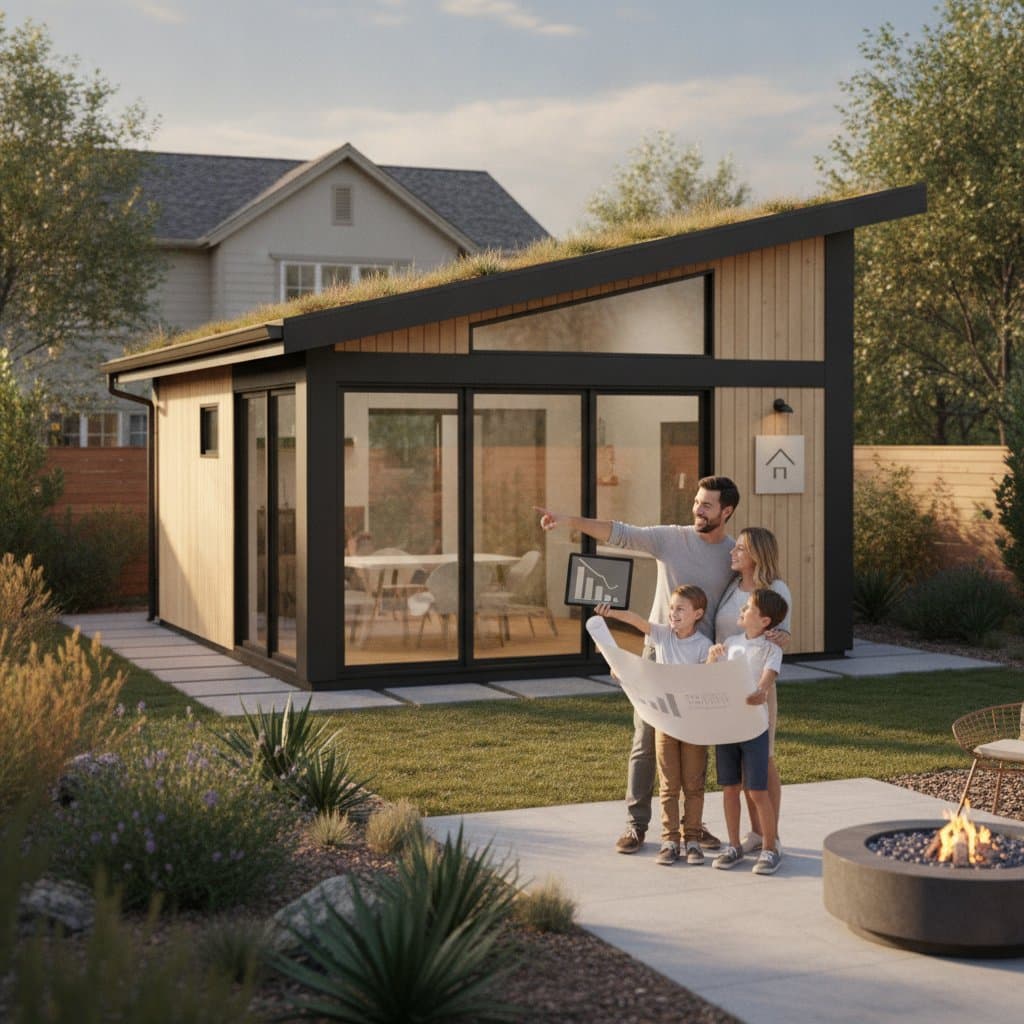
Accessory dwelling units have become more affordable following recent regulatory changes at national and state levels. These updates reduce administrative steps, standardize design choices, and limit certain charges, which together decrease overall project expenses by roughly one quarter. Many property owners now view an ADU as a practical addition rather than a distant possibility.
Key Details at a Glance
- An ADU functions as a secondary residence on the same parcel as the primary home and may appear as a detached structure, converted garage, or basement apartment.
- Reduced expenses allow owners to generate rental revenue, accommodate relatives, or increase overall property worth without relocating.
- Current national costs range from 135000 dollars to 225000 dollars based on scale, access conditions, and interior quality, with a typical project near 175000 dollars.
- Engage a licensed contractor for any work involving structural elements, electrical systems, plumbing, or when local rules require engineered drawings.
- Construction usually spans 12 to 20 weeks once permits are secured, though prefabricated components can shorten this window.
- Schedule a complete exterior review every two years along with seasonal inspections of roofing, siding, and site drainage.
Regulatory Changes and Their Effects
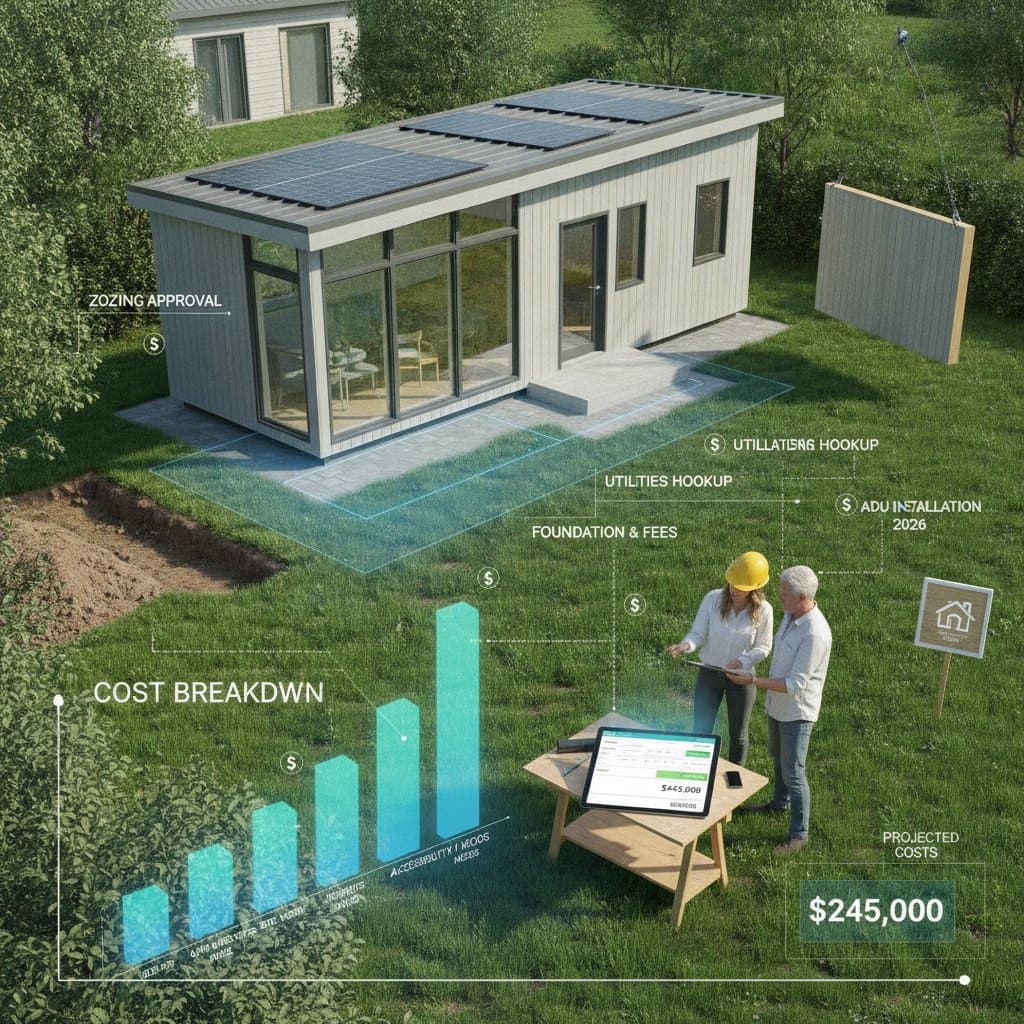
Three primary adjustments drive the savings. Permit processing now follows strict timelines when designs match approved templates, which eliminates extended holding expenses. Fee limits cap development charges, impact fees, and utility connections, with many smaller projects qualifying for full waivers. Statewide collections of preengineered plans cut design expenses and accelerate reviews because the templates already satisfy seismic, wind, and energy requirements. These combined provisions typically trim planning and compliance outlays by 20000 dollars to 40000 dollars.
Construction Sequence
- Verify local zoning rules and required setbacks by consulting planning staff or digital parcel maps and measuring distances from boundaries and easements.
- Select either a preapproved template or a custom layout, noting that standardized plans reduce both time and expense while restricting certain layout options.
- Arrange financing through equity lines, cash-out refinancing, or specialized renovation products, as lenders increasingly factor projected rental income into approval calculations.
- Contract licensed specialists for foundation work, framing, electrical installation, plumbing, and HVAC even when overall project management stays in house.
- Submit documentation and pay the capped fees, then coordinate required inspections at each major stage from foundation through final completion.
- Apply durable, low-maintenance finishes and integrate landscaping, lighting, and drainage to blend the new unit with the existing property.
Owner-Built Work Versus Professional Services
| Category | Owner-Built Approach | Professional Services |
|---|---|---|
| Skill level | Requires broad experience across several trades | Licensed specialists manage technical tasks |
| Safety considerations | Elevated exposure during structural, electrical, and plumbing phases | Coverage provided through contractor insurance |
| Equipment needs | Complete set of construction tools plus safety gear | Supplied by the service provider |
| Regulatory compliance | Owner must satisfy every applicable code | Contractor oversees all approvals |
| Duration | Six to nine months on a part-time basis | Three to five months on a full-time basis |
| Warranty provisions | No labor coverage included | Protection follows state contractor statutes |
Owners can handle cosmetic finishing, painting, and landscaping themselves, yet structural and utility work requires licensed professionals to maintain code compliance and warranty eligibility.
Ongoing Care and Expected Service Life
A properly constructed ADU can remain functional for 50 to 75 years when maintenance follows a consistent schedule. Roofing requires inspection every two years and replacement after 20 to 30 years depending on material. Heating and cooling equipment needs annual servicing with filter changes every three months. Exterior coatings or siding should be renewed every seven to 10 years. Foundation drainage should be checked each spring and fall to preserve slope and clear downspouts. Consistent attention protects both safety and long-term value.
Common Questions
Is rental use permitted immediately after completion? Yes, once the final inspection passes and a certificate of occupancy is issued.
Are separate utility meters required? Shared service lines remain acceptable provided the existing infrastructure supports the added load.
Planning an ADU Project
Homeowners ready to proceed should begin by confirming zoning allowances and reviewing available preapproved plans through local planning offices. Early coordination with lenders familiar with ADU financing further streamlines the process and clarifies borrowing capacity based on anticipated rental returns.