AMS Home Guides Logo
Home
Remodeling Cost ComparisonsAbout
AMS Home Guides Logo

Your comprehensive resource for home guides, cost guides, and home warranty information.

HomeAboutAll ArticlesSearchPrivacyTerms

© 2026 AMS Home Guides. All rights reserved.

  1. Home
  2. /
  3. Outdoor & Exterior Guides
  4. /
  5. Wildfire Landscaping Costs $3-$12 Per Square Foot in 2026
Outdoor & Exterior Guides

Wildfire Landscaping Costs $3-$12 Per Square Foot in 2026

byEric Melton
2026-06-26 03:23:44June 26, 2026
5 min read
Featured image for Wildfire Landscaping Costs $3-$12 Per Square Foot in 2026
2026-06-26 03:23:44
AMS - Home Guides, Cost Guides, Home Warranty

Wildfire Resistant Landscaping Costs in 2026

Quick Take

  • Expect wildfire resistant landscaping to cost between 3 and 12 dollars per square foot. The final price depends on design complexity, materials selected, and property slope.
  • Fire safe plants, hardscaping elements, and targeted irrigation reduce long term ignition risk.
  • Homeowners can complete basic preparation themselves. Grading, irrigation installation, and code compliance work usually require a licensed professional.

Pros and Cons

Pros

  • The approach protects both the home structure and overall property value.
  • Reduced insurance risk may lead to lower premiums over time.
  • Once established, the landscape requires less frequent upkeep than traditional designs.
  • Drought tolerant plant choices support water conservation goals.

Cons

  • Initial expenses exceed those of standard landscaping projects.
  • The finished appearance may differ from preferences for dense or lush vegetation.
  • Certain jurisdictions mandate inspections and permits before completion.
  • Regular pruning and debris removal remain necessary for continued effectiveness.

Step by Step Process for a Fire Safe Yard

Tools and Supplies

  • Shovel, rake, and pruning shears
  • Wheelbarrow
  • Drip irrigation kit or soaker hoses
  • Nonflammable mulch such as gravel or decomposed granite
  • Fire resistant plants including succulents, native groundcovers, and low resin shrubs
  • Gloves, safety glasses, and dust mask

Time: Two to six weekends depending on yard size
Difficulty: Moderate

Assess and Plan

Walk the full property and divide it into three distinct zones. Zone 0 covers the area from zero to five feet from the home and must remain noncombustible. Zone 1 extends from five to thirty feet and calls for low, well spaced plants paired with stone or gravel mulch. Zone 2 reaches from thirty to one hundred feet or the property line and requires thinned trees plus breaks in continuous fuel.

Create a simple sketch that shows plant locations, pathways, and hardscape areas.

Clear and Grade

Remove dead plants, accumulated leaves, and woodpiles. Trim tree branches so none extend over the roofline. Establish gentle slopes that direct water away from the foundation and limit erosion.

Install Irrigation

Place drip lines or soaker hoses to deliver water directly to plant roots. Overhead sprinklers waste water and promote fine growth that ignites more readily.

Add Hardscape

Install gravel, pavers, or concrete for patios and walkways. These surfaces function as fire breaks and provide usable outdoor space.

Plant Smart

Select species with high moisture content and low resin levels. Maintain spacing that prevents flames from jumping between plants. Group vegetation according to similar water needs to simplify ongoing care.

Inspect and Test

After planting, walk the property once more. Check for overhanging branches, patches of dead grass, or mulch placed too close to siding. Adjust plant spacing where gaps appear insufficient.

Clean Up

Take trimmings to a green waste facility rather than leaving them near the home. Keep gutters and roofs clear of debris at all times.

DIY versus Professional Installation

Safe for DIY if:

  • You can manage light excavation, planting, and basic irrigation setup.
  • You understand spacing requirements and fuel reduction principles.

Hire a professional when:

  • The site includes steep slopes, retaining walls, or drainage challenges.
  • Local regulations require certified defensible space documentation.
  • Tree removal involves heavy equipment or proximity to power lines.

A licensed landscape contractor designs zones that satisfy code requirements, manages permits, and chooses native plants suited to local soil and climate. The same professional can integrate drip systems that comply with water conservation rules.

Design Alternatives

Option A: Fire Resistant Hardscape Yard

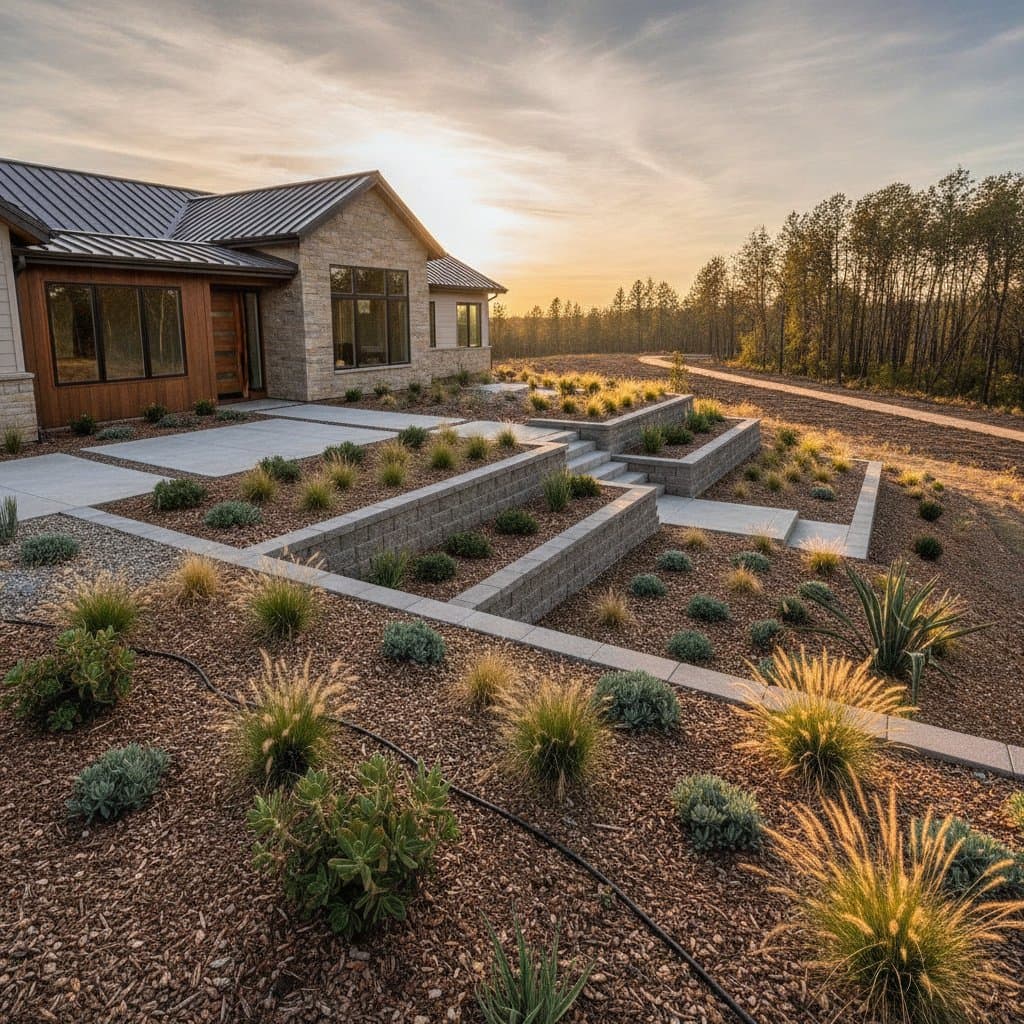
This choice suits small lots or urban properties. It relies primarily on stone, gravel, and raised planters. Ignition risk reaches the lowest level, yet heat reflection increases.

Option B: Native Xeriscape

This option works well in dry climates. It combines drought tolerant native plants with limited mulch. Water costs drop, though early season weeding increases.

Option C: Mixed Design

This layout fits larger lots. It places hardscape near the home and native shrubs plus trees at greater distances. The result balances visual appeal, shade, and safety.

Frequently Asked Questions

How much defensible space do I need?

Most fire agencies require at least thirty feet of clearance around a home. Steep slopes or high risk zones call for extension to one hundred feet.

Can I keep trees near my house?

Yes, provided crowns remain at least ten feet apart and branches are trimmed six feet above ground level.

What mulch is safest?

Gravel or decomposed granite offers the best performance. Bark, pine needles, and wood chips should stay away from structures.

Do succulents help?

Yes. Their high water content resists ignition and slows fire spread.

Will insurance cover upgrades?

Some policies reimburse part of fire hardening improvements. Contact the provider before work begins.

Taking the First Steps

Begin with the area within five feet of the home and expand outward in stages. Replace flammable plants and bark mulch with gravel or low moisture native species. Maintain tuned irrigation and remove debris regularly. Each completed action lowers fire risk and safeguards the property investment.
You may also like

Image for Flood-Resistant Flooring Cuts Repair Costs 70%

Flood-Resistant Flooring Cuts Repair Costs 70%

June 25, 2026
Image for Modular Homes Cut Build Time But Limit Design Changes

Modular Homes Cut Build Time But Limit Design Changes

June 25, 2026
Image for Garage ADU Conversion Runs $80K to $175K in 2026

Garage ADU Conversion Runs $80K to $175K in 2026

June 25, 2026

Tagged:

landscaping,wildfire,costs,resistant,yard,fire,safe,wildfire-resistant-landscaping

Recent Articles by Eric Melton

Image for Home Battery Backup Beats Generators in 2026

Home Battery Backup Beats Generators in 2026

June 25, 2026
Image for AI Cuts Home Warranty Claim Waits from Days to Hours

AI Cuts Home Warranty Claim Waits from Days to Hours

June 25, 2026
Image for Modular Homes Cut Build Time But Limit Design Changes

Modular Homes Cut Build Time But Limit Design Changes

June 25, 2026
Image for Why Home Warranty Premiums Jump One-Third in 2026

Why Home Warranty Premiums Jump One-Third in 2026

June 24, 2026
Image for Flood Proofing Costs: What Actually Pays Off in 2026

Flood Proofing Costs: What Actually Pays Off in 2026

June 24, 2026

Related: landscaping

Image for Hardscaping Creates Fire Defense in First 30 Feet

Hardscaping Creates Fire Defense in First 30 Feet

June 21, 2026
Image for Drought-Resistant Yards Cut Water Bills by 70 Percent

Drought-Resistant Yards Cut Water Bills by 70 Percent

June 20, 2026
Image for Fire-Resistant Landscaping Cuts Wildfire Risk 80%

Fire-Resistant Landscaping Cuts Wildfire Risk 80%

June 9, 2026
Image for Climate Landscaping Cuts Water Bills 70% for $13K

Climate Landscaping Cuts Water Bills 70% for $13K

May 19, 2026
Image for Smart Plant Choices That Slow Wildfire Spread

Smart Plant Choices That Slow Wildfire Spread

March 11, 2026

Outdoor & Exterior Guides

Flood Proofing Costs: What Actually Pays Off in 2026

Learn how targeted flood proofing measures protect homes in 2026. Compare costs of sealing, pumps, and elevation against insurance savings and resale benefits.

June 24, 2026

Granny Pod Costs: $85K to $225K in 2026

Building a granny pod in 2026 offers independence for loved ones while boosting property value. Expect total costs between $85,000 and $225,000, influenced by size, design, and site conditions. This guide details every stage from permitting to finishing and helps homeowners plan realistic budgets.

June 22, 2026

Hardscaping Creates Fire Defense in First 30 Feet

Strategic hardscaping with noncombustible materials slows flames, protects access, and lowers maintenance. Review costs, design steps, code requirements, and professional versus DIY guidance for a resilient landscape.

June 21, 2026

Drought-Resistant Yards Cut Water Bills by 70 Percent

Explore drought resistant yard pricing from basic to premium options. Find cost breakdowns, DIY comparisons, and strategies that deliver lasting water savings and curb appeal.

June 20, 2026

Impact Windows Cut Storm Damage and Insurance Costs

Impact windows deliver strong protection against storms, debris, and high winds while boosting energy efficiency, security, and home value. This guide covers performance details, cost factors, installation steps, code requirements, and maintenance practices to help homeowners select and care for windows that meet current safety standards.

June 18, 2026

What Granny Pod Installation Actually Costs

Granny pod and ADU projects range from $80,000 to $250,000 depending on size, site conditions, and utility access. This guide covers cost components, code requirements, and planning steps that help homeowners complete a functional backyard unit.

June 16, 2026

Wildfire Upgrades Return 60-80% of Investment Cost

Wildfire resistant home upgrades pay off through lower insurance premiums, higher resale value, and reduced damage risk. Costs range from 5000 to 30000 dollars, and strategic choices often deliver strong returns.

June 15, 2026

Most Outdoor Kitchens Cost $8K to $25K in 2026

Find out what it costs to build an outdoor kitchen in 2026. Review budget options starting at 5000 dollars, luxury builds reaching 50000 dollars, and the design choices that influence final pricing.

June 14, 2026

Fire-Resistant Landscaping Cuts Wildfire Risk 80%

Fire-resistant landscaping creates defensible space that reduces wildfire risk by up to 80 percent. Average projects cost around 7800 dollars. Property size, materials, and terrain determine final pricing. Professional installation improves safety, curb appeal, and long-term value.

June 9, 2026

Move Water Away Before It Becomes a Flood

Protect your home from rising water with smart grading, sealing, and drainage solutions. Learn cost effective steps, when to call professionals, and how seasonal maintenance keeps your foundation dry.

June 2, 2026

Solar Roof Reality: $40K-$80K and Your Payback Timeline

A solar roof costs 40000 to 80000 dollars for an average home. Payback arrives in 12 to 18 years through energy savings. Compare system types, review installation needs, and examine regional factors that influence returns.

May 29, 2026

Granny Pods Now Cost $90K–$250K Under New 2026 Rules

Thinking about adding a backyard granny pod in 2026? Updated rules tighten safety and zoning requirements while costs range from $90,000 to $250,000. Learn how to plan, permit, and build these compact ADUs for aging parents or guests, plus discover cost-saving options, DIY tips, and long-term maintenance essentials.

May 27, 2026

Granny Pods Cost $50K Less But ADUs Add Resale Value

Granny pods deliver lower costs and faster installation while backyard ADUs provide greater space and lasting resale value. Families must balance immediate needs against future property goals when choosing between these independent living options.

May 26, 2026

Outdoor Kitchen ROI Averages 55-75% of Build Cost

Explore real costs for outdoor kitchens in 2026, from modular setups to custom builds. Review price ranges, ROI data, material options, and phased construction strategies that balance quality with budget.

May 22, 2026

Hurricane Windows Cost $600-$1,800 Per Window Installed

Hurricane windows deliver strong storm protection while improving energy efficiency and home value. Costs range from 600 to 1800 dollars per window depending on size, materials, and installation needs.

May 22, 2026

Outdoor Kitchen Costs Jump 35% Higher in 2026

Outdoor kitchen costs are projected to climb roughly 35 percent by 2026 due to material, labor, and shipping pressures. Current projects range from 15000 to 45000 dollars. Early planning, clear design choices, and permit awareness help control expenses while delivering lasting backyard value.

May 21, 2026

Climate Landscaping Cuts Water Bills 70% for $13K

Climate landscaping turns yards into water efficient spaces that handle drought and heat. Most projects cost around 13000 dollars and can reduce outdoor water use by up to 70 percent while adding lasting property value.

May 19, 2026

Hurricane Upgrades as Engineering and Financial Investment

As the 2026 hurricane season approaches, homeowners must prioritize strategic upgrades that blend engineering precision with financial planning. This guide details critical improvements, expense breakdowns, insurance considerations, and maintenance tips to create resilient properties that safeguard lives, assets, and long-term value.

April 25, 2026

Greywater Systems Cut Water Bills 40% for $5,200

Greywater systems repurpose household wastewater to decrease outdoor water needs by up to 40%. Installations average $5,200, varying by scale, filtration, and permits. From $1,800 DIY options to $9,500 advanced units, discover strategies for savings, essential permits, and professional setup for optimal efficiency and enduring benefits.

April 23, 2026

Granny Pod Installation Costs in 2026

Granny pods provide independent living options for elderly relatives near family, but 2026 installation costs depend on size, location, and features. This guide breaks down expenses from construction to maintenance, with strategies for smart budgeting and maximizing value.

April 19, 2026

Categories

Appliance & System Coverage
Cost Guides
Home Guides
Home Warranty Basics
Outdoor & Exterior Guides
Remodeling Cost Comparisons
Room-by-Room Guides