The Rise of ADUs in Multigenerational Living for 2026
Accessory dwelling units (ADUs) represent a pivotal shift in how families approach shared living arrangements. These structures provide independent spaces on the same property, allowing relatives to coexist while maintaining personal boundaries. As housing costs escalate and caregiving demands grow, ADUs emerge as a strategic solution for long-term family stability.
Defining an Accessory Dwelling Unit
An accessory dwelling unit consists of a compact, independent residence situated on the property of a primary home. It features essential amenities including a kitchenette, bathroom, and sleeping quarters. Commonly referred to as granny flats, in-law suites, or detached studios, ADUs serve purposes ranging from housing extended family members to generating rental revenue.
Homeowners often select ADUs to accommodate aging parents who require proximity without full integration into the main household. Similarly, they support adult children transitioning to independence. The design emphasizes functionality, ensuring the unit integrates seamlessly with the existing landscape.
Advantages and Drawbacks of ADUs
Advantages
- Establishes distinct living areas for family members or visitors, preserving individual privacy.
- Generates potential rental income, offsetting mortgage payments or funding home improvements.
- Elevates overall property value by approximately 10 to 20 percent in supportive markets.
- Maximizes underutilized land, avoiding the need for additional lot purchases.
Drawbacks
- Involves substantial initial investment, often exceeding $150,000 for custom builds.
- Navigating permitting processes demands time, with approvals taking 2 to 6 months in many jurisdictions.
- May necessitate upgrades to utilities, such as electrical panels or sewer connections.
- Reduces available outdoor area, potentially impacting landscaping or recreation space.
Practical Advice: Consult your local zoning office early to understand regulations on unit size, which typically caps at 800 to 1,200 square feet, along with parking and height requirements.
Ideal Scenarios for ADUs and Potential Pitfalls
Optimal Applications
- Implement an ADU for enduring support of elderly relatives or grown children needing affordable housing.
- Pursue construction to secure rental income while retaining ownership of the primary residence.
- Consider it if you intend to reside in the home for at least five years to recoup investments.
Situations Where ADUs May Underperform
- Proceed with caution if the lot lacks sufficient space to meet setback distances, usually 5 to 10 feet from property lines.
- Avoid if extending utilities proves challenging due to site topography or infrastructure limitations.
- Reassess if budget constraints limit access to financing, such as low home equity.
Comprehensive Guide to Constructing an ADU
Essential Tools and Materials
- Measuring instruments: tape measure, laser level, and chalk line for precise layouts.
- Building supplies: concrete mix for foundations, pressure-treated lumber, fiberglass insulation, and moisture-resistant drywall.
- Specialized kits: plumbing fixtures and electrical wiring compliant with national residential standards.
- Protective equipment: sturdy gloves, safety goggles, and ear protection to mitigate on-site risks.
Estimated Timeline: 3 to 9 months, influenced by design complexity and regulatory approvals. Skill Level: Moderate to advanced, requiring familiarity with construction basics.
- Design and Site Assessment. Develop detailed sketches incorporating desired layout, then verify compliance with zoning laws. Measure setbacks, maximum lot coverage (often 40 percent), and height limits (typically one story).
- Obtain Necessary Permits. Prepare and submit architectural drawings, topographic surveys, and energy efficiency documentation. Leverage pre-approved templates available in progressive municipalities to expedite the process.
- Site Preparation. Remove obstacles like overgrown plants, grade the terrain for evenness, and identify underground utilities through professional locator services.
- Foundation Installation. Select from slab-on-grade, raised crawlspace, or pier-and-beam systems based on soil conditions. Ensure footings reach frost line depth and incorporate reinforcing rebar for structural integrity.
- Framing and Roofing Assembly. Employ seasoned, kiln-dried lumber with metal connectors and ties for seismic or wind resistance. Position roof trusses, apply plywood sheathing, and layer waterproof underlayment.
- Utility Integration. Connect water lines, electrical circuits, and heating systems to the main house infrastructure. Engage certified plumbers and electricians to adhere to safety codes.
- Insulation and Interior Walls. Apply R-13 wall insulation and R-30 attic values for energy efficiency. Joint-tape, mud, and sand drywall seams to achieve a professional surface.
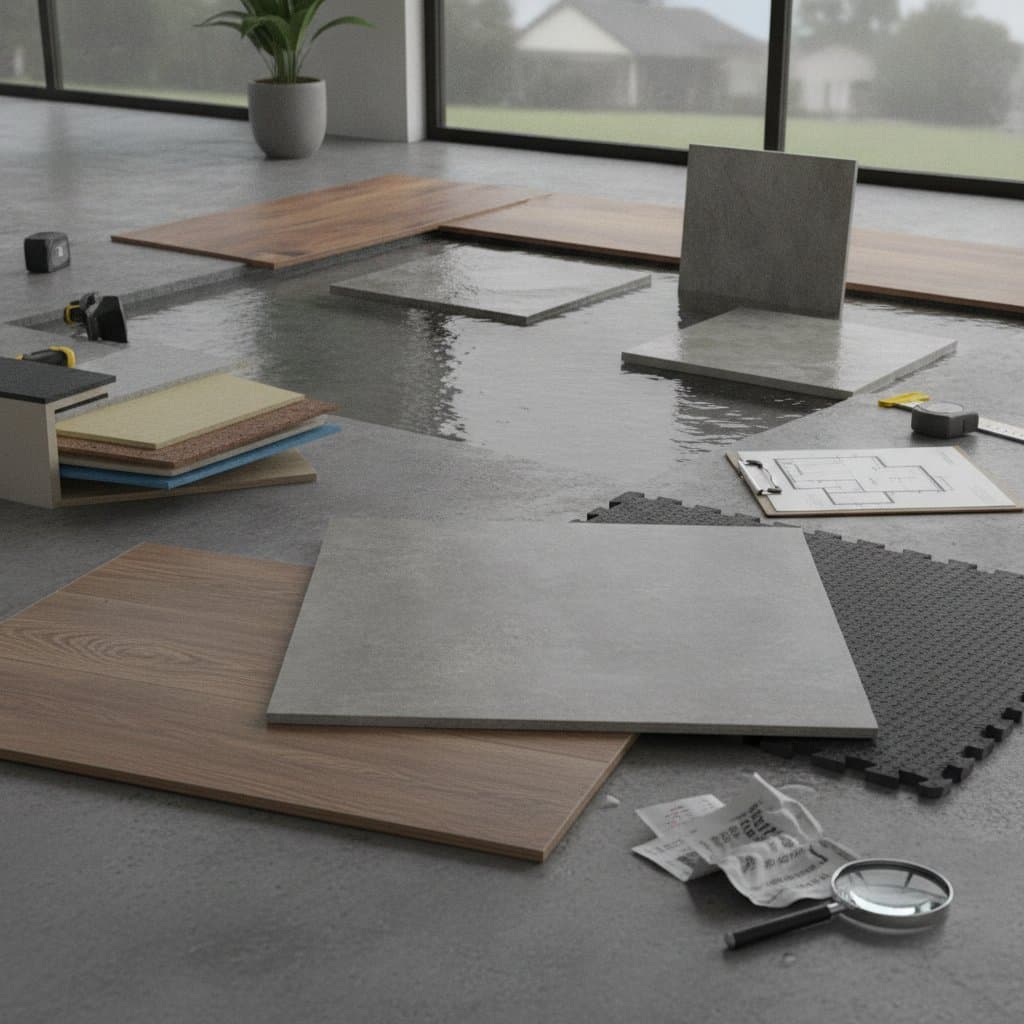
- Fixture and Finish Installation. Mount kitchen cabinets, lay vinyl or laminate flooring, install recessed lighting, and add baseboards. Opt for materials like quartz countertops that resist wear.
- Final Inspections. Arrange evaluations for structural stability, wiring safety, plumbing functionality, and ventilation systems to secure occupancy certification.
- Cleanup and Preparation. Remove construction waste, recycle usable materials, and perform thorough cleaning to ready the space for occupancy.
Outcome: A fully compliant, habitable unit equipped for immediate family or tenant use.
Budgeting for an ADU Project
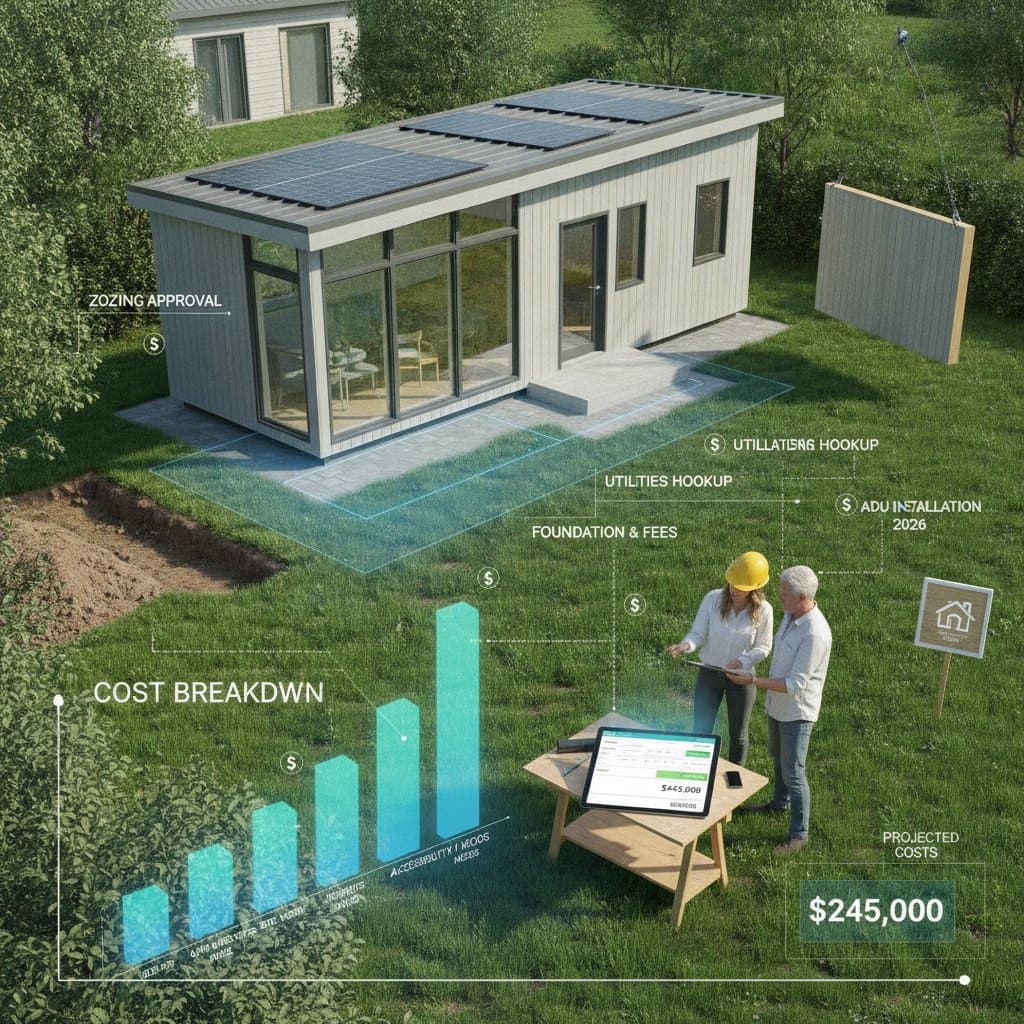
Standard Cost Spectrum: $120,000 to $350,000, varying by location and specifications.
Factors Increasing Expenses:
- Bespoke architectural designs or premium materials like hardwood floors.
- Independent metering for utilities to facilitate separate billing.
- Challenging site work, including retaining walls or elevated foundations.
- Elevated labor rates in urban or coastal regions.
Strategies to Lower Costs:
- Utilize standardized plans approved by local authorities.
- Choose prefabricated or modular units assembled on-site.
- Share utility connections with the primary residence to minimize infrastructure expenses.
Conversion Option: Transforming an existing garage reduces costs by 30 to 50 percent compared to ground-up construction, provided the structure supports residential conversion.
DIY Approaches Versus Professional Services
Suitable DIY Tasks
- Minor site clearing or exterior painting.
- Interior finishing, such as trim installation or wall texturing.
- Basic assembly of flooring systems or modular cabinetry.
When to Engage Professionals
- For foundational elements or load-bearing framing that demand engineering precision.
- Involving new installations of plumbing, electrical, or climate control systems.
- Any phase requiring official permits or code verifications.
Key Rationale: Professionals possess expertise in regional building standards and handle permitting efficiently. Their involvement prevents hazards in critical areas like gas lines or circuit breakers, avoiding penalties from non-compliance.
Ongoing Maintenance for ADUs
Recommended Schedule: Seasonal inspections, with comprehensive reviews twice yearly.
Core Maintenance Activities:
- Examine roofing materials, gutter systems, and exterior siding for signs of moisture intrusion or deterioration.
- Verify operation of smoke alarms and carbon monoxide sensors, replacing batteries as needed.
- Clear plumbing drains and confirm functionality of ground-fault circuit interrupters.
- Replace air filters and clear ductwork in heating and cooling units.
Primary Objective: Sustain habitability, prevent water damage, and optimize energy use. Proactive care averts expensive interventions, such as roof replacements or electrical overhauls.
Viable Alternatives to Traditional ADUs
Garage Conversions: Ideal for properties with sturdy existing garages near utility access. This approach cuts expenses but constrains square footage to the original footprint.
Basement Finishing: Suited to regions with harsh winters or premium real estate. It leverages existing foundations for cost savings, though egress windows and moisture barriers are mandatory for safety.
Prefabricated Units: Factory-built and transported for quick assembly. They offer timeline certainty and budget predictability, albeit with reduced customization options.
ADUs as a Cornerstone of Multigenerational Harmony
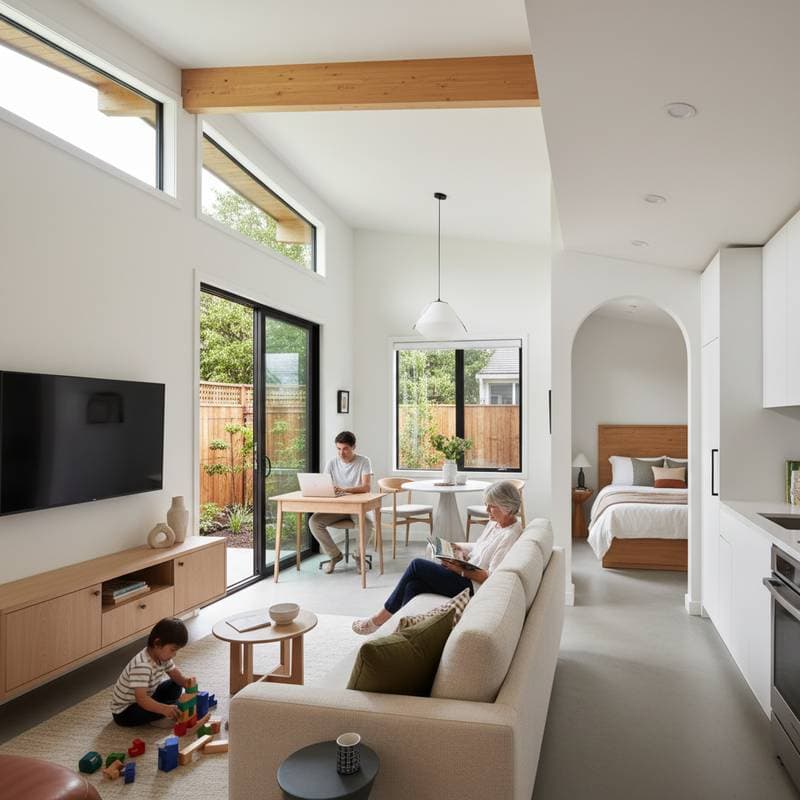
Extended family dynamics evolve with economic pressures, making cohabitation increasingly viable. ADUs address these needs by enabling proximity for support without sacrificing autonomy. Elderly occupants benefit from accessible designs, while younger generations gain a launchpad toward financial independence.
Customization enhances versatility: single-level plans accommodate mobility aids, and open studios appeal to millennials. Independent access points foster self-reliance, and shared resources like landscaping reduce collective burdens.
Essential Pre-Construction Evaluations
Space Compatibility Assessment
- Evaluate yard dimensions against minimum setback requirements.
- Ensure pathways for heavy equipment or modular deliveries.
- Design connections like shared driveways for seamless integration.
Property Condition Review
- Test soil stability and ensure proper slope for water runoff.
- Assess utility infrastructure for expansion capacity.
- Confirm effective drainage to mitigate flood risks.
Financial Planning Review
- Account for fees related to permits and utility extensions.
- Allocate 10 to 15 percent buffer for unforeseen expenses.
- Explore funding through home equity lines or specialized construction loans.
These evaluations minimize disruptions and align the project with realistic expectations.
Frequently Asked Questions About ADUs
Does an ADU require its own mailing address? In most locales, it receives a secondary address, though correspondence can consolidate with the primary home.
How does an ADU impact property taxes? It typically increases assessments proportional to the added square footage and value, without triggering a complete reevaluation.
Is short-term renting permitted? Regulations differ; consult municipal guidelines, as some prohibit platforms like Airbnb for ADUs.
Does an ADU influence marketability upon sale? Generally, it enhances appeal by offering versatile space and income potential to prospective buyers.
Can existing outbuildings become ADUs? Conversion is feasible only if they satisfy residential standards for ceiling height, thermal insulation, and emergency exits.
Steps to Launch Your ADU Initiative
Initiate the process by reviewing municipal ADU policies and assessing your property's potential. Outline specific objectives, such as caregiving provisions or revenue targets, alongside a preliminary budget. This foundation guides subsequent decisions.
Solicit detailed proposals from contractors experienced in compact residential projects. Request breakdowns covering design fees, regulatory costs, and labor estimates. Weigh prefabricated solutions against traditional builds for efficiency and affordability.
Post-construction, integrate the ADU into your routine maintenance protocol. Address seasonal tasks like debris clearance and system testing promptly. Ultimately, this investment yields a dynamic environment that nurtures family bonds, eases financial strains, and adapts to evolving circumstances—all from the comfort of home.