Complete Solar Panel Maintenance: 2026 Warranty Coverage
Homeowners install solar panels with the expectation of decades of reliable clean energy and reduced utility bills. The longevity of these systems hinges on consistent maintenance and adherence to warranty conditions. This guide outlines essential inspection tasks, budgeting considerations, and strategies to safeguard warranty protection through diligent upkeep.
What Solar Panel Maintenance Includes
Solar panel maintenance ensures that modules, wiring, and inverters operate close to their specified performance levels. Key activities encompass cleaning, visual assessments, and electrical evaluations. A comprehensive service typically addresses the following:
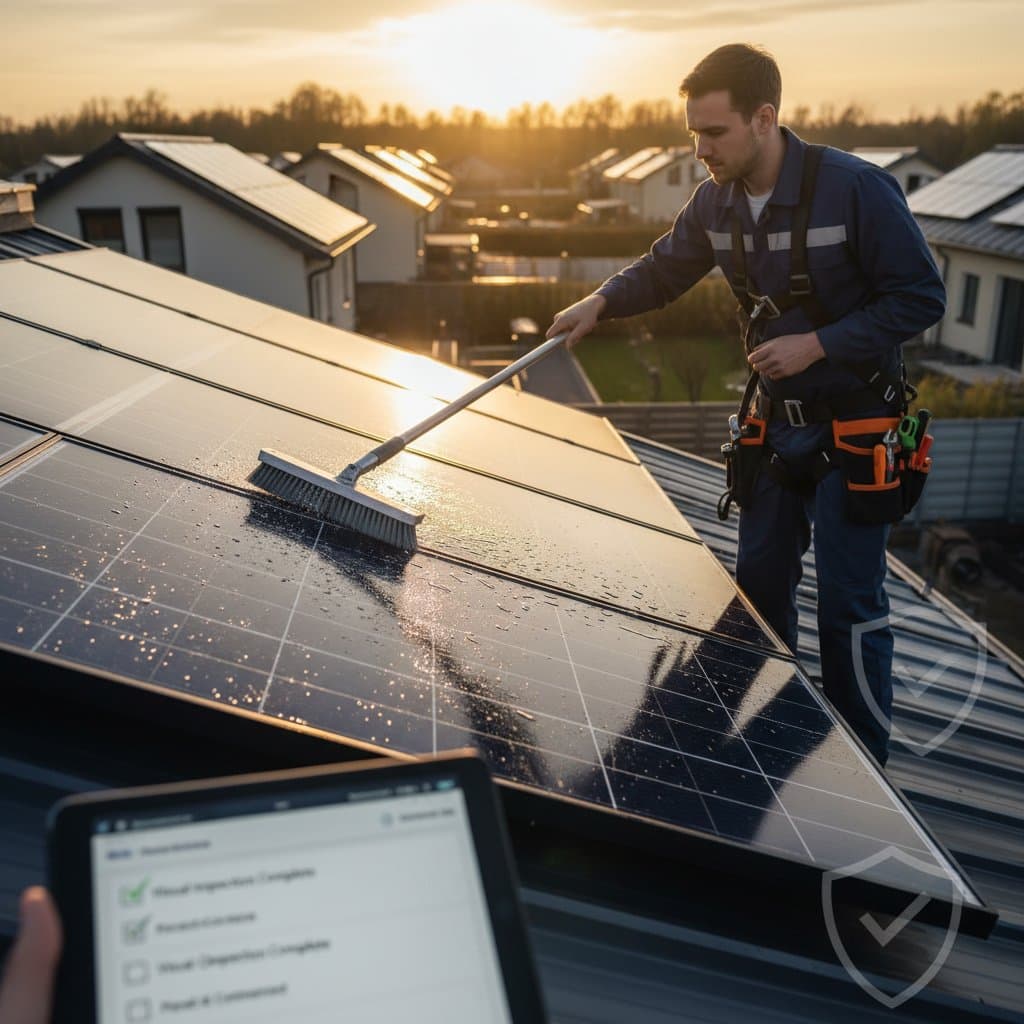
- Washing panels to eliminate accumulated dirt, pollen, and bird droppings.
- Examining for damaged glass, unsecured mounting clamps, or corrosion around junction boxes.
- Evaluating inverter functionality and electrical output.
- Reviewing roof penetrations and sealants for signs of leakage.
- Confirming accuracy in system monitoring data.
Removing debris from panels can recover 5 to 15 percent of efficiency losses. In temperate regions, a gentle rinse suffices two to four times annually. However, environments with heavy dust, such as deserts, or salt exposure, like coastal zones, demand more frequent attention.
Pros, Cons, and Best Fit Scenarios
Pros:
- Consistent energy generation with reduced output degradation.
- Prolonged equipment durability and preserved warranty eligibility.
- Prompt identification of potential hazards, including fire or electrical arcing.
Cons:
- Recurring expenses associated with servicing.
- Hazards involved in accessing rooftops.
- Risk of warranty invalidation from improper cleaning methods, such as the application of abrasive chemicals by untrained individuals.
Best Fit:
Service agreements prove ideal for installations exceeding 4 kW or those positioned on sloped or elevated roofs, where self-performed cleaning poses undue risks.
Typical Cost Breakdown
Routine maintenance for solar panels remains affordable, yet neglect can jeopardize long-term warranties spanning decades. The table below outlines standard cost estimates.
| Scope Item | Material Cost Range | Labor Cost Range | Total Range | Notes on Drivers |
|---|---|---|---|---|
| Panel cleaning | 10 to 30 | 100 to 250 | 110 to 280 | Access height, debris level |
| Electrical inspection | 0 | 150 to 300 | 150 to 300 | System size, inverter type |
| Sealant and clamp repair | 20 to 60 | 100 to 200 | 120 to 260 | Roof pitch, material type |
| Full annual service | 30 to 100 | 300 to 600 | 330 to 700 | Regional labor rates |
Costs escalate in metropolitan settings due to challenges like restricted ladder placement or the necessity for advanced fall protection equipment.
Step-by-Step Maintenance Workflow
Required PPE: Gloves, safety glasses, non-slip footwear, and a harness for roofs with significant incline.
- Shut down system power. Deactivate the inverter and isolation switch to eliminate electrical hazards.
- Visual inspection. Scan for fractured glass, panel discoloration, or unsecured wiring connections.
- Clean panels. Apply deionized water with a soft-bristled brush. Refrain from pressure washers or abrasive tools that could scratch surfaces.
- Check inverter display. Note voltage readings and any diagnostic error messages.
- Inspect roof flashings. Apply fresh sealant to any visible cracks or separations.
- Restart system. Verify standard performance via the monitoring application or utility meter.
For a modest array, DIY cleaning requires one to two hours. Professional teams complete the process in approximately one hour, leveraging extension poles and purified water delivery systems.
Safety, Permits, and Code Notes
Permits seldom apply to standard solar maintenance, though rewiring or inverter exchanges necessitate them. Adhere strictly to manufacturer guidelines for electrical isolation prior to handling components. Employ fall arrest systems on roofs taller than one story. Never tread directly on panel surfaces. For interconnected grid systems, consult utility regulations regarding post-service inspections.
Warranty provisions mandate that certified professionals handle electrical tasks. Issues arising from unapproved modifications, inadequate roof sealing leading to leaks, or physical impacts may nullify coverage.
Common Mistakes to Avoid
- Employing tap water, which deposits mineral residues on panel surfaces.
- Traversing panels, potentially inducing invisible micro-fractures.
- Overlooking inverter warning indicators.
- Neglecting to record maintenance activities, as providers often require evidence for warranty claims.
Maintenance Plan and Lifespan
An effective maintenance regimen sustains system efficiency far beyond the initial warranty duration. Adopt this structured Maintenance Cadence:
- After Install: Within the first few months, verify the integrity of mounting bolts and sealants.
- Seasonal: Rinse panels, review monitoring metrics, and remove debris from the array's base.
- Annual: Arrange expert evaluation of wiring, circuit breakers, and the inverter.
- End of Life: Plan inverter replacement after roughly 20 years or upon efficiency falling below 80 percent.
With rigorous care, panels maintain viability for 30 years or longer, exhibiting only gradual performance decline.
Pro vs DIY Decision Rules
Apply these DIY Gate criteria to determine the approach:
- Skill Fit: Individuals at ease with ladders and hoses can manage routine cleaning safely.
- Safety Risk: Engage professionals for high-rise or slippery metal roofs.
- Tool Availability: Experts utilize specialized equipment, including water-fed poles, safety harnesses, and thermal imaging devices.
Opting for DIY saves 100 to 200 dollars per session. Professional involvement guarantees adherence to warranty stipulations and minimizes roof-related dangers.
Quick Comparison Table: Warranty Claim Readiness
| Line Item | Spec or Scope | Contractor A | Contractor B | Contractor C | Variance Notes |
|---|---|---|---|---|---|
| Cleaning frequency | Biannual | Quarterly | Semiannual | Annual | Match warranty terms |
| Inspection checklist | Full electrical | Visual only | Full electrical | Partial | Affects claim approval |
| Documentation | Digital photos | PDF report | Portal upload | None | Proof required for coverage |
Your Next Steps
A meticulously maintained solar installation delivers optimal energy yields while upholding warranty integrity. Integrate upkeep into routine ownership responsibilities to maximize returns on this investment.