AMS Home Guides Logo
Home
Remodeling Cost ComparisonsAbout
AMS Home Guides Logo

Your comprehensive resource for home guides, cost guides, and home warranty information.

HomeAboutAll ArticlesSearchPrivacyTerms

© 2026 AMS Home Guides. All rights reserved.

  1. Home
  2. /
  3. Home Warranty Basics
  4. /
  5. Mold Remediation Costs $1,200-$6,000: Coverage Guide
Home Warranty Basics

Mold Remediation Costs $1,200-$6,000: Coverage Guide

byDaniel Burnett
2026-03-04 03:49:40March 4, 2026
6 min read
Featured image for Mold Remediation Costs $1,200-$6,000: Coverage Guide
2026-03-04 03:49:40
AMS - Home Guides, Cost Guides, Home Warranty

Understanding Mold Remediation Costs: Home Warranty and Insurance Coverage Guide

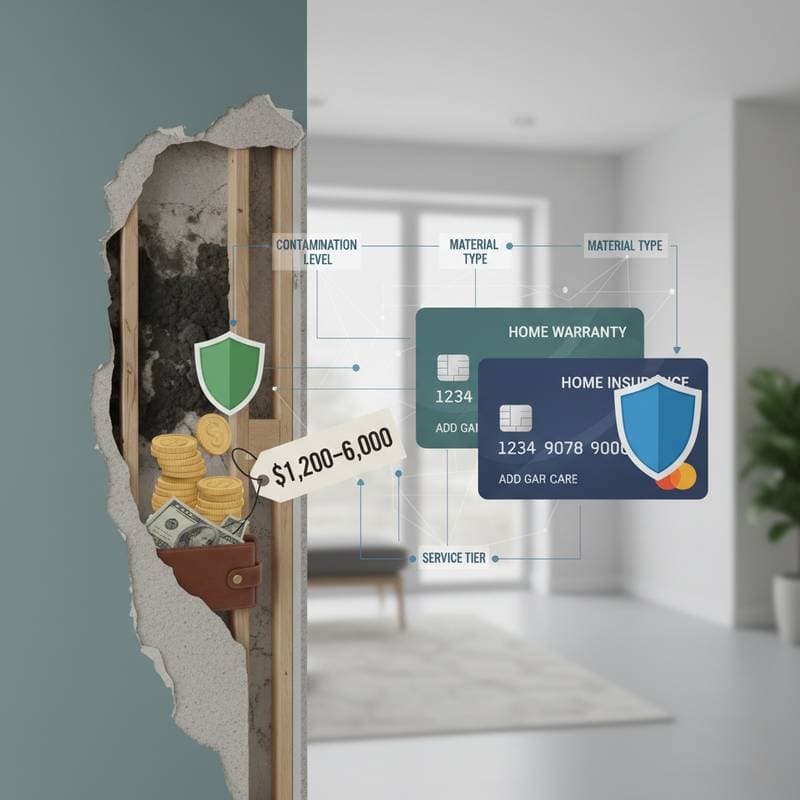
Mold remediation safeguards homes against structural damage, compromised air quality, and potential health risks. Professional services generally range from $1,200 to $6,000, with an average expenditure of $3,500 for typical projects. Minor surface treatments start at $400, whereas extensive infestations involving HVAC systems or concealed areas may surpass $10,000.

Three primary factors influence the total expense: the moisture source, contamination extent, and available coverage through home warranties or homeowners insurance. Regional variations play a role as well, with higher risks in humid or coastal areas leading to elevated premiums. The Environmental Protection Agency indicates that timely remediation can decrease subsequent structural repairs by up to 40 percent. Knowledge of coverage options helps homeowners minimize out-of-pocket costs and preserve property value.

Detailed Cost Breakdown

Remediation expenses vary based on affected area size, material types, accessibility, and insurance applicability. Across the nation, rates average $10 to $25 per square foot. Contractors typically impose a minimum fee of $250 to $500, regardless of project scale.

Projects at the 25th percentile, such as light mold in a bathroom or basement, average $900. Moderate cases at the 50th percentile, involving areas behind drywall or under flooring, fall between $2,800 and $3,600. Widespread issues at the 75th percentile, including HVAC involvement, often exceed $7,500.

Size and Scope Considerations

Every additional 100 square feet of affected space adds $1,000 to $2,500 to the bill. Single-room treatments may require only surface cleaning and HEPA vacuuming, but multi-room efforts often necessitate drywall removal, insulation replacement, and enhanced air filtration. The Institute of Inspection Cleaning and Restoration Certification advises professional handling for mold exceeding 10 square feet, as DIY approaches prove inadequate.

Consider these real-world scenarios: a homeowner in Atlanta incurred $1,400 for a small bathroom ceiling remediation following a leak, while a Seattle family faced $8,200 to address mold spreading from a roof leak into three bedrooms. Such examples illustrate how scope and delays escalate expenses rapidly.

Material and Service Tiers

Entry-level options involve antimicrobial sprays, basic containment, and standard air scrubbers, priced at $10 to $15 per square foot. These suffice for minor visible growth but provide limited prevention against recurrence.

Mid-range services, costing $16 to $25 per square foot, incorporate robust biocides, HEPA filtration, and negative air pressure setups. Products from brands such as Concrobium or Benefect feature in this category, often with one-year warranties.

Premium remediation, at $26 to $35 per square foot, encompasses structural drying, infrared moisture detection, and advanced containment. Providers like Servpro or Belfor employ specialized systems, supported by multi-year guarantees and post-treatment air quality assessments. These comprehensive approaches lower recurrence by more than 60 percent, yielding long-term savings.

Complexity Factors

Accessibility significantly impacts pricing. Treating open wall spaces proves simpler than tackling attic rafters or HVAC ducts. Crawl space work increases labor by 10 to 20 percent, and duct cleaning adds $700 to $2,000.

Pre-existing damage requires material replacement, elevating costs. Compliance with local codes for disposal adds another $500 to $1,000. Urban areas like Los Angeles or Miami command 15 percent higher rates due to labor and regulatory demands.

Service Types and Pricing Options

Homeowners choose from basic, comprehensive, or supplemental packages based on needs and coverage terms.

Basic Remediation Package

This level covers:

  • Visual inspection and moisture assessment
  • Containment and air filtration setup
  • Surface treatment with antimicrobials
  • Clearance verification

Suitable for isolated incidents from brief leaks, it demands 4 to 8 hours and costs $1,000 to $2,500. Home warranties cover such services only if linked to mechanical failures, like pipe bursts.

Comprehensive Remediation and Restoration

Advanced packages include:

  • Thorough drying and dehumidification
  • Material removal and rebuilding
  • HVAC sanitation
  • Sealing and humidity controls

Priced at $4,000 to $9,000, these exceed basic services by 60 to 70 percent yet deliver value through fewer future claims and better air quality. Insurance may offset costs for mold from sudden events, such as appliance overflows or storm damage.

Supplemental Services for Efficiency

Consider these add-ons:

Service Average Cost Bundled Savings
Air quality testing $300 - $600 10% discount
HVAC cleaning $700 - $1,200 15% discount
Crawl space encapsulation $1,500 - $3,000 20% energy savings
Dehumidifier installation $800 - $1,500 50% risk reduction

Combining services yields 10 to 20 percent savings and bolsters claim approvals.

Professional Versus DIY Approaches

DIY Expense Analysis

DIY suits small-scale efforts but involves risks. Supplies like Concrobium Mold Control ($40 per gallon), gear ($60), coveralls ($20), and HEPA rental ($40 daily) total $200 to $300 for areas under 10 square feet. Include a moisture meter ($30) and tools ($25) for precision.

Efforts span 8 to 12 hours, excluding preparation. Mishandling spreads spores, often necessitating professional fixes that double expenses. Online anecdotes reveal frequent DIY shortcomings.

Benefits of Professional Services

Experts utilize equipment valued at $10,000 or more, carry insurance, and offer warranties. Their expertise ensures containment and prevents regrowth. The IICRC notes that professionals reduce recurrence by over 70 percent compared to amateur methods. For areas beyond 10 square feet or hidden sources, professionals provide superior value considering time, tools, and safety.

Strategies to Minimize Costs

Optimize Timing

Off-peak scheduling cuts rates by 10 to 15 percent. Weekday appointments for non-urgent work qualify for discounts. Steer clear of high-humidity seasons, when demand raises prices by 20 percent amid equipment limits.

Effective Selection Methods

Obtain three quotes via platforms like HomeAdvisor or Angi for competitive insights. Confirm certifications and insurance. Full payment at completion may secure 5 percent off, and direct material sourcing trims up to 10 percent.

Pre-Work Preparations

Ease costs by relocating furniture, clearing paths, and disabling HVAC prior to arrival. These steps save $100 to $300 in labor. Precise details on affected zones streamline inspections and avoid extras.

Regional and Market Influences

Location-Based Pricing

Humidity, regulations, and labor availability drive variations. Metropolises like New York, Miami, and Los Angeles incur 15 to 25 percent premiums over rural zones. Arid states such as Arizona or Nevada enjoy lower averages from infrequent mold.

Economic Factors

Inflation in materials and labor affects rates. Shortages in filters or agents cause temporary spikes. Post-storm technician scarcity elevates prices during surges in cases.

Steps to Secure Coverage and Prevent Issues

Review policy details for mold exclusions and riders. Install dehumidifiers and fix leaks promptly to avert growth. Select warranties covering mechanical failures that lead to moisture. These measures protect health, maintain home integrity, and control expenses effectively.
You may also like

Image for Real ADU Pricing: $100K to $350K Breakdown

Real ADU Pricing: $100K to $350K Breakdown

July 17, 2026
Image for Understanding Product vs Performance Solar Coverage

Understanding Product vs Performance Solar Coverage

July 17, 2026
Image for Floor Coverage in Home Warranties vs Replacement Costs

Floor Coverage in Home Warranties vs Replacement Costs

July 17, 2026

Tagged:

home,insurance,coverage,costs,warranty,mold,remediation,mold-remediation-costs,mold-coverage,home-warranty-vs-insurance

Recent Articles by Daniel Burnett

Image for Wildfire Defense Costs $3K-$18K in 2026

Wildfire Defense Costs $3K-$18K in 2026

July 17, 2026
Image for Rental Warranties Cut Landlord Repair Costs by 35 Percent

Rental Warranties Cut Landlord Repair Costs by 35 Percent

July 14, 2026

Related: home

Image for Understanding Product vs Performance Solar Coverage

Understanding Product vs Performance Solar Coverage

July 17, 2026
Image for Floor Coverage in Home Warranties vs Replacement Costs

Floor Coverage in Home Warranties vs Replacement Costs

July 17, 2026
Image for Wildfire Defense Costs $3K-$18K in 2026

Wildfire Defense Costs $3K-$18K in 2026

July 17, 2026
Image for What Home Battery Warranties Actually Cover in 2026

What Home Battery Warranties Actually Cover in 2026

July 17, 2026
Image for Modular Home Costs Drop 25% in 2026: What Changed

Modular Home Costs Drop 25% in 2026: What Changed

July 16, 2026

Home Warranty Basics

Floor Coverage in Home Warranties vs Replacement Costs

Learn current flooring costs from vinyl to hardwood, see what home warranties actually cover, and find clear steps to choose materials, control expenses, and maintain value.

July 17, 2026

Home Warranty Mold Claims Rarely Pay Without This

Mold problems can cost thousands, but home warranties rarely cover them fully. In 2026, coverage usually applies only when mold results from a covered leak. This guide explains actual coverage limits, costs, exclusions, and tips for filing claims, preventing growth, and saving money through smart maintenance and timely action.

July 15, 2026

Rental Warranties Cut Landlord Repair Costs by 35 Percent

Rental warranties transform unpredictable repairs into controlled expenses. This guide covers pricing, coverage tiers, and strategies that protect property value and tenant satisfaction.

July 14, 2026

HVAC Maintenance Cuts Costs Better Than Warranties

Choosing between an HVAC maintenance plan and a home warranty depends on system age, risk tolerance, and budget. Maintenance prevents breakdowns and improves efficiency. Warranties offset major repair costs. This guide compares coverage, pricing, and long-term value.

July 11, 2026

AI Monitoring Now Included in 2026 Home Warranties

Home warranties now incorporate AI predictive monitoring to catch failures early. These plans add efficiency yet introduce new costs, data risks, and contract details that require close attention before enrollment.

July 10, 2026

Mold Coverage Limits: What Home Warranties Actually Pay

Home warranties rarely cover mold directly, but they may pay for repairs to appliances causing moisture. With cleanup costs averaging 2300 dollars, understanding exclusions, timing, and professional options is crucial. Learn how coverage limits, regional pricing, and smart prevention strategies can protect your property and reduce expensive remediation risks.

July 9, 2026

Mold Coverage Tightens Under 2026 Warranty Rules

New 2026 home warranty rules clarify when mold damage is covered and when it is not. Standard plans still exclude most mold, but add-ons and documentation can make a difference. Learn how to file valid claims, control costs, and prevent disputes through smart maintenance, quick action, and clear understanding of coverage limits.

July 9, 2026

Hidden Home Warranty Fees That Drain Your Wallet Fast

Home warranties can conceal extra charges that increase expenses. This guide explains how to locate service fees, trade charges, and cancellation costs in contract terms so homeowners can make informed decisions.

July 6, 2026

Warranty Coverage Gaps in ADUs and Multi-Unit Homes

Multigenerational homes and ADUs require careful warranty planning to avoid coverage gaps. This guide explains costs, system classifications, documentation steps, and regional factors that affect protection for every unit.

July 5, 2026

What Home Warranties Actually Cover for Air Quality Systems

Home warranties offset repair costs for air quality systems ranging from basic filters to whole home purifiers. Coverage depends on plan details, location, and equipment type while excluding routine maintenance and new installations.

July 1, 2026

AI Home Inspections Cut Warranty Wait Times to Hours

AI-powered home inspections convert slow warranty claims into rapid, data-driven approvals. Cameras and image-recognition models produce same-day reports, minimize bias, and lower expenses while helping homeowners decide between self-managed and professional options.

July 1, 2026

Home Warranties Fill the Water Damage Coverage Gap

Home warranties now include limited water damage coverage that bridges maintenance plans and insurance. Compare plan types, costs, and exclusions to protect against plumbing leaks and unexpected repairs.

June 30, 2026

Hidden Costs That Turn Cheap Warranties Expensive

Home warranties in 2026 often hide service fees, exclusions, and coverage caps that increase total expenses. This guide explains contract structures, claim processes, and comparison methods so homeowners can evaluate real costs before signing.

June 28, 2026

Home Warranty Turns Unpredictable Repairs Into Fixed Fees

A home warranty safeguards rental properties from costly repairs, stabilizes maintenance budgets, and keeps tenants satisfied. This guide covers plan types, costs, setup steps, and key exclusions so landlords can choose coverage with confidence.

June 28, 2026

AI Cuts Home Warranty Claim Waits from Days to Hours

AI tools now approve home warranty claims in hours instead of days by verifying coverage, assigning contractors, and maintaining full records. Homeowners gain speed and transparency while human oversight handles complex cases.

June 25, 2026

Why Home Warranty Premiums Jump One-Third in 2026

Home warranty premiums are set to jump one-third by 2026, driven by higher labor, material, and claim costs. Aging systems, climate stress, and complex appliances add pressure. Learn why prices are climbing, how to evaluate your coverage, and smart steps to cut renewal costs without losing essential protection.

June 24, 2026

New Warranty Laws Tighten Repair Timelines for Landlords

New 2026 rental warranty laws redefine landlord responsibilities by tightening repair deadlines, mandating clearer warranty disclosures, and expanding tenant rights. Landlords must update leases, verify coverage, and ensure compliance to avoid penalties. Learn cost ranges, timelines, and best practices to protect property value, maintain habitability standards, and stay legally compliant nationwide.

June 21, 2026

AI Now Decides Your Home Warranty Claims in Minutes

Home warranty claims now face automated review that demands timestamped digital proof and strict response windows. Learn the updated requirements, cost impacts, and record keeping steps that keep repairs covered.

June 21, 2026

Home Warranty vs Insurance: What AI Claims Reveal

AI claims data show how insurance covers disasters while warranties handle wear and tear. Learn claim timelines, cost reductions of 22 percent with dual coverage, and practical steps for choosing the right mix.

June 21, 2026

Smart Home Hacks: Which Policy Actually Pays

Smart homes introduce cyber risks alongside convenience. This guide details how home warranties and insurance handle hacking incidents, what add-ons cover, and how to compare policies for effective protection.

June 20, 2026

Categories

Appliance & System Coverage
Cost Guides
Home Guides
Home Warranty Basics
Outdoor & Exterior Guides
Remodeling Cost Comparisons
Room-by-Room Guides