Why Install Whole-Home Surge Protection Now
Quick Take
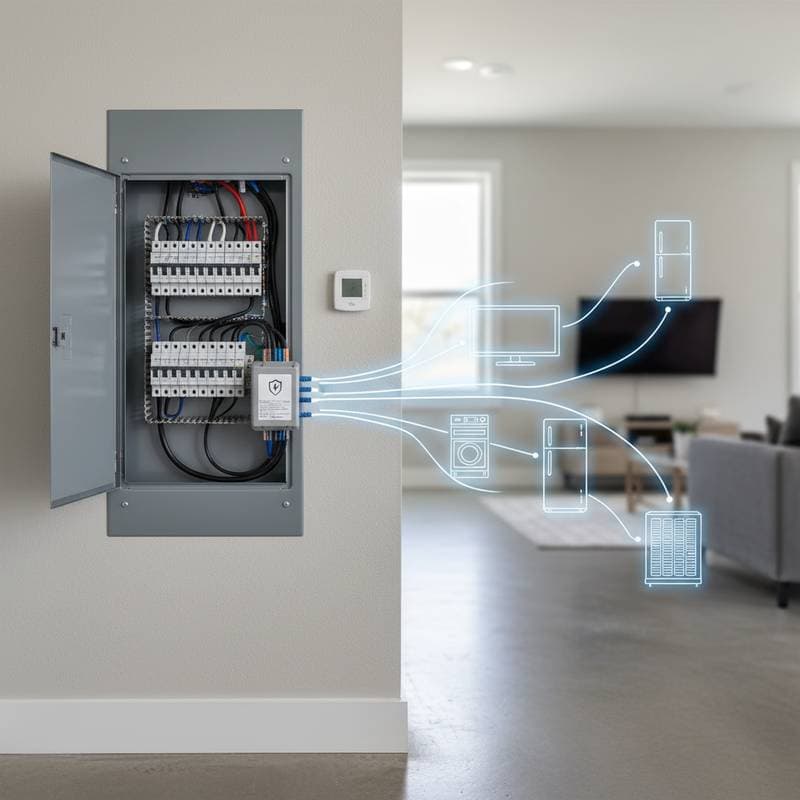
A whole-home surge protector safeguards your electrical system and valuable electronics from abrupt voltage spikes.
- It intercepts high voltage before the energy reaches outlets.
- The device covers every circuit rather than isolated devices.
- Protection yields savings by averting expensive replacements and interruptions.
What It Is
A whole-home surge protector integrates directly into the main electrical panel. The unit redirects excess voltage from home circuits during a surge event. Common sources include lightning strikes, utility grid fluctuations, and the startup of heavy appliances. Unprotected systems risk immediate damage to circuit boards in televisions, heating and cooling units, and connected smart devices.
Pros and Cons
Pros
- Comprehensive coverage extends to the full electrical system beyond select outlets.
- Decreased potential for fires arising from circuit overloads.
- Prolonged operational life for delicate electronics and household appliances.
- Automatic operation requires no routine user intervention.
Cons
- Installation demands access to the main electrical panel.
- Initial expense exceeds that of basic plug-in surge strips.
- Professional assistance becomes necessary for replacement following significant surge absorption.
When To Use It or When It Fails
Install one when:
- Residence occurs in regions prone to thunderstorms or inconsistent power supply.
- The household features numerous electronics, interconnected smart systems, or advanced heating and cooling equipment.
- Existing reliance on power strips seeks enhancement through complete system defense.
It can fail when:
- The device capacity falls short of the home service amperage requirements.
- Panel grounding or bonding exhibits deficiencies.
- Cumulative surge exposure exhausts the unit, necessitating replacement.
Step-by-Step: How Whole-Home Surge Protection Works
Tools and Materials
- Surge protective device matched to panel amperage
- Assorted screwdrivers
- Voltage tester
- Wire strippers
- Lockout tag kit for panel safety
Time: Approximately 1 to 2 hours for a licensed electrician
Difficulty: Moderate to high
1. Prep
Deactivate power at the main disconnect switch. Apply lockout tags to the breaker. Confirm absence of power on bus bars using a voltage tester.
2. Mount the Device
Position the surge protector inside or adjacent to the main panel. Adhere to the manufacturer diagram for placement. Maintain short wire leads to optimize performance.
3. Connect Wires
Secure neutral and ground wires to designated bars. Link hot wires to a double-pole breaker rated appropriately. Tighten all connections securely.
4. Inspect and Close
Verify tightness of connections and organization of wires. Reinstall the panel cover. Restore power and observe indicator lights to confirm activation.
5. Test and Label
Mark the breaker supplying the protector. Activate the test button on models equipped with one. Document the installation date and model details in the electrical maintenance log.
Safety Tip: Qualified personnel alone should access the main panel. Bus bars retain lethal voltage potential despite tripped individual breakers.
Costs
Typical range: $300 to $900 for professional installation.
What raises cost:
- Elevated amperage service or expansive homes requiring additional units.
- Extended wiring distances from panel to meter base.
- Mandatory upgrades to grounding or bonding per electrical codes.
- Advanced models incorporating data line and coaxial safeguards.
What lowers cost:
- Integration with panel upgrades or generator installations.
- Unobstructed access to the main panel location.
- Selection of standard protectors focused on core surge suppression.
When a replacement beats a repair:
If indicator lights signal failure or the unit sustains major surge impact, opt for full replacement. Internal components, such as metal oxide varistors, render most units non-repairable post-exhaustion.
DIY vs Pro
Safe for DIY:
Individuals may conduct product research, selection, and preparatory mounting tasks. Power shutdown and breaker labeling remain feasible after professional completion.
Hire a pro when:
- Main service panel access proves essential.
- Wiring involves aluminum conductors or obsolete grounding setups.
- Local regulations mandate licensed electrician oversight and inspection.
What the pro does differently:
Electricians evaluate grounding continuity, align breaker ratings with device specifications, and verify code-compliant bonding. They secure necessary permits where applicable.
Maintenance or Prevention
Frequency: Biannual inspections.
Tasks:
- Inspect indicator lights for green status indicating active protection.
- Ensure grounding connections remain secure and free of corrosion.
- Replace the unit upon light failure or red flashing.
Outcome: Consistent defense against power disturbances.
Alternatives
Plug-in surge strips. Suitable for individual devices or compact office setups. Coverage limits to plugged items, with quicker degradation over time.
Point-of-use surge receptacles. Appropriate for integrated appliances such as microwaves or laundry machines. These provide targeted defense along extended wiring paths.
Service entrance surge protection. Positioned upstream of the main panel by utility services. Broad service shielding applies, though internal appliance surges may evade coverage.
FAQs
Do I still need power strips if I have a whole-home protector?
Affirmative. Layered defense combines whole-home blocking of substantial surges with strip management of minor outlet fluctuations.
How long does a whole-home surge protector last?
Typically several years, contingent on local surge incidence and intensity. Replacement follows indicator light deactivation.
Can lightning still damage my home?
Direct strikes may overwhelm protective measures. Whole-home systems mitigate harm yet cannot neutralize all severe occurrences. Robust grounding and bonding remain vital.
Will it lower my electric bill?
Negative. Protection averts damage without influencing energy use. Financial benefits stem from eliminated repair and replacement expenses.
Does it protect against brownouts or outages?
Negative. Devices address elevated voltage exclusively, excluding low voltage reductions or total power interruptions. Uninterruptible power supplies serve sensitive electronics in such scenarios.
Checklist
- Examine electrical panel for existing surge protection.
- Evaluate insurance provisions for surge-related damages.
- Catalog essential electronics targeted for safeguarding.
- Arrange licensed electrician assessment of service panel.
- Select protector aligned with amperage and service specifications.
- Document installation date and conduct semiannual tests.
Strengthening Electrical Resilience
Whole-home surge protection establishes primary defense against major voltage threats. This setup enables secondary measures, such as power strips, to address residual risks effectively.
Assess panel age and grounding integrity prior to installation. Remediation of outdated panels or deteriorated grounding rods ensures optimal device function.
Households with smart ecosystems, solar power inverters, or electric vehicle charging stations face heightened vulnerability. Protection preserves these assets and maintains network reliability.
Anticipate replacement following intense storms or detectable power anomalies. Heed indicator signals of component depletion to avoid unprotected exposure.
Product evaluation should prioritize joule capacity and response speed. Elevated joule ratings absorb greater energy loads, while rapid response minimizes circuit exposure. Seek units with visible indicators, robust warranties, and UL 1449 certification.
In areas with regular grid operations or generator use, verify compatibility with diverse surge profiles. Appropriate ratings accommodate both atmospheric and mechanical voltage variations.
This safeguard transcends mere equipment; it fortifies wiring, appliances, and overall security. Minimal ongoing oversight suffices post-installation.
Initiate protection through panel evaluation, quality device selection, and professional setup. Resulting assurance equips the home against impending electrical challenges.