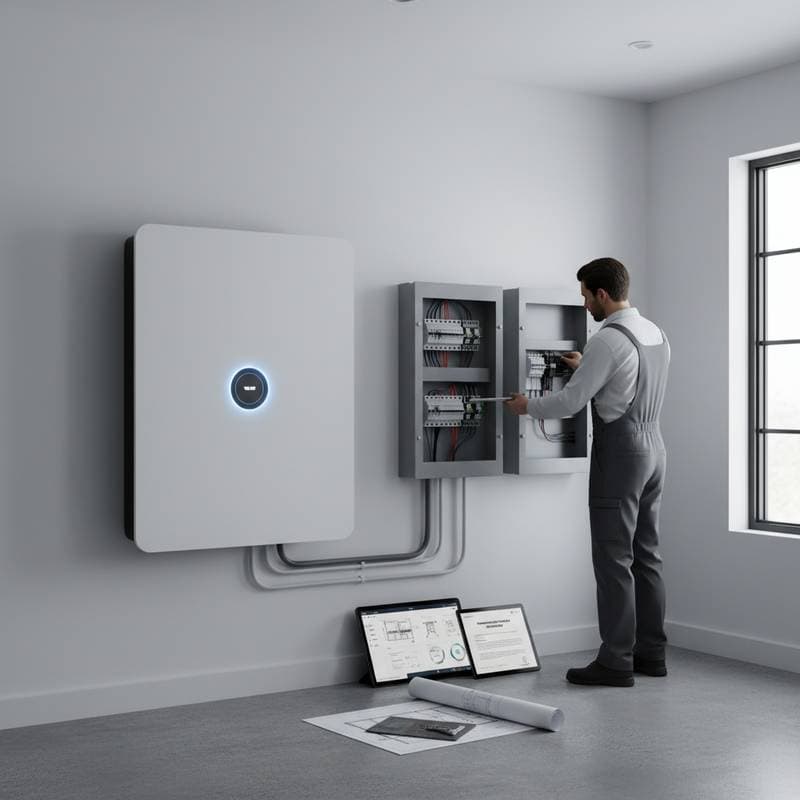
Home Battery Backups: Strategic Installation and Insurance Planning
Quick Overview
- Home battery backups maintain power to essential circuits when outages occur.
- These systems integrate with solar panels or charge directly from the grid.
- Address installation, permits, and insurance requirements prior to purchase.
Advantages and Drawbacks
Advantages
- Sustains operation of vital circuits during power failures.
- Diminishes dependence on noisy, fuel-dependent generators.
- Enables bill reductions via time-of-use rate optimization.
- Operates silently without emissions or ongoing refueling needs.
Drawbacks
- Involves significant initial investment.
- Runtime limits exist if the connected load exceeds capacity.
- Demands professional setup and regulatory approvals.
- Battery longevity decreases in conditions of extreme temperatures.
Detailed Installation Process
Required Tools and Materials
- Voltage tester
- Wire strippers
- Conduit bender
- Mounting brackets
- Torque wrench
- Safety gloves and insulated tools
Estimated Time and Complexity
- Duration: One to two days with a professional team
- Complexity: High for independent efforts, moderate for certified electricians
Step 1: Assess Your Power Needs
Compile a list of devices essential for backup. Sum their wattage ratings. Multiply the total by the desired runtime in hours to determine required capacity in kilowatt-hours (kWh). Select a battery with at least that capacity, including a 20 percent margin for safety.
Step 2: Evaluate Electrical Panel Suitability
The primary electrical panel requires available space and sufficient amperage for the backup circuit. If capacity is maxed, install a subpanel dedicated to critical loads. Engage a licensed electrician to confirm system compatibility and safety.
Step 3: Obtain Permits and Utility Permissions
Local regulations often mandate electrical and building permits. For integrations with solar or grid systems, secure utility company approval. Fees vary by location, typically starting in the low hundreds of dollars.
Step 4: Position the Battery Unit
Secure the battery to a sturdy wall or concrete foundation. Adhere to manufacturer guidelines for clearances, generally six inches on all sides and the top. Position away from direct sunlight, moisture, or high-traffic areas.
Step 5: Connect Inverter and Safety Disconnects
Link the inverter to the battery bank and the essential load panel. Employ conduit and appropriately gauged wiring for the system's voltage. Ensure proper grounding for all components. Add a lockable, visible disconnect switch to meet safety and inspection standards.
Step 6: Perform System Testing
Simulate a grid outage by disconnecting main power. Verify that backed-up circuits remain energized. Monitor voltage and current via the inverter interface. Confirm all protective enclosures are firmly in place.
Step 7: Apply Labels and Maintain Records
Mark backup circuits, disconnect switches, and the main panel clearly. Organize manuals, warranty information, and inspection reports in a dedicated file. These documents support insurance claims and enhance property value upon resale.
Independent Efforts Versus Professional Services
Suitable for Independent Handling
- Calculating load requirements and researching system options.
- Securing a battery enclosure in a ventilated, dry location prior to electrical connections.
- Verifying adequate airflow and spacing around the unit.
Circumstances Requiring Experts
- Connections to the home's primary electrical system.
- Configurations involving grid synchronization or solar arrays that necessitate approvals.
- Situations where insurers demand certified work for policy validity.
Expert Advantages
Licensed electricians select precise wire sizes, install required disconnects, manage permitting processes, and verify adherence to local codes. They also conduct thorough tests of grounding and bonding to eliminate electrical risks.
Ongoing Maintenance Practices
Recommended Schedule
Inspect the system every three months.
Key Procedures
- Examine cables for signs of corrosion or insecure connections.
- Gently clean ventilation openings and filters using a soft brush or vacuum.
- Install any available firmware updates provided by the manufacturer.
- Conduct a full system test under simulated outage conditions annually.
Desired Results
Expect smooth, quiet function with consistent charge indicators and absence of physical damage. Maintain battery temperatures within specified ranges to maximize operational lifespan.
Alternative Power Solutions
Portable Generators
Ideal for brief interruptions or off-grid locations. They offer lower entry costs but require fuel storage and safe exhaust management.
Whole-Home Standby Generators
Suited for expansive residences or extended outages. These operate on natural gas or propane and handle substantial loads, though at higher expense.
Solar Systems Without Storage
Appropriate in areas with stable grid service focused on cost reduction. Such setups provide no outage protection due to lack of energy retention.
Common Questions
What is the typical runtime for a home battery backup?
Systems generally operate eight to twenty hours based on connected load and storage capacity. For instance, a 10 kWh unit supporting a 1 kW demand will function for approximately ten hours.
Is it possible to expand battery capacity later?
Expansion works if the inverter accommodates additional modules. Review specifications at purchase to ensure scalability.
Does the system require solar panels to function?
No, grid charging suffices for operation. Solar integration enhances self-sufficiency and extends availability but remains optional.
What is the expected lifespan of the batteries?
Batteries endure ten to fifteen years under standard conditions. Exposure to heat or frequent full discharges accelerates degradation.
Is specialized insurance necessary?
Contact your provider post-installation to update coverage. Certain policies stipulate professional installation and documentation to remain effective.
Can this system increase property value?
Yes, particularly in regions prone to outages or with elevated electricity costs. Prospective buyers appreciate dependable, low-maintenance power reserves.
Preparation Checklist
-Store all manuals and warranty details securely.
Securing Reliable Power
A well-planned home battery backup delivers consistent energy during grid disruptions. Focus on accurate sizing, secure wiring, and complete documentation to satisfy insurance and market needs. Delegate installation to qualified professionals while overseeing the planning phase. Regular upkeep and annual testing ensure the system operates efficiently, safeguarding critical functions and delivering enduring reliability.