Solar Roof Costs in 2026
Cost Overview
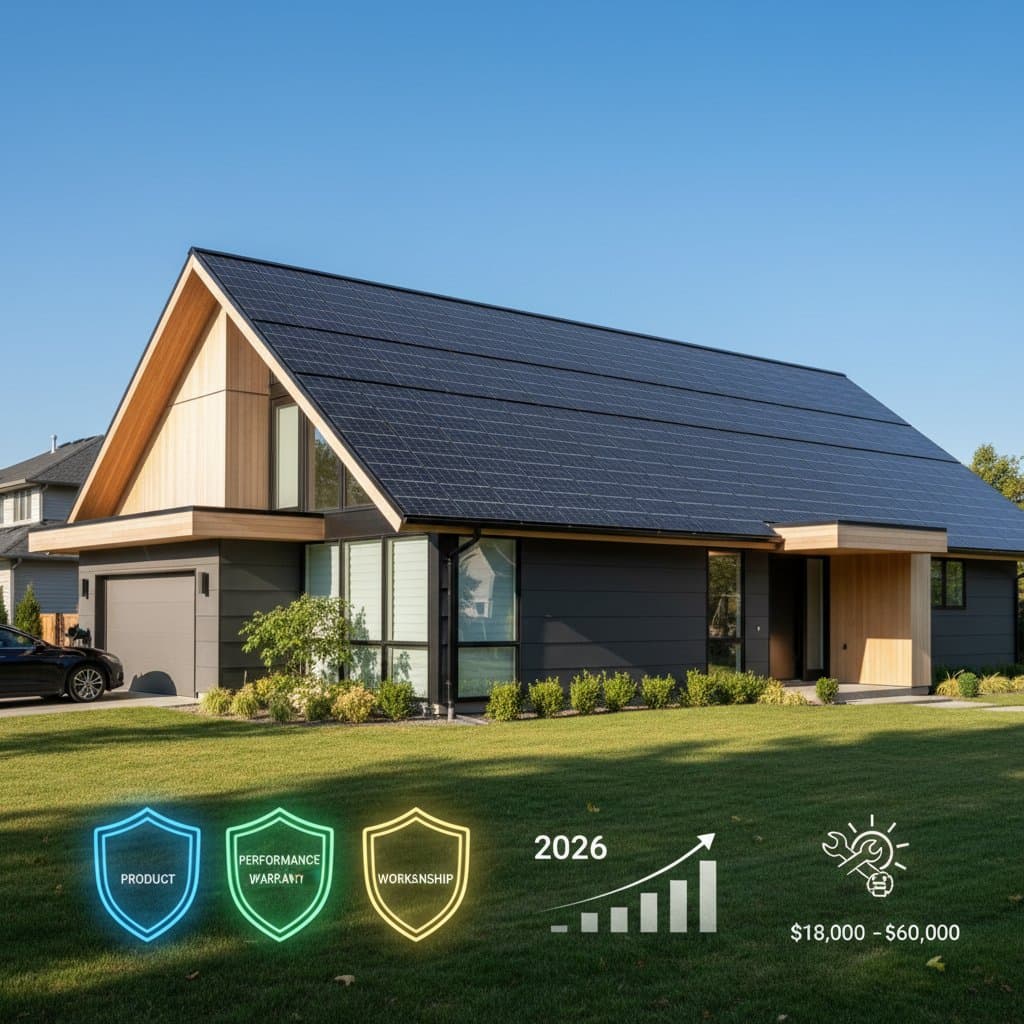
Full solar roof systems range from 18000 dollars to 60000 dollars. Pricing depends on roof size, chosen materials, and household energy requirements. Homeowners receive both energy generation and a new roof surface in one integrated installation.
Advantages and Limitations
Advantages
- Monthly electric bills decrease after the system begins operation.
- Property resale value rises when the warranty transfers to the new owner.
- Roof surfaces remain uncluttered because the panels serve as the finished roofing layer.
- Available tax credits and local rebates reduce net project expense.
Limitations
- Initial investment exceeds the combined cost of a conventional roof plus separate panels.
- Future repairs require specialized labor because wiring and tiles form a single assembly.
- Only contractors trained in both roofing and electrical standards can perform the work.
- Certain roof materials restrict panel placement or system layout options.
Installation Sequence
Professional crews complete most projects in two to five days. Homeowners should not attempt the work without roofing and electrical credentials.
- A structural assessment confirms the roof can support added weight and identifies any rot or sagging.
- Permits and utility interconnection agreements are secured before work begins.
- Existing roofing is removed only in the areas that will receive solar components.
- Mounting hardware and flashing are fastened to rafters and sealed against water intrusion.
- Panels or shingles are placed from the lower edge upward while wiring connections are completed row by row.
- Inverters and conduit are installed and all metal parts are grounded.
- A licensed electrician connects the system to the service panel and installs required disconnects.
- Output is verified and the local building department performs final inspection.
- Old materials are recycled and all warranty documents are organized for future reference.
Warranty Structure
Solar roof warranties contain separate coverage for energy performance and for the roof assembly itself. Performance guarantees typically assure 80 to 90 percent of rated output after 20 to 25 years. Product warranties cover material defects for 10 to 25 years. Roof integration coverage protects against leaks at panel junctions and usually lasts 10 to 20 years. Claims remain valid only when installation follows manufacturer specifications and proof of professional work is retained.
Professional Service Versus Owner Tasks
Owners may safely clean panels with a soft brush and water or review inverter output through monitoring apps. Any task that involves panel removal, wiring changes, or suspected leaks requires a certified installer. These professionals maintain liability insurance, follow current codes, and preserve eligibility for warranties and incentives.
Routine Care
Inspect the system twice each year, once after heavy rain and once before winter. Rinse loose debris from panel surfaces, trim overhanging branches, and examine sealants around mounts. Consistent output readings and intact flashing reduce the chance of warranty issues.
Other Options
Homeowners whose roofs were replaced recently may prefer conventional shingles with rack-mounted panels. Smaller properties or partial upgrades can use solar shingle overlays that blend with existing surfaces. Residents with shaded roofs can purchase shares in community solar arrays and receive bill credits without roof modifications.
Common Questions
Solar roofs need the same cleaning schedule as standard panels. When one panel stops producing power, the inverter isolates the section and warranty replacement usually applies. Most systems accommodate asphalt, metal, and select tile roofs, though flat or structurally weak roofs require additional engineering. Standard homeowners policies treat the solar roof as part of the dwelling structure. Installer certification must match manufacturer requirements to avoid voiding the original roof warranty.
Financial Considerations
Although upfront costs exceed separate roof and panel projects, combined labor savings and incentive eligibility improve long-term economics. Financing and power purchase agreements allow monthly payments while preserving future ownership options. Comparing total expense, interest rates, and warranty length across multiple bids helps identify the strongest value.
Preparing for Installation
Begin with a roof condition report and an analysis of recent electric usage. Obtain detailed proposals from at least three certified installers that itemize materials, labor, and permit fees. When the existing roof remains serviceable, rack-mounted panels often deliver comparable output at lower cost. Maintain a service calendar and store all documentation to protect the investment over its full lifespan.