Home Warranty vs. Insurance: Protecting AI Appliances from Wear and Sudden Damage
Smart homes integrate advanced technology into everyday routines. Refrigerators that automatically reorder groceries, washing machines that optimize cycles for different fabrics, and thermostats that adapt to user preferences represent the forefront of AI appliances. These devices enhance convenience, yet their complexity increases the risk of breakdowns. Homeowners must distinguish between home warranties and insurance to ensure proper protection for these investments.
A home warranty addresses routine failures, while insurance safeguards against catastrophic events. This distinction prevents unexpected expenses when an AI-powered oven malfunctions due to internal wear or a storm damages the home's electrical system. By clarifying coverage options, homeowners can select plans that align with their needs and maintain seamless smart home functionality.
Essential Factors in Coverage Choices
Selecting protection for AI appliances involves evaluating several key elements. Consider the nature of potential failures, whether gradual deterioration or abrupt incidents. Assess the age and value of devices, as premium models like voice-activated lighting systems demand higher repair budgets.
Examine manufacturer warranties, which often extend one to three years for electronic components. Account for smart connectivity features, such as Wi-Fi integration, that may require specialized policy language. Evaluate service speed, costs including deductibles, and annual payout caps to match your household's requirements.
For instance, a five-year-old AI vacuum cleaner might benefit from warranty coverage for motor failures, while insurance proves vital for theft protection. These factors guide decisions toward comprehensive safeguards without redundant expenses.
Advantages and Limitations of Home Warranties
Benefits
Home warranties focus on mechanical and electrical breakdowns unrelated to external causes. They provide a centralized service line for repairs across multiple appliances, streamlining the process during issues. Many plans explicitly include smart home devices, such as connected security cameras, reducing direct repair expenditures.
Optional add-ons cover advanced features like software updates for AI assistants. This approach suits frequent users of high-tech gadgets, offering predictable costs for maintenance.
Drawbacks
Coverage excludes certain AI elements, such as proprietary software glitches or network hardware. Homeowners cannot select preferred technicians; providers assign certified professionals. Annual limits, typically ranging from $1,500 to $5,000, constrain total reimbursements.
Claims face rejection for reasons like inadequate upkeep or conditions present before enrollment. Thorough policy review reveals these gaps, ensuring realistic expectations.
Advantages and Limitations of Home Insurance
Benefits
Home insurance shields against substantial losses from perils like fires, storms, or burglary. It encompasses the dwelling structure alongside personal belongings, including appliances within the home. Riders for electronics protection address power surges that could fry circuit boards in smart refrigerators.
Lenders frequently mandate this coverage, providing baseline security. In disaster-prone areas, it prevents financial devastation from events damaging multiple devices simultaneously.
Drawbacks
Policies omit routine mechanical failures or age-related wear. Deductibles, often $500 to $2,000, render minor claims uneconomical. Successful claims can elevate renewal premiums by 10 to 20 percent.
Smart device inclusions vary; verify policy fine print for app-controlled items. This reactive coverage complements, rather than replaces, proactive warranty plans.
Step-by-Step Guide to Securing Coverage
Begin by inventorying all AI appliances, documenting brands, models, ages, and connectivity details. Cross-reference with manufacturer support sites for remaining warranty periods on components like sensors or processors.
Examine your current insurance policy for clauses on high-value electronics or surge endorsements. Contact providers to confirm applicability to items like AI-enabled door locks.
Research home warranty companies, scrutinizing contracts for exclusions on IoT features or remote diagnostics. Obtain quotes from at least three sources, factoring in service fees of $75 to $125 per visit.
Arrange a professional inspection if required, focusing on electrical integrity for connected systems. Maintain records of purchases, serial numbers, and service histories to expedite future claims.
This evaluation typically spans one to two weeks, allowing time for comparisons and adjustments.
Essential Resources for Appliance Management
Effective oversight of AI appliances demands straightforward tools. Gather user manuals and warranty documentation for quick reference during troubleshooting.
Install manufacturer apps on a dedicated smartphone or tablet to monitor diagnostics and firmware updates. Deploy whole-home surge protectors rated for 3,000 joules or higher to shield against voltage spikes.
Prepare a basic toolkit with screwdrivers, pliers, and multimeters for simple checks. Use microfiber cloths and canned air to clear dust from sensors and vents, preventing overheating in devices like smart dryers.
Track maintenance in a digital spreadsheet, noting cleaning dates and performance logs. These items facilitate proactive care, extending device longevity.
Adapting Coverage to Local Conditions
Environmental factors influence AI appliance durability. In humid coastal zones, salt air accelerates corrosion on circuit boards; opt for sealed, weather-resistant models.
Cold climates strain power supplies, risking failures in battery-backed systems like smart doorbells. During winter peaks, install uninterruptible power supplies to buffer grid instability.
Storm-frequent regions benefit from insurance riders for lightning-induced surges, which can render AI hubs inoperable. Arid, dusty areas necessitate monthly vent cleanings to avoid sensor blockages.
Regardless of location, enable cloud backups for device data, safeguarding configurations against local storage corruption from outages. Tailored adjustments enhance reliability across varied settings.
Integrating Protections for Optimal Safeguards
Compile a comprehensive list of your home's AI appliances, including installation dates and integration points like smart hubs. Consult your insurer about expanding coverage for surge events and high-tech valuables.
Solicit detailed quotes from warranty providers emphasizing AI inclusions, such as repairs for neural processing units in learning thermostats. Weigh options using a comparison chart that highlights overlap and gaps.
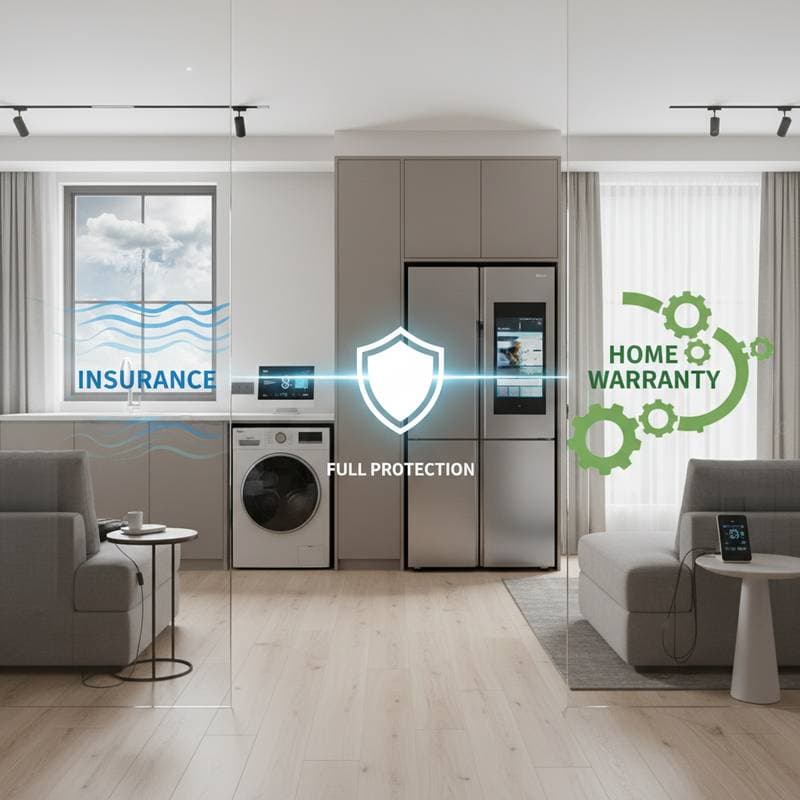
Adopt a hybrid strategy: leverage insurance for peril-based risks and warranties for operational failures. Perform quarterly maintenance checks, update software promptly, and register all devices for extended support.
This integrated method minimizes disruptions, preserves smart home efficiency, and protects your technological ecosystem from both predictable wear and unforeseen threats.