Budget Designs for Multigenerational Homes
Quick Take
- Optimize shared areas while establishing distinct private zones.
- Repurpose current rooms prior to expanding square footage.
- Direct investments toward safety features, accessibility, and enduring comfort.
Understanding Multigenerational Homes
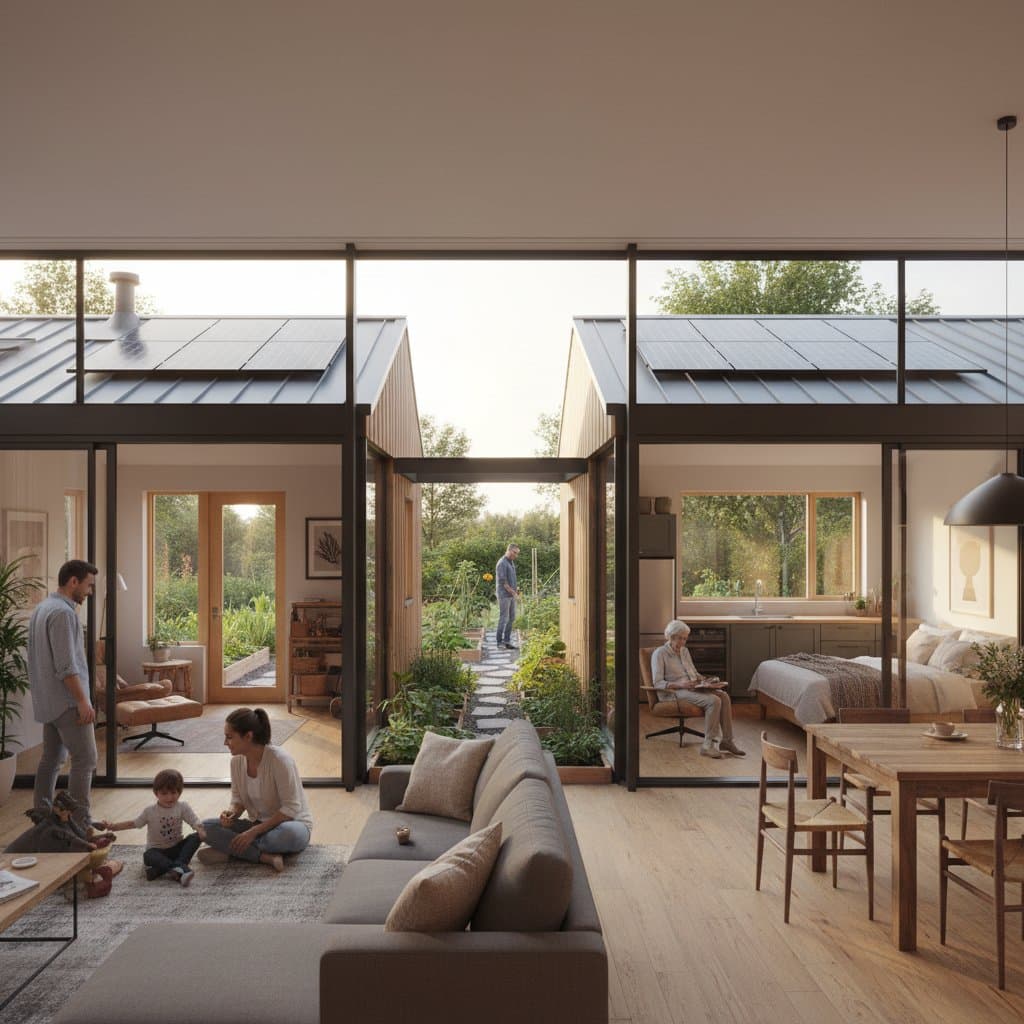
A multigenerational home houses multiple family generations within one property. Parents reside alongside adult children and grandparents, sharing common areas yet requiring personal independence. The primary design goal involves achieving equilibrium: communal spaces encourage interaction, while private sectors support rest and daily routines.
Effective layouts delineate sleeping quarters from living zones, incorporate sound barriers, and ensure pathways accommodate varying mobility levels. This approach minimizes conflicts and enhances overall well-being.
Benefits and Challenges
Benefits
- Families reduce expenses by pooling utilities and maintenance responsibilities.
- Caregiving for elderly members or young dependents becomes more straightforward.
- Collective ownership accelerates property equity accumulation.
- Adaptable configurations respond to evolving household dynamics.
Challenges
- Inadequate planning risks diminished privacy.
- Local regulations might limit accessory dwelling unit construction.
- Increased occupancy accelerates wear on mechanical systems and surfaces.
- Divergent schedules can overburden communal facilities.
Conditions for Success and Pitfalls
Success Factors
- Distinct areas exist for sleeping, meal preparation, and personal hygiene.
- Independent access points or auxiliary kitchens promote autonomy.
- Residents align on daily rhythms and preferences.
Common Pitfalls
- Overreliance on a single bathroom overwhelms users.
- Sound travels freely between private sections.
- Absence of mobility aids disadvantages seniors.
To avoid these issues, conduct a thorough space audit early and consult building codes for compliance.
Step-by-Step Guide: Developing an Affordable Multigenerational Layout
Required Tools and Materials
- Measuring tape for precise dimensions.
- Graph paper or digital design software for sketching.
- Stud finder to locate structural elements.
- Essential carpentry implements.
- Supplies for painting and surface repairs.
Estimated Time and Difficulty
Planning and minor renovations span two to six weeks, based on project scope. The process rates as moderate in complexity, suitable for those with basic skills.
Step 1: Identify Resident Needs and Assignments
Compile a detailed roster of all occupants, highlighting essential requirements. Consider preferences for quiet environments, wheelchair access, or dedicated work areas. For instance, assign a ground-level bedroom with adjacent full bathroom to a grandparent; allocate a basement area with private entrance to a young professional.
Step 2: Evaluate Current Layout
Inspect every room to identify underutilized sections. Transform formal dining spaces, expansive corridors, or oversized parlors into secluded retreats or compact suites. Verify ceiling clearance, natural light sources, and emergency exit compliance before designating sleeping areas.
Step 3: Design Communal Areas
Position kitchens, laundry facilities, and exterior patios at central locations. Maintain open configurations with resilient, low-maintenance flooring and subdued palettes to harmonize diverse tastes.
Incorporate multi-height counters and adjustable shelving to serve all users effectively.
Step 4: Implement Privacy Measures
Install pocket doors, acoustic-rated drywall, or freestanding partitions to dampen noise. Equip bedroom entries with secure locks. Employ temporary solutions such as heavy drapes or retractable screens to delineate boundaries without permanent alterations.
Step 5: Incorporate Auxiliary Food Preparation Spaces
Where regulations permit, add a modest kitchenette featuring a compact refrigerator, microwave oven, and basin. This setup facilitates independent snacking and light cooking, preserving the primary kitchen for group activities.
Step 6: Integrate Accessibility from the Outset
Retrofit with lever-style door hardware, broadened openings, and barrier-free shower enclosures prior to finalizing interiors. Early implementation cuts future modification expenses significantly.
Step 7: Simulate Daily Use
Navigate the proposed arrangement simulating full occupancy. Assess simultaneous cooking capacity or unobstructed routes for night owls. Refine elements before erecting fixed barriers.
Step 8: Complete Finishing Touches
Apply pale, unifying hues to signify collective stewardship. Layer illumination options to accommodate varied visual needs across ages. Select versatile pieces, including expandable tables and sectional sofas, for flexible arrangement.
Step 9: Monitor and Refine Post-Implementation
Convene a family review after one week of occupancy. Document effective aspects and spatial constraints. Address concerns through minor adjustments in organization or fixtures.
Step 10: Manage Waste Responsibly
Utilize municipal services for debris removal. Prioritize recycling of outdated components and donate functional items to community resources.
Cost Considerations
Full transformations or expansions typically range from $20,000 to $120,000.
Cost Escalators
- Modifications to load-bearing elements or utility installations.
- Premium materials or bespoke joinery.
- Approval processes for secondary units.
Cost Reducers
- Leveraging preexisting partitions and conduits.
- Adapting sublevels or outbuildings over ground-up construction.
- Opting for standard-grade supplies and self-directed cosmetic tasks.
Strategic Replacement Decisions
Address foundational defects or dampness problems in core areas before expansion. Proactive repairs avert escalating expenditures down the line.
DIY Approaches Versus Professional Services
Suitable for DIY
- Cosmetic enhancements like resurfacing, coloring, or installing non-permanent barriers.
- Projects where participants possess foundational woodworking and wiring awareness.
- Superficial improvements without structural impact.
When to Engage Experts
- Relocating partitions or altering water systems.
- Introducing electrical, climate control, or authorization-dependent additions.
- Scenarios involving weight distribution or escape route standards.
Professional Advantages
Contractors verify regulatory adherence, secure necessary approvals, and guarantee adequate thermal barriers, airflow, and fire safeguards. These measures safeguard occupants and bolster market appeal.
Ongoing Upkeep Strategies
Conduct inspections biannually.
Key Maintenance Actions
- Examine seals, fasteners, and screening elements.
- Validate functionality of fire and gas alarms across zones.
- Service communal air handlers and ducts.
- Scrutinize washrooms for water intrusion or sealant degradation.
The desired result is a hygienic, secure setting that nurtures generational coexistence seamlessly.
Alternative Design Paths
Option A: Internal Suite Adaptation
Optimal for properties featuring lower levels or spare chambers. Provides seclusion sans expansion, though natural illumination and climate systems remain interconnected.
Option B: Connected Accessory Unit
Suited to lots with lateral outdoor areas. Yields partial autonomy with joint services, at higher initial outlay for enhanced division.
Option C: Standalone Unit or Garden Structure
Recommended for ample parcels seeking sustained separation. Delivers complete isolation and income potential, contingent on approvals and infrastructure extensions.
Frequently Asked Questions
**What represents the most economical method to accommodate additional generations?**Repurpose available interiors ahead of expansions. Adapting garages or cellars generally incurs lower fees than fresh constructions.
**Are permits required for supplementary food or hygiene facilities?**Affirmative; novel piping or circuitry demands oversight. Consult municipal authorities prior to commencement.
**Strategies to mitigate auditory disturbances in collective residences?**Employ sound-attenuating fillers in dividing walls and robust doors. Textiles like area rugs and window treatments further muffle echoes.
**Does an accessory unit enhance real estate worth?**Indeed, compliant installations frequently elevate appraisal and market options, particularly in high-demand locales.
**Selecting universally appealing surface treatments?**Favor impartial shades, unadorned fittings, and resilient fabrics. Permit personalization via accessories and movable decor.
Essential Checklist for Budget-Conscious Multigenerational Planning
- Document all household members and specific requirements.
- Dimension interiors and pinpoint adaptable sectors.
- Establish feasible financial limits with a 10 percent contingency.
- Review municipal guidelines on secondary accommodations.
- Sketch communal and secluded domains on preliminary drafts.
- Secure expert input for utility, wiring, or structural shifts.
- Specify hardy, simple-maintenance options for joint spaces.
- Embed mobility accommodations during initial phases.
- Arrange periodic household evaluations for usability feedback.
Realizing Your Multigenerational Vision
Affordable multigenerational design demands focused objectives and methodical collaboration. Prioritize protective elements and seclusion foremost, followed by ergonomic and aesthetic refinements. Harness inherent spatial assets before pursuing growth. Adhere to ordinances throughout adaptations or unit integrations. A deliberate strategy sustains familial proximity absent congestion, evolving alongside life stages in a pragmatic, economical, and inclusive manner.