How Much Does a Granny Flat Cost? 2026 Pricing Guide
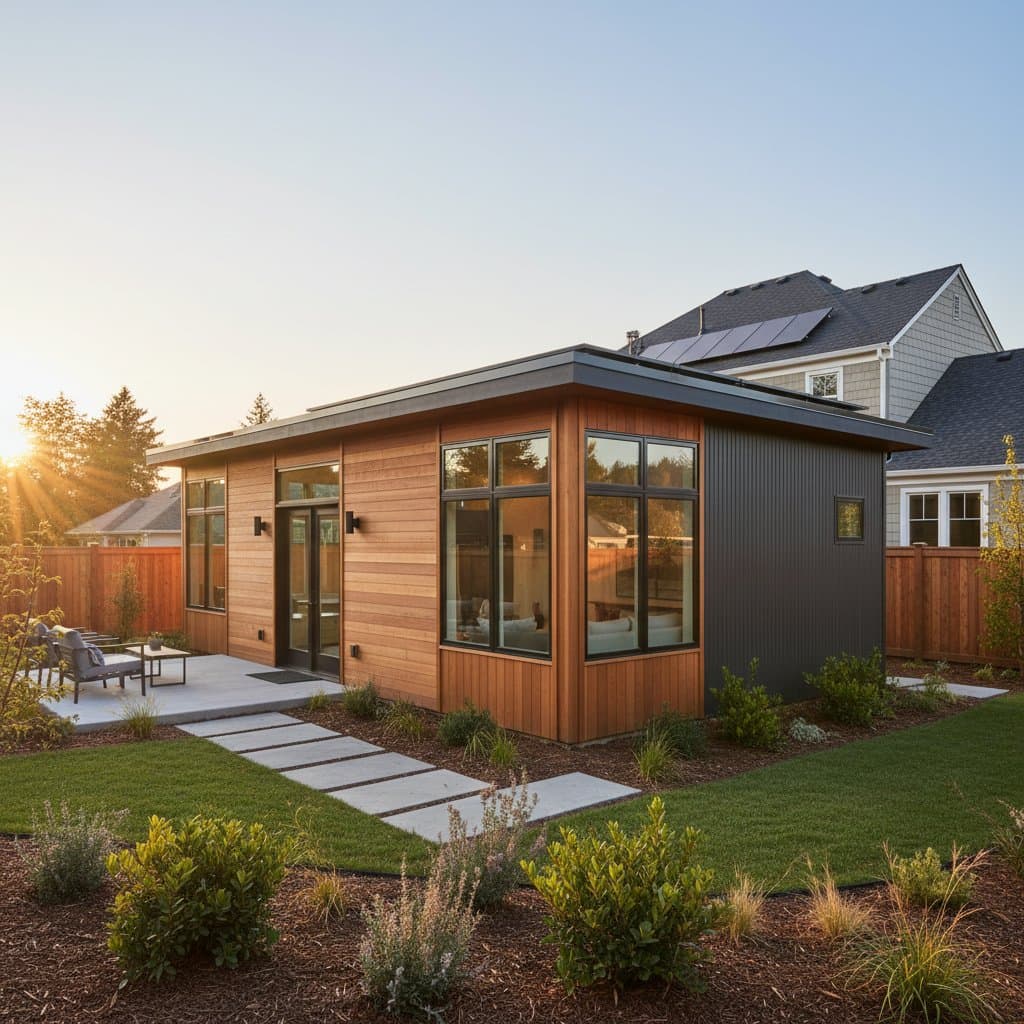
A thoughtfully designed granny flat expands living options and elevates property value. Professional construction for these accessory dwelling units ranges from $90,000 to $260,000, with the national average at $165,000 for a complete, code-compliant backyard structure. This pricing covers both detached and attached units, reflecting current market trends.
Three primary factors shape the total expense: unit size, material quality, and site conditions. Regional variations play a role as well, with urban locations commanding higher fees for labor and permits. Industry analysis indicates that a compliant granny flat can raise resale value by as much as 25 percent, providing both practical benefits and financial advantages.
Property owners build granny flats to accommodate family, create guest spaces, or secure rental revenue. A clear grasp of pricing elements allows for informed decisions that yield resilient, efficient additions aligned with long-term goals.
Detailed Cost Breakdown
Granny flat expenses combine fixed and variable components. Builders charge $250 to $450 per square foot based on design details and finish levels. Small projects incur minimum fees starting at $85,000, which encompass planning, approvals, and core construction.
Contractor data reveals these national benchmarks:
- 25th percentile: $120,000 for 400-square-foot compact units
- 50th percentile (median): $165,000 for 600-square-foot standard models
- 75th percentile: $230,000 for 800-square-foot premium configurations with enhanced features
Size and Scope Impact
Size exerts the greatest influence on pricing. A 400-square-foot studio typically costs $110,000, whereas an 800-square-foot two-bedroom unit approaches $220,000. Adding 100 square feet generally increases expenses by $20,000 to $30,000, depending on framework and interior arrangements.
Reports from construction platforms note that detached units cost about 15 percent more than attached or converted options, owing to extra foundation and utility requirements. In dense areas, owners often select smaller footprints to simplify approvals and preserve outdoor areas.
Material and Quality Levels
Choices in materials affect initial outlay and enduring performance.
- Entry-level options employ standard siding, laminate surfaces, and basic insulation at $250 per square foot. These structures last approximately 20 years with routine upkeep.
- Mid-range selections incorporate fiber cement exteriors, durable windows, and solid-surface counters at $320 per square foot. Products from established manufacturers balance cost and visual appeal effectively.
- Premium configurations feature weather-resistant roofing, bespoke storage, and superior insulation at $400 to $450 per square foot. Prefabricated systems from specialized providers include extended warranties up to 30 years.
Superior materials lower maintenance expenses by up to 40 percent over time, based on remodeling industry insights.
Site and Complexity Factors
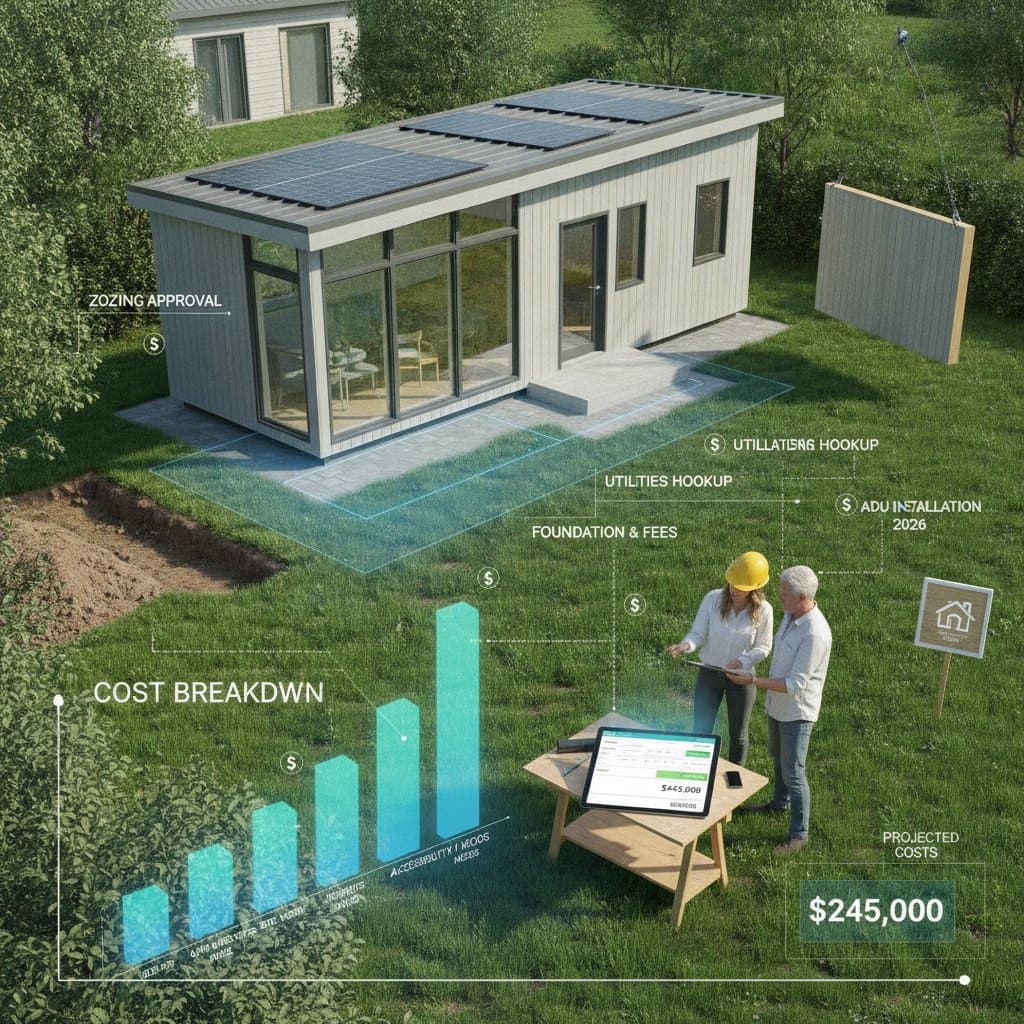
Site challenges extend both budget and duration. Difficult access, terrain issues, or legacy utilities may add $10,000 to $35,000. Urban settings demand rigorous adherence to regulations, with approval and review costs ranging from $5,000 to $12,000.
Soil evaluation, land preparation, and utility extensions account for 10 to 15 percent of overall spending. Properties with adaptable existing structures, such as garages, achieve 20 percent savings relative to full new builds.
Early expert input proves essential to refine estimates and sidestep expensive revisions during execution.
Service Packages and Pricing Overview
Projects fall into basic, premium, and supplemental categories, each with defined inclusions for tasks, components, and schedules.
Basic Package Essentials
This tier covers:
- Planning and spatial design
- Base foundation and framing
- Roof installation, wall finishes, and simple flooring
- Essential kitchen and bath setups
- Standard heating, ventilation, and wiring
For a 600-square-foot space, pricing spans $140,000 to $170,000. Labor comprises 45 to 50 percent of the total, with timelines of 10 to 14 weeks influenced by local processes.
Such packages suit needs for family or guest accommodations without luxury elements or integrated technology.
Premium Package Features
Enhanced options provide:
- Tailored architecture and digital renderings
- Luxury surfaces like stone counters and ceramic floors
- Efficiency enhancements such as solar integration
- Comprehensive warranties and superior thermal barriers
These range from $200,000 to $260,000, representing 20 to 30 percent above basic levels. The extra expenditure supports savings on operations and stronger income streams.
Analytics from design platforms suggest that efficiency-focused additions recover up to 60 percent of costs via lower bills and elevated leasing rates.
Supplemental Services Overview
| Service | Cost Range | Key Benefit |
|---|---|---|
| Solar Integration | $8,000 - $15,000 | Reduces energy costs by 40 percent |
| Site Landscaping | $3,000 - $9,000 | Improves curb appeal and usability |
| Automation Systems | $2,000 - $6,000 | Increases marketability for rentals |
| Outdoor Extensions | $5,000 - $12,000 | Broadens recreational areas |
| Water Collection | $1,800 - $4,000 | Supports eco-friendly operations |
Combining elements often secures 5 to 10 percent reductions versus separate purchases. Service directories highlight seasonal promotions for bundled work.
Professional Build Versus Self-Managed Approach
Self-Managed Expenses
Independent efforts appear cost-effective initially, yet accumulate rapidly. Core materials like framing, coverings, and fixtures total $70,000 to $100,000. Reliable suppliers offer competitive selections for insulation and appliances.
Tools for cutting, mixing, and elevation add $3,000 to $6,000 for ownership or $1,000 to $2,000 for rentals. Effort demands surpass 600 hours for foundational work.
Overlooked items including approvals, technical approvals, debris management, and verifications elevate self-managed totals to $110,000 to $130,000, without assurance coverage.
Benefits of Expert Involvement
Licensed teams accelerate completion by 40 to 60 percent while guaranteeing standards and stability. Coverage protects against risks valued in the tens of thousands per job.
Specialized resources and supplier rates mitigate labor premiums. Builds include 1 to 3 years of guarantees, fostering security and market strength.
Financial reviews demonstrate that expert projects offset premiums through rental returns in 3 to 5 years, varying by area demand.
Selection Guidelines
Opt for professionals on projects with intricate utilities or bases. Self-management fits simpler finishes or grounds work with minimal hazards. Error corrections or compliance failures can exceed $10,000, underscoring the value of guidance for reliability.
Strategies to Lower Expenses
Schedule Planning
Aligning with quieter periods yields notable reductions. Firms provide 5 to 15 percent off during off-seasons like winter or early spring. Midweek arrangements avoid elevated weekend charges.
Procurement Methods
Obtain three bids from accredited sources via trusted directories. This comparison trims 8 to 12 percent from estimates. Structure payments to match progress phases rather than full advances. Direct purchases of finishes or fixtures from bulk outlets save an additional 5 percent.
Pre-Work Preparations
Owners trim $2,000 to $5,000 by managing initial clearing, removals, or line identifications. Precise discussions on scope and pacing minimize alterations and extensions.
Regional and Market Insights
Location-Based Differences
Pricing fluctuates by area. High-demand coastal cities like Los Angeles and Seattle face 20 to 35 percent premiums from scarcity and rules. Inland or southern regions offer 15 percent or greater reductions, balanced against service access.
Economic Influences
Supply variations affect inputs like wood, aggregates, and wiring, with recent shifts of 10 to 20 percent. Secure agreements promptly to fix rates. Trade shortages sustain elevated wages.
Performance Metrics
Strategic granny flats yield robust returns. Market studies reveal 20 to 35 percent sales uplifts for permitted additions. Efficient setups cut yearly utilities by $800 to $1,200, while resilient choices curb upkeep.
Complementary Enhancements
Related improvements amplify granny flat projects.
- Garage Adaptations: $60,000 to $120,000. Repurposing saves versus ground-up work while fulfilling requirements.
- Grounds Design: $5,000 to $20,000. Thoughtful arrangements aid flow, control, and seclusion.
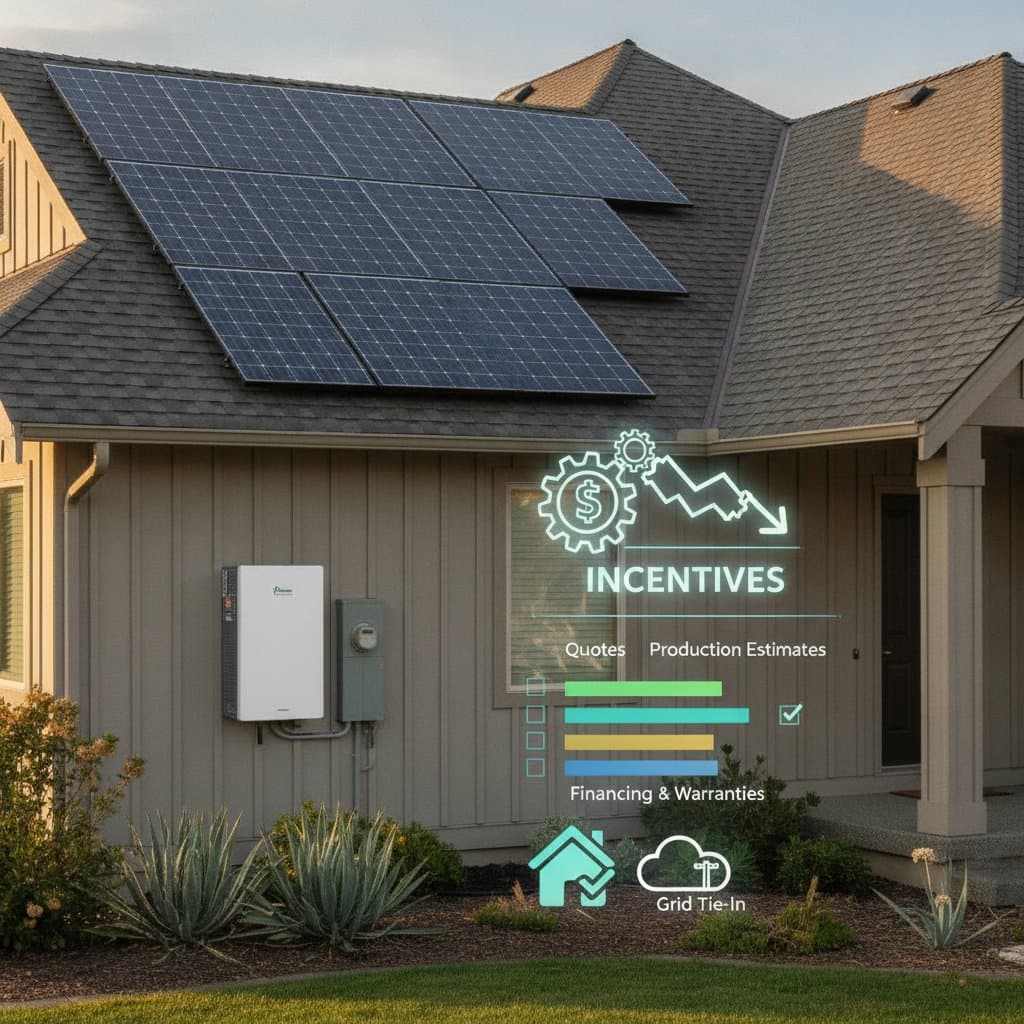
- Solar Additions: $12,000 to $18,000. Unified systems serve primary and secondary spaces, optimizing expenses.
Integrated approaches foster cohesive, efficient properties.
Securing Strong Returns
Focus on durable choices and detailed preparation to optimize outcomes. Balance fiscal prudence with enhancements that sustain usability and desirability over time.