Solar Maintenance Costs and Warranty Insights
Solar maintenance encompasses cleaning, inspections, and minor repairs essential for system efficiency and safety. Homeowners typically allocate several hundred dollars annually for these tasks, though unforeseen issues with inverters or wiring can escalate expenses. Knowledge of warranty scopes and coverage enables effective financial planning and minimizes unexpected charges.
Defining Solar Maintenance
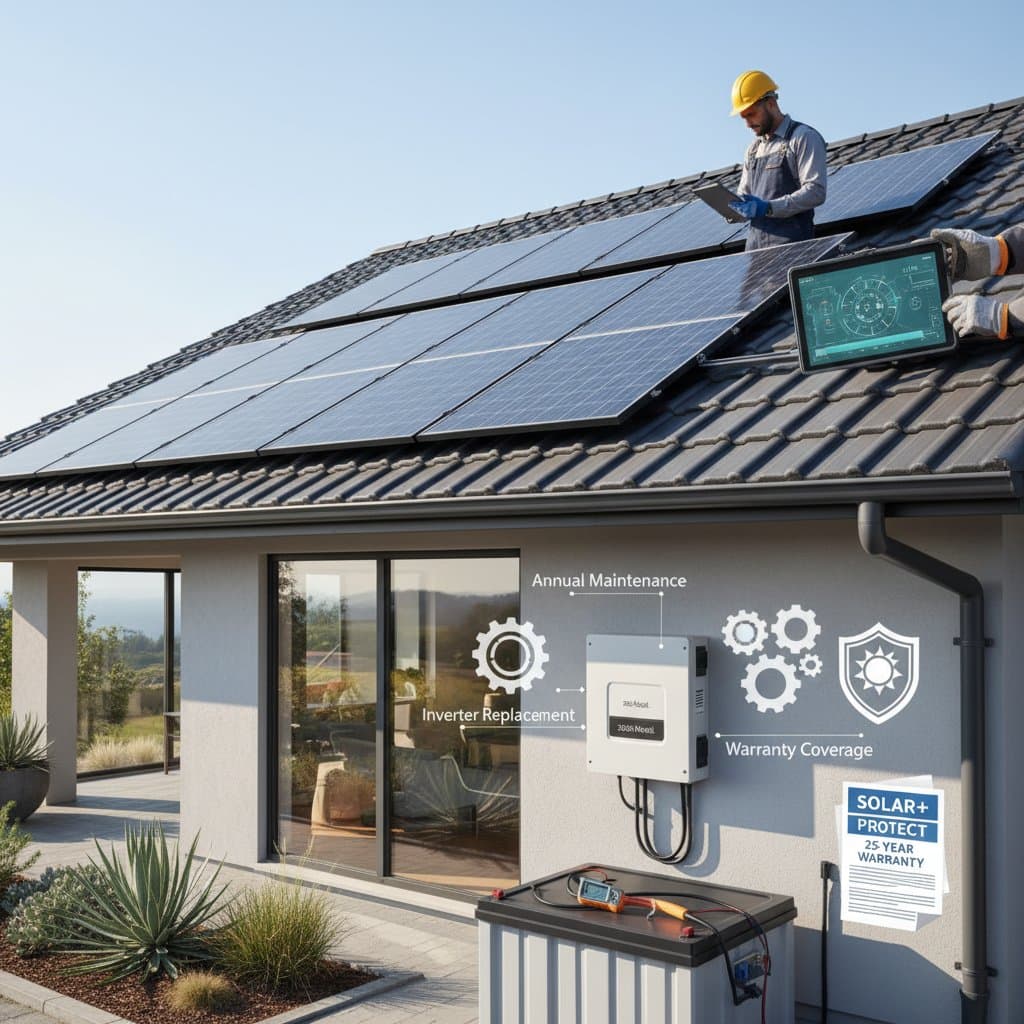
Solar maintenance involves removing dirt and debris from panels, inspecting wiring and mounts, and confirming the functionality of inverters and monitoring equipment. It extends to warranty-related services for components failing within designated periods.
A solar system comprises three primary components: modules that capture sunlight, inverters that transform direct current into alternating current, and mounting systems that secure panels. These elements degrade at varying rates. Panels often endure 25 years or longer. Inverters generally function for 10 to 15 years, while mounts persist as long as the roof with adequate sealing.
Indicators Requiring Professional Service
- Declines in energy output become evident through monitoring apps or utility bills.
- Accumulation of dirt, pollen, or bird droppings obscures panel surfaces.
- Appearance of water stains or leaks on the roof beneath panel arrays.
- Display of error codes or alerts on the inverter interface.
- Visible corrosion or unsecured conduit connections.
Such problems diminish performance and accelerate equipment wear. Regular evaluations detect minor faults early, preventing escalation to extensive repairs.
Expense Breakdown and Influencing Variables
Across the United States, solar maintenance expenses align with established ranges, influenced by location and system specifics.
| Line Item | Typical Range | Notes and Variables |
|---|---|---|
| Annual Cleaning | $150 to $300 | Frequency varies with dust levels, pollen, and roof angle. |
| Annual Inspection | $100 to $200 | Frequently bundled with cleaning services. |
| Inverter Replacement | $1,000 to $3,000 | Encompasses parts and labor; scales with system capacity. |
| Wiring Repair | $200 to $800 | Affected by roof accessibility and conduit extent. |
| Mount Re-sealing | $150 to $500 | May include flashing updates as required. |
Expenses increase in regions featuring steep roofs, high-rise structures, or scarce technician resources. Active warranties often provide complimentary or reduced-cost services, yet labor beyond warranty stipulations accumulates rapidly.
Safety Protocols and Regulatory Compliance
Solar system work entails electrical hazards and elevated positions. Equip yourself with insulated gloves, slip-resistant footwear, and a secure harness for roof access. Avoid directing cold water onto heated panels, as thermal shock risks glass fractures. De-energize the system prior to handling wiring or junction boxes.
Local jurisdictions classify solar electrical tasks as permit-required activities. Engage licensed electricians or certified solar professionals for wiring modifications or inverter installations. For grid-tied systems, obtain municipal inspections and utility approvals before reactivating post-repair.
Regional and Environmental Considerations
Climate Impacts
- In hot, humid areas, algae proliferation and salt-induced corrosion impair efficiency. Opt for mounts resistant to corrosion.
- Cold regions experience snow accumulation and freeze-thaw stresses on mounts. Conduct inspections annually in spring.
- Arid environments demand vigilant cleaning due to dust storms and avian residues.
- Coastal settings accelerate metal corrosion from salt exposure; select stainless steel hardware.
Permitting and Code Requirements
Areas prone to high winds or hurricanes necessitate robust racking systems and permit evaluations of anchoring mechanisms. Fire safety codes dictate spacing near roof perimeters, which influences cleaning approaches.
Material Recommendations
Tempered glass panels paired with anodized aluminum frames withstand diverse conditions. Steer clear of inexpensive plastic fasteners that deteriorate under ultraviolet radiation.
Optimal Scheduling
Arrange inspections during spring or fall, when moderate temperatures facilitate work and service providers maintain availability.
Frequently Asked Questions
How frequently should panels undergo cleaning?
Panels require cleaning once or twice yearly, with increased intervals in dusty or coastal locales.
Does cleaning enhance energy output?
Affirmative. Soiling reduces efficiency by 10 to 20 percent.
What elements does a solar warranty encompass?
Warranties typically address panel performance, output guarantees, and manufacturing defects, excluding labor or roof penetration issues unless explicitly stated.
Are inverter malfunctions included in coverage?
Yes, within the manufacturer's timeframe, covering replacement parts but not installation labor.
Is pressure washing suitable for solar panels?
Negative. Elevated water pressure compromises seals and protective coatings.
Which actions invalidate a solar warranty?
Improper repairs, non-approved cleaning agents, or roof alterations impacting mounts.
Safeguarding Your Solar Investment
Proactive maintenance extends the lifespan of your solar system and maximizes returns. By adhering to recommended schedules and understanding warranty boundaries, homeowners ensure sustained performance and financial benefits. Consult certified professionals for tailored advice, transforming potential challenges into opportunities for optimized energy production.