How Much Does a Whole-Home Generator Cost? Upcoming Pricing Guide
Power Security Comes at a Rising Price
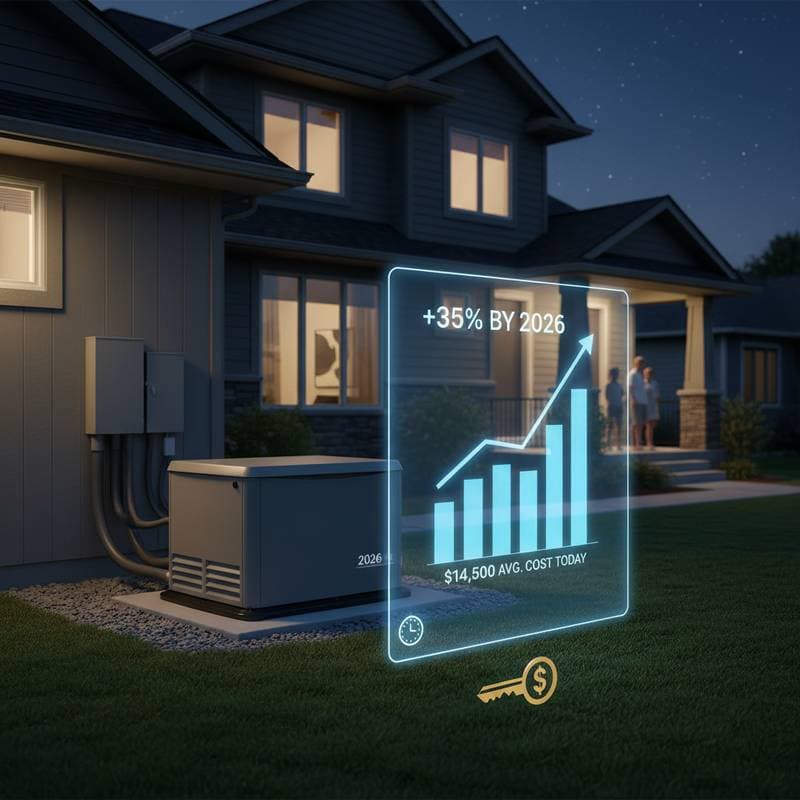
Whole-home generators deliver uninterrupted electricity during outages, safeguarding essential systems such as HVAC, refrigeration, and medical equipment. Professional installation costs range from $8,000 to $22,000, with the national average at $14,500 for a standard setup in a mid-sized home.
Three key factors shape the final price: generator capacity, fuel source, and installation complexity. Regional labor rates and material availability further influence totals. Industry analysts project a 35 percent increase in average generator pricing through 2026, fueled by rising material costs and supply chain challenges. Purchasing now secures current rates and provides reliable backup power amid grid uncertainties.
A well-installed generator sustains up to 95 percent of household functions during prolonged outages, per consumer energy studies. Such reliability protects property and boosts home resale value.
Detailed Cost Breakdown
Whole-home generator pricing combines equipment quality with professional labor. Basic standby systems begin at $8,000, while high-capacity automated units surpass $22,000. The national average of $14,500 covers the generator, transfer switch, and installation.
Primary Pricing Structure
- Per-kilowatt pricing: Budget $500 to $800 per kW for equipment and installation. A 20 kW unit for a 2,500-square-foot home costs $10,000 to $16,000 installed.
- Minimum service charge: Licensed electricians charge $1,000 to $1,500 for site assessment, permitting, and initial setup.
- Cost distribution:
- 25th percentile: $9,000
- 50th percentile (median): $14,500
- 75th percentile: $19,500
Size and Scope Factors
Generator size drives costs, with each additional 5 kW adding $2,000 to $3,000. Homes under 1,500 square feet typically require 14 kW systems; those over 3,000 square feet need 24 kW or more.
Contractor data indicates a 22 kW Generac Guardian installation averages $15,800 in suburban areas, including permits and a concrete pad. A 14 kW Kohler unit averages $10,200.
Material and Quality Tiers
Entry-Level: Steel-enclosed systems with standard transfer switches cost $8,000 to $10,000. These carry 5-year warranties and fit smaller homes or partial coverage. Brands include Champion and Briggs & Stratton.
Mid-Range: Aluminum-housed automatic models with remote monitoring range from $12,000 to $16,000. Generac and Kohler lead here, providing durable, quieter operation.
Premium: Liquid-cooled commercial-grade units cost $18,000 to $22,000, supporting full-house coverage and smart home integration with 10-year warranties for optimal return on investment.
Complexity Variables
Installation complexity adjusts pricing by 20 to 40 percent. Units distant from the electrical panel demand extra wiring and trenching, adding $1,500 to $3,000. Fuel conversions from propane to natural gas incur $800 to $1,200.
Outdated panels require upgrades at $1,200 to $2,000. Local codes may necessitate clearances or noise measures, extending labor. Urban areas like New York or San Francisco add 15 to 25 percent premiums from elevated labor costs.
Service Types and Comprehensive Pricing
Basic or Standard Installation Package
Standard packages encompass site survey, load calculation, generator and transfer switch installation, fuel hookup, electrical integration, testing, and orientation. Labor spans one to two days with two electricians, costing $8,000 to $12,000 based on size. This suits essential circuit needs over full-home power.
Premium or Comprehensive Service
Comprehensive options add concrete pads, noise-reduction housing, extended warranties, and smart monitoring, averaging $16,000 to $22,000. The 30 to 40 percent premium enhances lifespan and safety.
These benefit large homes with medical devices, offices, or electronics. Consultants note that maintenance preserves $500 per outage in spoilage and damage prevention.
Add-On Service Matrix
| Add-On Service | Cost Range | Benefit |
|---|---|---|
| Remote monitoring system | $400 - $700 | Track performance via mobile app |
| Annual maintenance plan | $200 - $500 | Extends lifespan, ensures readiness |
| Propane tank installation | $1,000 - $2,000 | Enables off-grid operation |
| Noise-reduction enclosure | $600 - $1,200 | Reduces sound by up to 40% |
Bundling with one contractor saves 10 to 15 percent. Platforms like Angi and Thumbtack list specialists with seasonal discounts.
Professional vs. DIY Analysis
DIY Cost Breakdown
DIY suits skilled owners but risks safety. Materials for a 20 kW Generac total $8,500: generator ($6,000 to $7,000), transfer switch ($1,000), conduit ($300), pad ($200), tools ($250 to $400). Time exceeds 20 hours, excluding permits or fuel work. Errors void warranties or breach codes.
Professional Advantages
Certified installers offer $1 million insurance, warranty service, and load testing for 98 percent inspection success versus 60 percent for DIY. Wholesale access offsets labor costs.
Decision Framework
Opt for professionals if capacity exceeds 14 kW, fuel integration is needed, or codes require licensing. Reserve DIY for portable units under 10 kW, where labor justifies professional fees against fault risks.
Actionable Cost-Saving Strategies
Timing Optimization
Install during off-peak months to cut 10 to 20 percent; avoid storm seasons. Midweek bookings add 5 percent labor savings.
Smart Shopping Tactics
Obtain three quotes to reduce costs by 15 percent. Seek rebates or warranties. Check payments avoid card fees.
Preparation Actions
Prepare sites by clearing vegetation, marking lines, and basic pads to save $300 to $700. Specify load priorities to avoid revisions.
Market Dynamics and Considerations
Geographic Variations
Regional averages vary:
- Northeast: $16,000 to $19,000
- Midwest: $13,000 to $15,000
- South: $11,000 to $14,000
- West Coast: $17,000 to $21,000
Urban premiums reach 20 percent; rural areas balance with lower labor but higher fuel delivery.
Market Timing
Steel, aluminum, and copper costs rise, alongside labor shortages. Wholesale prices may increase 35 percent, favoring prompt action.
Value Indicators
Generators boost resale by 3 to 5 percent in outage-prone areas. They cut repair costs, ease HVAC stress, and prevent $1,000+ losses from sump or freezer failures.
The Broader Backup Power Ecosystem
Pair generators with:
- Electrical panel upgrades: $1,200 to $2,000 for safety.
- Battery storage: $8,000 to $12,000 for silent electronics backup.
- Smart integration: $300 to $600 for monitoring.
Combining saves 10 percent on labor.
Securing Long-Term Power Reliability
Anticipate rising costs by installing early to capture current prices and availability. Schedule oil changes and load tests to maintain performance and warranties, ensuring enduring protection for your home.