Granny Pod Costs in 2026: Backyard ADU Budget
Summary Box
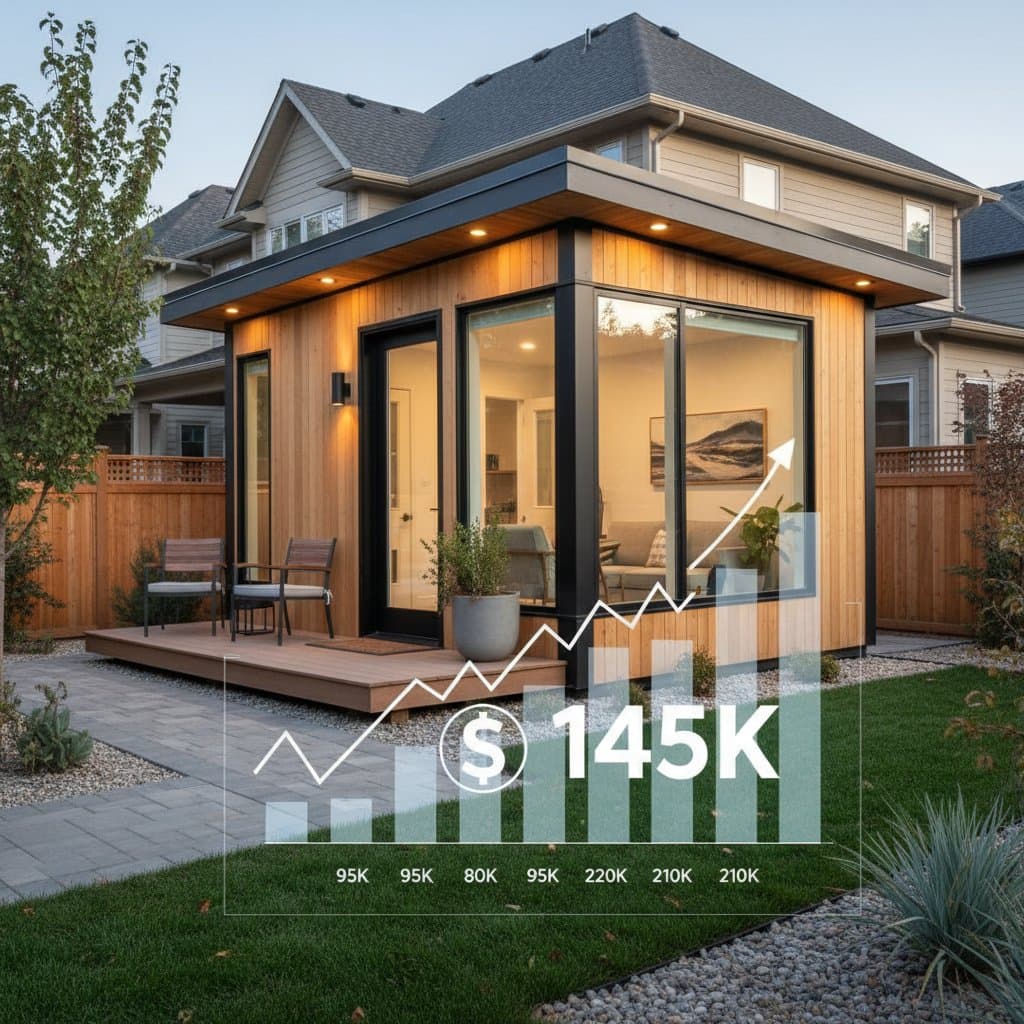
National average cost: $145,000
Typical range: $95,000 to $210,000
Low end: $65,000 for basic prefab shell on utilities
High end: $275,000 for custom-built accessible cottage
Time to complete: 3 to 6 months from permits to move-in
DIY or Pro: Mostly professional, limited DIY finish work only
ROI or resale impact: 50% to 70% of cost recouped on home sale
Updated: May 2026
A granny pod functions as a compact, self-sufficient dwelling unit on the property of a main home. It enables elderly relatives or adult children to maintain autonomy while remaining nearby for assistance. Expenses fluctuate according to dimensions, amenities, and regional regulations, which necessitates thorough financial preparation and foresight.
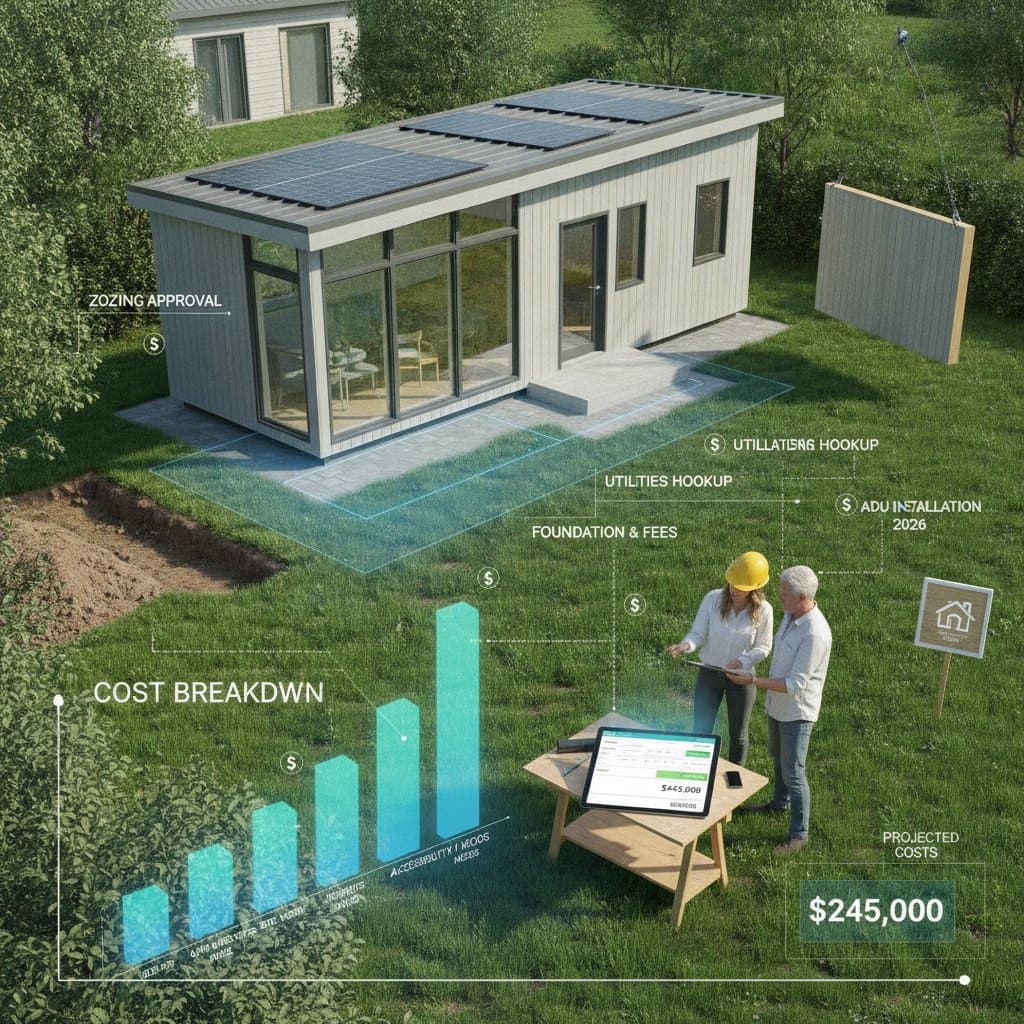
Cost Breakdown
| Item | Unit cost | Typical quantity | Line total | Notes |
|---|---|---|---|---|
| Site prep and grading | $5 to $15 per sq. ft. | 400 sq. ft. | $2,000 to $6,000 | Includes leveling, trenching, and basic drainage |
| Foundation (slab or pier) | $8 to $18 per sq. ft. | 400 sq. ft. | $3,200 to $7,200 | Slab is common for prefab units |
| Framing and exterior shell | $45 to $80 per sq. ft. | 400 sq. ft. | $18,000 to $32,000 | Includes structure, sheathing, and roof decking |
| Roofing and siding | $10 to $25 per sq. ft. | 400 sq. ft. | $4,000 to $10,000 | Depends on asphalt, metal, or fiber cement |
| Windows and doors | Lump sum | — | $3,000 to $7,000 | Energy-efficient vinyl or composite common |
| Plumbing rough-in and fixtures | $4,000 to $9,000 | — | $4,000 to $9,000 | Includes kitchen and bath |
| Electrical and HVAC | $6,000 to $12,000 | — | $6,000 to $12,000 | Mini split systems are typical |
| Insulation, drywall, and paint | $10 to $20 per sq. ft. | 400 sq. ft. | $4,000 to $8,000 | R13 to R21 walls with low-VOC paint |
| Flooring and interior trim | Lump sum | — | $3,000 to $6,000 | Vinyl plank, laminate, or engineered wood |
| Kitchenette and appliances | Lump sum | — | $5,000 to $10,000 | Compact or ADA-accessible layout |
| Bathroom finish | Lump sum | — | $3,000 to $8,000 | Includes walk-in shower and grab bars |
| Utility hookups and permits | Lump sum | — | $4,000 to $12,000 | Sewer, water, and electrical tie-ins |
| Contingency and misc. | 5% to 10% of total | — | $5,000 to $15,000 | For change orders or delays |
Typical total: $95,000 to $210,000
Luxury custom: $250,000 and up
Key Cost Influences
The scale and dimensions of the granny pod significantly affect expenses. Units between 300 and 600 square feet represent standard sizes, yet expanding the area increases material needs and permitting fees. Selecting premium materials such as composite siding or metal roofing elevates the budget, whereas opting for builder-grade options tempers costs without sacrificing essential durability.
Site-specific challenges further impact pricing. Properties with slopes demand additional excavation, while distant utility connections require extended trenching. Labor availability plays a role as well; regions with high demand or seasonal constraints may see bids increase by 10 percent or greater. Custom modifications, including accessibility features like ramps and widened doorways, typically add $10,000 to $25,000 to the overall estimate.
Professional Installation Versus DIY Options
Homeowners with relevant skills can undertake certain preparatory tasks. These include researching designs, submitting permit applications, and completing interior finishes such as painting or installing flooring. Assembling basic prefab components also falls within feasible DIY scope, provided structural elements remain untouched.
Professional expertise proves essential for core construction phases. Licensed contractors must handle electrical wiring, plumbing integrations, foundation pouring, and HVAC setups to meet safety standards. Structural framing similarly requires certified professionals to ensure stability and compliance.
Attempting unlicensed work on interconnected systems risks severe consequences. Errors in wiring or framing may invalidate insurance coverage or lead to accidents. Building codes frequently mandate professional involvement for any modifications linked to the primary residence utilities. Consult the local building authority prior to initiating any project phase.
Prefab manufacturers often extend warranties that exclude amateur modifications. Engaging certified installers preserves these protections and guarantees seamless integration with factory standards.
Strategies for Cost Efficiency
Opt for predefined dimensions to minimize transportation and installation expenses. Modules narrower than 14 feet wide avoid specialized crane requirements and simplify delivery logistics. Streamlining interior selections, such as choosing laminate surfaces over custom stone, yields substantial savings while upholding functionality.
Coordinate the granny pod construction with concurrent property improvements. Aligning utility trenching with driveway repairs, for instance, reduces repeated equipment rentals and mobilization charges. Early assessment of utility access points averts expensive alterations during later stages.
Solicit bids from no fewer than three qualified contractors to benchmark pricing.
Essential Quote Evaluation Points
- Verify itemized scope of work
- Confirm specified material grades and brands
- Ensure inclusion of site preparation and cleanup
- Check for coverage of permits and waste disposal
- Review warranty details and project timelines
- Confirm payment terms linked to verifiable milestones
Selecting and Hiring Contractors
Contractor Evaluation Steps
- Validate licensing and insurance status through the local building department.
- Assess experience with ADU projects, particularly modular or small-scale foundations.
- Collaborate on plan reviews to align with accessibility needs and zoning restrictions.
- Establish a transparent payment structure, with initial deposits of 10 to 20 percent and subsequent payments upon phase completion.
- Inquire about production and delivery schedules, noting that prefab units require 8 to 12 weeks post-permitting.
Contractors typically manage the full spectrum of approvals, inspections, and utility coordination. For properties on septic systems, confirm sufficient capacity to accommodate the additional unit. In denser urban settings, separate metering and associated impact fees may apply.
Project Timeline Overview
Initial design and permitting phases span 4 to 8 weeks, influenced by local review processes. Site preparation and foundation installation follow, lasting 1 to 3 weeks. Modular units arrive and assemble in 2 to 4 weeks, while site-built structures demand 4 to 8 weeks for framing.
Interior outfitting and system integrations require 3 to 6 weeks. Final inspections and utility verifications conclude the process in about 1 week, granting occupancy approval. Account for potential disruptions from weather or regulatory delays by incorporating a two-week buffer.
Ongoing Maintenance and Durability
Granny pods exhibit robust longevity, often lasting 20 to 50 years with proper care. Annual inspections of roofing, siding, and HVAC components prevent minor issues from escalating. Budget $500 to $1,500 yearly for upkeep, covering tasks like gutter cleaning, filter replacements, and sealant applications.
Energy-efficient designs minimize operational costs, with utility bills averaging $100 to $200 monthly for a 400-square-foot unit. Select durable materials from the outset to reduce long-term repairs. Regular professional servicing of plumbing and electrical systems ensures safety and extends the structure's service life.
Realizing Lasting Family and Property Benefits
Investing in a granny pod fosters closer family connections without compromising independence. It addresses multigenerational living needs while potentially increasing home resale appeal by 50 to 70 percent of the build cost. Thoughtful planning transforms this addition into a valuable asset for current comfort and future security.