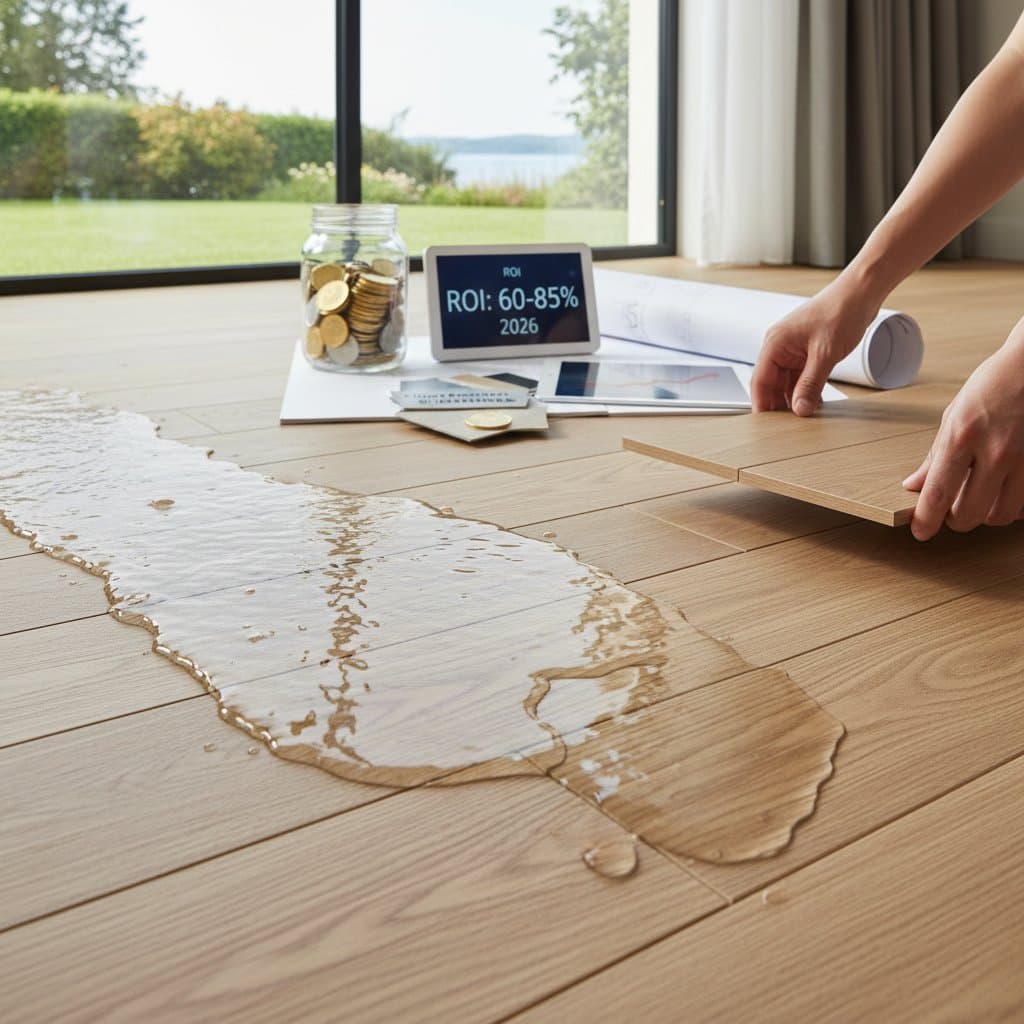
The Real ROI of Flood-Resistant Flooring in 2026
Summary Box
National average cost: $6,800 for a 1,000 square foot home
Typical range: $4,200 to $9,500
Low end and high end: $3,000 for basic vinyl planks to $15,000 for full tile or concrete systems
Time to complete: 3 to 7 days including removal and installation
DIY or Pro: DIY possible for vinyl or rubber tiles, pro required for epoxy, concrete, or sealed systems
ROI or resale impact: 60% to 85% depending on region and flood risk
Updated: April 2026
Cost Breakdown
| Item | Unit cost | Typical quantity | Line total | Notes |
|---|---|---|---|---|
| Waterproof vinyl planks | $3 to $5 per sq. ft. | 1,000 sq. ft. | $3,000 to $5,000 | Core product for flood-prone basements |
| Epoxy coating system | $4 to $9 per sq. ft. | 1,000 sq. ft. | $4,000 to $9,000 | Requires professional installation |
| Rubber or PVC tiles | $2 to $4 per sq. ft. | 1,000 sq. ft. | $2,000 to $4,000 | Easy to replace sections after water events |
| Cementitious overlay | $5 to $10 per sq. ft. | 1,000 sq. ft. | $5,000 to $10,000 | Durable but labor intensive |
| Moisture barrier membrane | $1 to $2 per sq. ft. | 1,000 sq. ft. | $1,000 to $2,000 | Often required by code in flood zones |
| Labor | $2 to $6 per sq. ft. | 1,000 sq. ft. | $2,000 to $6,000 | Range depends on prep, slope, and sealing |
| Disposal and prep | Flat | — | $300 to $800 | Includes removal of old flooring and moisture checks |
| Permit or inspection fees | Flat | — | $150 to $400 | Varies by municipality |
Average total: $6,800
Range: $3,000 to $15,000
Cost Factors
Scope and size influence expenses significantly. Larger areas lower the per-square-foot labor cost, yet they increase the overall investment. Material grade plays a key role; high-end vinyl and epoxy systems endure longer and withstand warping from prolonged water exposure.
Site conditions add complexity. Uneven concrete slabs, elevated hydrostatic pressure, or prior mold remediation demand extra preparation and raise costs. Labor markets in coastal or flood-prone regions command higher rates due to sustained demand for durable solutions.
Custom features elevate the budget. Integrated drainage channels, sealed baseboards, or aesthetic finishes necessitate skilled labor and specialized supplies.
DIY vs Pro
DIY suits simpler projects. Homeowners can install click-lock vinyl planks or interlocking rubber tiles with basic tools. They may also apply self-leveling underlayments in confined spaces and seal baseboards with waterproof caulk.
Professional expertise proves essential for advanced applications. Epoxy or urethane coatings demand exact mixing and controlled curing environments. Concrete resurfacing requires slope adjustments for proper drainage, while moisture barriers under slabs or in crawlspaces involve structural assessments.
Safety concerns warrant caution. Epoxy application releases fumes that necessitate respirators and robust ventilation. Grinding concrete generates silica dust, posing respiratory risks. Electrical outlets adjacent to damp floors require GFCI breakers to prevent shocks.
Warranties hinge on proper execution. Manufacturers typically mandate certified professional installation for commercial-grade products. DIY efforts risk voiding coverage if moisture testing or preparatory steps receive inadequate attention.
How To Save Without Regret
Opt for mid-grade vinyl to achieve water and scratch resistance at roughly half the price of premium epoxy. Reuse a structurally sound subfloor by sealing and leveling it, avoiding full replacement costs.
Coordinate multiple upgrades to maximize efficiency. Pair flooring installation with baseboard enhancements or sump pump additions to reduce labor mobilization fees. Schedule work during off-peak dry seasons when contractors offer competitive rates amid slower flood-related demands.
Secure quotes from at least three providers to ensure fair pricing.
Quote Comparison Checklist
- Scope itemized with clear deliverables
- Material brands and thickness specifications included
- Subfloor preparation and moisture barrier provisions detailed
- Permit and disposal fees explicitly stated
- Warranty terms outlined in writing
- Payment schedule aligned with project milestones
Regional Notes
Flood-resistant flooring delivers the strongest returns in coastal zones, river valleys, and regions prone to recurrent basement inundation. Buyers in these areas prioritize resilient surfaces, and real estate professionals note increased buyer interest when flood-proofing documentation accompanies listings.
In arid inland locations, these materials yield modest value unless integrated with complementary improvements such as finished basements or waterproof insulation. Regional flood history and insurance requirements further amplify the investment's appeal.
Step By Step Guide for DIY Vinyl Installation
Safety First
Equip yourself with knee pads, gloves, and eye protection. Verify that electrical circuits in the work area remain de-energized, particularly after recent water exposure. Employ a moisture meter to confirm subfloor humidity levels stay below 5 percent prior to plank placement.
Tools and Materials
- Utility knife and straightedge
- Tape measure
- Spacers
- Rubber mallet
- Moisture barrier roll
- Silicone caulk
Steps
- Remove old flooring. Extract carpet, padding, or laminate carefully. Scrape away adhesive remnants thoroughly.
- Inspect subfloor. Repair cracks and apply leveling compound to depressions for a smooth base.
- Lay moisture barrier. Position the roll with 6-inch seam overlaps, securing them with tape.
- Plan layout. Dry-assemble rows to minimize narrow edge cuts against walls.
- Install planks. Begin from the longest wall, interlocking ends and tapping joints securely with the mallet.
- Seal edges. Apply caulk along perimeters and thresholds to prevent water ingress.
- Reinstall trim. Position baseboards slightly elevated to accommodate natural expansion.
Verify that the flooring engages firmly without lifting edges. Allow 24 hours for settling before repositioning furniture.
Hiring Guide for Professional Systems
For epoxy, concrete overlays, or drainage-integrated setups, select a licensed contractor experienced in flood remediation.
Contractor Vetting Checklist
- References from comparable waterproof flooring projects
- Documented pre-quote moisture test outcomes
- Written explanation of surface preparation techniques
- Safety data sheets for all coatings, including VOC levels
- Comprehensive warranties covering labor and materials
Payment Schedule Basics
- 10 percent deposit upon contract execution
- 40 percent following preparation and moisture barrier placement
- 40 percent after primary floor application
- 10 percent upon final inspection and site cleanup
Avoid full upfront payments. Ensure all materials comply with local flood zone building codes.
Timeline and Scheduling
Material procurement varies by type. Vinyl and rubber tiles arrive within one week, while custom epoxy formulations may require two to three weeks.
On-site crew duration ranges from one to three days for vinyl installations and extends to five days for epoxy or concrete applications. Incorporate inspection intervals, including pre-installation moisture verification and post-curing evaluations.
Anticipate brief disruptions, but extend drying periods in high-humidity environments to guarantee adhesion.
Maintenance and Lifespan
These floors endure 10 to 25 years with appropriate upkeep, contingent on material selection and usage intensity.
Routine Care
- Employ pH-neutral cleaners to preserve surface integrity.
- Steer clear of abrasive tools that compromise protective coatings.
- Reseal epoxy or concrete surfaces every five years in high-traffic zones.
Prompt spill cleanup prevents long-term damage. Annual inspections identify early wear, extending overall durability.
Maximizing Long-Term Protection
Investing in flood-resistant flooring safeguards property and enhances marketability. Homeowners in vulnerable areas realize substantial ROI through reduced repair needs and elevated resale values. Pair this upgrade with comprehensive flood mitigation strategies for optimal resilience and financial returns.