2026 Flood-Proof Floors: Materials and True Costs
Flooding ranks among the most costly disasters for homeowners. Each incident causes structural harm and lingering moisture issues that compromise flooring over time. Residents in flood-prone areas or regions with intense rainfall now seek flooring solutions that resist water penetration and facilitate quick recovery. Selecting flood-proof flooring demands consideration of more than just waterproof surfaces. Homeowners must examine installation techniques, subfloor treatments, upkeep needs, and overall expenses across the product's lifespan.
A methodical evaluation leads to informed choices. This involves assessing material performance during multiple exposures, reviewing warranty conditions, and projecting cumulative costs. Such analysis enables selections that deliver lasting protection and economic efficiency.
Defining Flood-Proof Flooring
Flood-proof flooring withstands prolonged standing water without disintegrating, fostering mold, or separating layers. Unlike water-resistant products that handle brief spills, these systems address extended submersion. Effective designs integrate the surface with underlying components to block moisture spread.
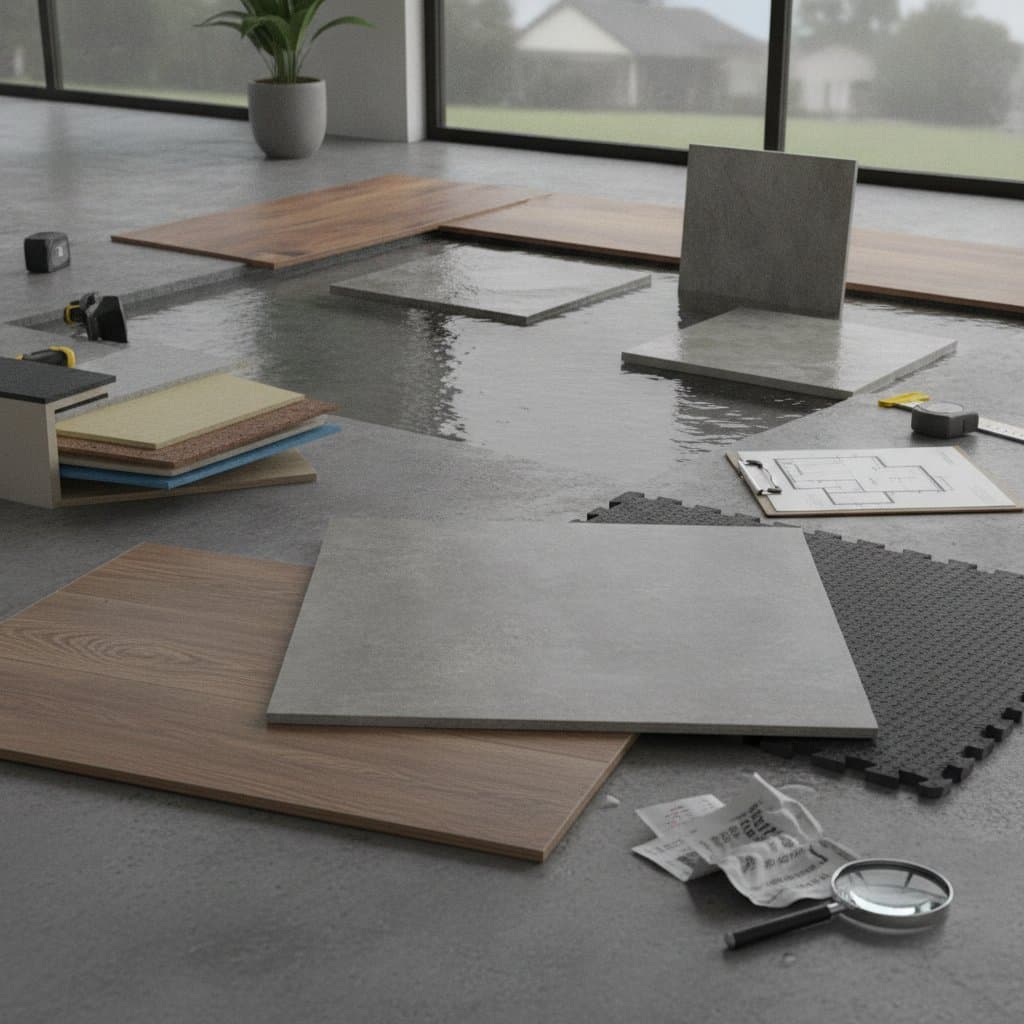
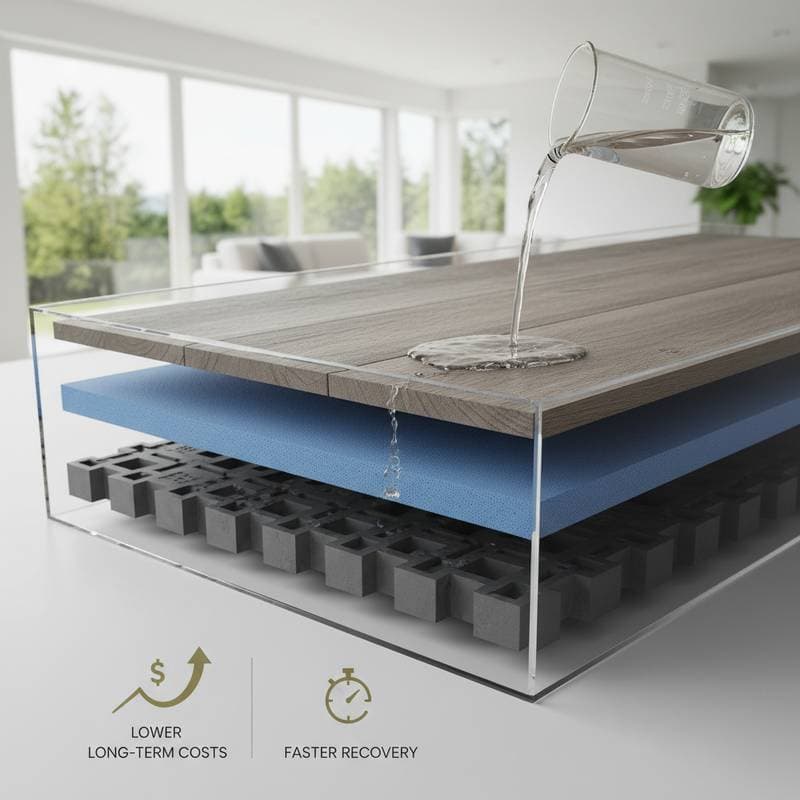
Comprehensive flood-proof setups feature three protective layers:
- Surface layer engineered to shed water and minimize uptake.
- Core layer that preserves shape and strength when wet.
- Subfloor barrier designed to halt upward moisture movement.
These elements ensure survival through floods, ease restoration efforts, cut repair expenses, and safeguard against concealed dampness in foundational areas.
Cost Structure Analysis
Assessing flood-proof flooring finances goes beyond initial per-square-foot pricing. True expenses encompass labor demands, subfloor modifications, and removal of prior coverings. The table below outlines average costs drawn from recent market trends.
| Material Type | Average Material Cost per sq. ft. | Installation Range per sq. ft. | Typical Service Life | Key Maintenance Costs |
|---|---|---|---|---|
| Luxury Vinyl Tile (LVT) | $2.50 to $6.00 | $1.50 to $3.00 | 15 to 25 years | Occasional resealing and adhesive inspections |
| Sealed Concrete | $3.00 to $8.00 | $2.00 to $4.00 | 30+ years | Re-sealing every 3 to 5 years |
| Ceramic or Porcelain Tile | $3.00 to $10.00 | $5.00 to $8.00 | 25 to 50 years | Grout sealing and crack repairs |
| Epoxy Resin Floor | $4.00 to $12.00 | $3.00 to $6.00 | 20+ years | Recoating every 5 to 7 years and deep cleaning |
| Rubber or PVC Sheet Flooring | $2.00 to $5.00 | $1.50 to $2.50 | 10 to 20 years | Seam replacements as needed |
Additional factors such as demolition, moisture barriers, and subfloor fixes typically add $1.00 to $3.00 per square foot. For extensive projects, compute total outlay by multiplying material and labor costs by area size, then incorporate 10 to 15 percent for unforeseen issues.
Process Walkthrough
Installing flood-proof floors demands precise steps to establish moisture defense from the base upward.
-
Initial Inspection: Contractors evaluate the subfloor for prior damage, fissures, or irregularities. Professionals extract any residual moisture to avoid future complications.
-
Moisture Barrier Installation: Apply a seamless polyethylene sheet or liquid-applied membrane across the subfloor. Seal all joints meticulously to create an impermeable shield.
-
Flooring Material Preparation: Allow items like luxury vinyl planks or rubber sheets to adjust to ambient temperature and humidity levels for 48 hours. This step minimizes risks of expansion or distortion.
-
Adhesive or Fastening Method: Employ hydrolysis-resistant adhesives for bonding or opt for interlocking mechanisms like click-lock systems that seal against water entry at joints.
-
Perimeter Sealing: Secure edges and thresholds with silicone-based caulk or specialized moldings. These prevent sideways water infiltration under the flooring.
-
Quality Verification: Test the completed surface for secure connections and evenness using water pour simulations. Flaws here could invalidate protections or warranties.
-
Post-Installation Care: Obtain guidelines on suitable cleaners, resealing timelines, and routine checks to sustain performance.
Coverage Limitations and Material Weak Points
Every flooring option carries inherent vulnerabilities despite flood-proof claims. Awareness of these guides realistic expectations and proactive care.
- Luxury Vinyl Tile risks buckling after days of immersion or over untreated concrete substrates.
- Ceramic Tile endures water on tiles but grout lines often permit seepage to underlying structures.
- Epoxy Flooring adheres poorly to moist or oily bases, leading to delamination.
- Rubber Flooring may separate at edges under intense water pressure from below.
- Sealed Concrete loses efficacy without regular sealant renewal, exposing the slab to erosion.
Identifying these issues allows homeowners to plan inspections and interventions that extend material longevity.
Financial Implications Over Time
Flood-proof flooring affects more than upfront spending; it shapes insurance rates, emergency repairs, and resale appeal. Insurers frequently discount premiums for properties with resilient features due to streamlined recovery processes.
Consider this long-range breakdown:
- Initial investment: $5,000 to $12,000 for a 400-square-foot space, varying by selection and regional labor.
- Maintenance costs: $200 to $500 biennially for treatments or fixes.
- Replacement cycle: 20 to 30 years for premium variants.
- Potential savings: $2,000 to $10,000 per avoided flood through minimized destruction and labor.
Incorporate depreciation and renewal projections into evaluations. Materials that hold form and utility longer decrease overall expenditures.
Evaluating Service Warranties
Extended warranties sound appealing, yet fine print often limits scope. Coverage typically addresses production errors rather than flood impacts, with conditions tied to expert application and upkeep.
Examine these warranty aspects:
- Water exposure limits: Policies may cap allowable submersion time before invalidation.
- Installation certification: Warranties activate only with certified professionals handling the work.
- Exclusion clauses: Internal leaks or external floods might fall outside protection.
- Claim process: Submit evidence of subfloor readiness and care logs for validation.
Secure detailed documentation upfront and confirm details with suppliers to avoid disputes.
Decision Framework for Material Selection
Choosing flood-proof flooring balances expense, aesthetics, and durability. Follow this sequence to refine options.
-
Assess Flood Risk Level: Consult regional hazard maps and site elevation. Low-lying or basement areas demand robust, fully sealed systems.
-
Determine Usage Area: Select abrasion-tough options for busy spaces like hallways; prioritize isolation for damp zones such as laundry rooms.
-
Set a Realistic Budget: Factor in full project elements including barriers and prep work. Prioritize value over lowest initial bid to prevent premature failures.
-
Compare Maintenance Requirements: Weigh frequent tasks like grout upkeep against one-time higher investments for self-sustaining surfaces.
-
Evaluate Long-Term Value: Tally lifetime costs divided by usage years for an annual figure. This reveals true economic performers.
-
Check Compatibility with Existing Subfloors: Verify if finishes like epoxy suit current conditions or necessitate extra smoothing and priming.
This approach eliminates mismatches and supports selections aligned with specific needs.
Risk Mitigation and Consumer Protection
Vigilance protects against exaggerated claims from installers promoting standard products as flood-proof. Demand verifiable data on resistance testing and standards adherence.
Prior to commitments:
- Confirm the contractor's credentials, coverage, and history with water-damaged sites.
- Insist on certifications for adhesives, barriers, and sealants from reputable sources.
- Monitor progress through staged reviews to catch issues early.
- Archive receipts and specs for future claims processing.
- Solicit testimonials from clients who faced floods post-installation.
Reputable providers offer explicit assurances on labor quality and water performance alongside product guarantees.
Securing Your Home's Foundation Against Floods
Investing in layered flood-proof flooring fortifies homes against rising waters and preserves financial stability. By integrating resilient materials with expert installation, homeowners achieve peace of mind and tangible savings. This proactive strategy transforms vulnerability into enduring strength, ensuring spaces remain functional and valuable through changing climates.