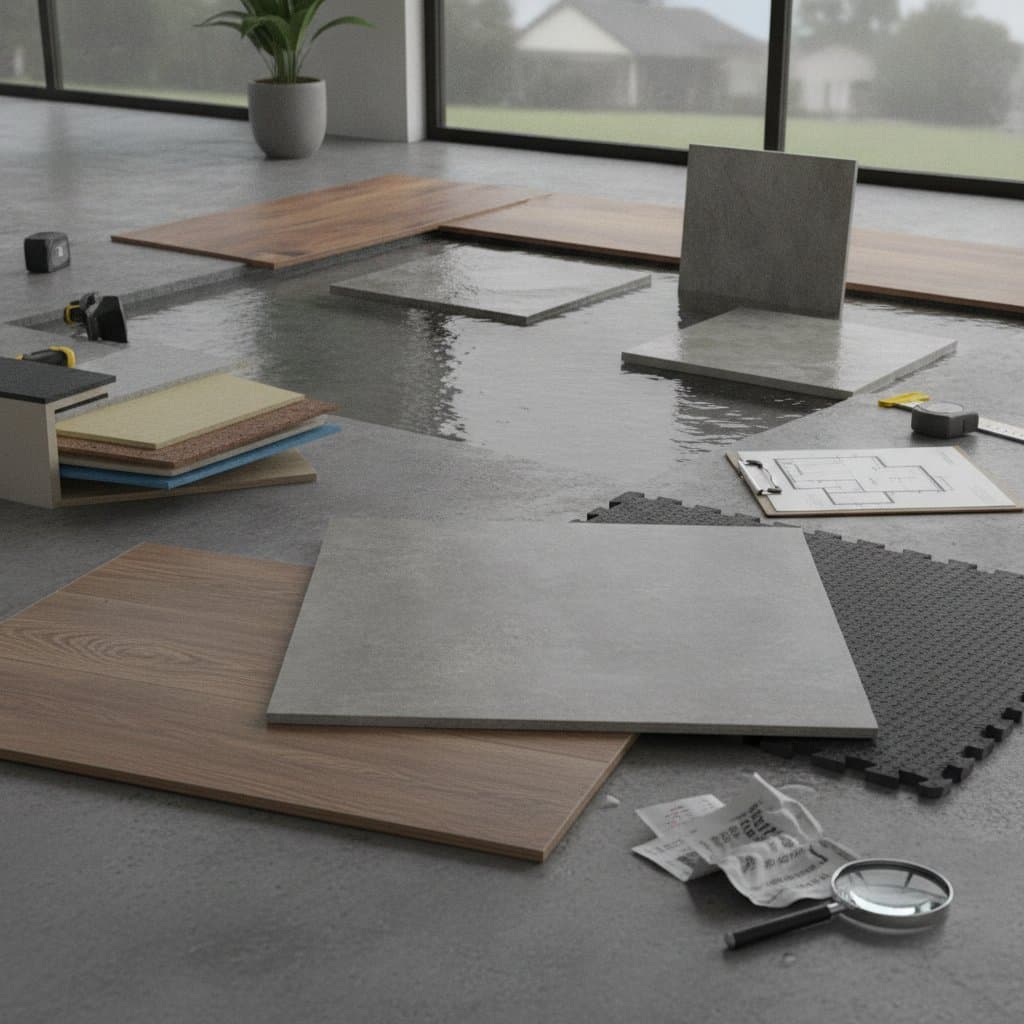
Flood-Resistant Flooring Choices by Cost
National average cost: $5 to $14 per square foot installed
Typical range: $3 to $20 per square foot
Low end and high end: $2 for basic vinyl sheets to $25 for sealed concrete with decorative finish
Time to complete: 1 to 5 days depending on material and room size
DIY or Pro: DIY possible for vinyl or tile replacement, pro required for concrete sealing or subfloor repair
ROI or resale impact: Moderate to high in flood-prone areas due to durability and insurance benefits
Updated: June
Key Cost Influences
Project size affects pricing because larger spaces allow labor efficiencies. Flood repairs frequently require extra steps such as subfloor drying or leveling, which increase the total.
Material selection matters. Premium luxury vinyl plank or porcelain tile that copies wood or stone finishes can cost twice as much as basic grades. Textured surfaces add slip resistance yet demand extra grout or sealant work.
Site conditions also play a role. Basements call for added moisture barriers. Slab-on-grade floors may need epoxy sealant or crack repairs ahead of new flooring.
Ways to Reduce Expense
Select mid-range vinyl planks rather than premium wood-look versions because waterproof performance remains comparable. Ceramic tile works well instead of porcelain in low-traffic zones. A single-color epoxy on concrete avoids the higher cost of decorative flakes or metallics.
Prepare the space in advance. Remove base trim before crews arrive and confirm the subfloor is dry and level. Bundle flooring work with baseboard painting or drywall repair to limit setup time.
Schedule during slower months such as winter. Combine the project with other moisture control upgrades like sump pump installation for volume discounts.
Obtain three written quotes. Each quote should list itemized scope, material brands and grades, surface preparation, permit and disposal fees, warranty details, and a payment schedule linked to milestones.
Installation Timelines
Vinyl and laminate products are often available locally. Special-order tile or rubber flooring may require one to three weeks. Custom epoxy blends need factory mixing and curing before delivery.
On-site work varies by material. Vinyl plank takes one to two days. Tile requires three to five days including drying. Epoxy or sealed concrete needs two to four days plus cure time. Rubber flooring finishes in one to two days.
Inspect at key stages. Verify subfloor moisture levels before installation. Check grout or sealant after curing. Conduct a final review for flatness and smooth transitions.
Regional Considerations
Coastal and riverfront homes gain the greatest advantage from these materials. Humid climates benefit from breathable underlayment that limits trapped moisture. Cold regions should avoid rigid tile directly on slabs without added insulation. Desert areas often see lower sealed concrete costs because moisture risk and prep work stay minimal.
Insurance providers sometimes offer discounts for documented waterproof systems. Contact your carrier before work begins to confirm eligibility.
Protecting Long-Term Value
Keep all installation records, moisture readings, and warranty documents. These materials establish compliance with moisture standards during future sales or insurance claims and support continued performance after installation.